
Base of Thumb Arthritis: Symptoms, Causes, Treatment and Recovery
Pain at the base of the thumb can make many everyday activities surprisingly difficult. Simple tasks such as opening jars, turning keys, fastening buttons, writing, carrying shopping or lifting a kettle all place large forces through the thumb joint. When this joint develops osteoarthritis, these everyday movements can become painful, stiff and frustrating.
Base of thumb arthritis, also known as carpometacarpal (CMC) joint osteoarthritis or basal thumb arthritis, is one of the commonest forms of arthritis affecting the hand. Fortunately, most people improve with simple measures such as activity modification, splints, hand exercises and pain relief. Surgery is usually only considered when symptoms remain severe despite appropriate non-operative treatment.
This guide explains what base of thumb arthritis is, why it develops, common symptoms, how it is diagnosed, evidence-based treatment options, when surgery is recommended and what recovery involves.
Key points
- The base of the thumb (CMC joint) is one of the most commonly affected joints in the hand by osteoarthritis.
- Pain is typically worse when gripping, pinching, opening jars or turning keys.
- Most patients improve with splints, exercises, activity modification and simple pain relief.
- Exercise programmes that strengthen the thumb muscles can improve pain and hand function, particularly in early arthritis.
- When non-surgical treatment is no longer effective, trapeziectomy surgery provides reliable long-term pain relief for most patients.
What is base of thumb arthritis?
Base of thumb arthritis is a type of osteoarthritis affecting the carpometacarpal (CMC) joint, where the first metacarpal bone meets a small wrist bone called the trapezium.
This saddle-shaped joint allows the thumb to move in multiple directions, making it essential for gripping, pinching, twisting, writing, lifting and fine hand movements. Unlike many other joints, the thumb base experiences enormous forces during everyday activities.
Over time the smooth cartilage covering the joint gradually wears away. As the cartilage becomes thinner and rougher, the bones no longer glide smoothly, leading to pain, stiffness and reduced hand function.
Understanding the thumb joint
The thumb differs from the other fingers because it needs to move through a much greater range of motion. The CMC joint allows the thumb to move away from the hand, move across the palm, pinch against the fingers, rotate and grip objects of different shapes.
This remarkable mobility is what allows humans to perform precise tasks such as fastening buttons, holding a pen, using scissors, opening bottles, turning keys and picking up coins. However, this mobility comes at a cost: because the joint is repeatedly loaded throughout life, it is particularly susceptible to developing osteoarthritis.
Why does the base of the thumb wear out?
Large forces pass through the thumb base during everyday activities. Forces applied through the tip of the thumb during pinching are magnified by around twelve times at the CMC joint, which helps explain why repetitive gripping and pinching can aggravate symptoms once arthritis has developed.
As the cartilage wears away the joint becomes less smooth, movement becomes painful, inflammation develops, surrounding muscles weaken and the thumb becomes less stable. Eventually the body may produce small bony enlargements around the joint, changing the appearance of the thumb.
What causes base of thumb arthritis?
In most people there is no single identifiable cause. Instead, several factors gradually combine over many years. Thumb instability may contribute to the development of arthritis, and recognised associated factors include age-related wear, joint laxity (hypermobility), previous injury, repetitive manual activities, obesity, hereditary factors and hormonal influences.
Who gets it?
Base of thumb arthritis is particularly common in adults over 50 years, in women, in people with previous thumb injuries, in people with hypermobile joints and in individuals performing repetitive manual work. Women are affected more commonly than men.
Symptoms
Symptoms usually develop gradually over months or years. The commonest symptom is pain at the base of the thumb, particularly during activities requiring gripping or pinching.
Typical symptoms include pain when opening jars, difficulty turning keys, pain when writing, discomfort lifting heavy objects, pain using scissors, weakness of grip, stiffness, swelling, tenderness over the base of the thumb, reduced pinch strength and changes in thumb shape over time.
How does it affect everyday life?
Because the thumb contributes to almost every grip, arthritis can interfere with many daily activities: opening bottles and milk cartons, carrying pans, holding a book, lifting shopping bags, turning taps, fastening buttons, gardening, knitting, writing, using a smartphone and preparing food. Many people notice that they gradually begin avoiding certain activities because they know they will trigger pain.
How is base of thumb arthritis diagnosed?
Diagnosis is usually straightforward. Your clinician will ask where the pain is located, which activities trigger symptoms, about stiffness, loss of grip strength, previous injuries and how long symptoms have been present. Examination looks for tenderness over the CMC joint, swelling, reduced movement, weakness, altered thumb posture and pain during pinch or grip.
In many patients the diagnosis can be made clinically. If the diagnosis is uncertain, or surgery is being considered, X-rays are often performed to assess the severity of joint wear. It is important to remember that X-ray changes do not always match symptom severity: some people have advanced arthritis on imaging but relatively mild pain, while others experience significant symptoms despite more modest changes.
Other conditions that can cause thumb pain
Not every painful thumb is caused by arthritis. Other possible causes include De Quervain's tenosynovitis, trigger thumb, ligament injuries, fractures, inflammatory arthritis (such as rheumatoid arthritis) and nerve compression. Your clinician will assess these possibilities during the examination.
Non-surgical treatment
The vast majority of people with base of thumb arthritis do not need surgery. Current NHS guidance recommends beginning with conservative treatment, combining education, activity modification, hand therapy, splints and exercises.
The aims of treatment are to reduce pain, improve grip and pinch strength, protect the joint, maintain movement and allow you to continue everyday activities.
Understanding pain
One of the most reassuring messages from the OTTER programme is that pain does not necessarily mean you are causing further damage. Like many forms of osteoarthritis, symptoms often fluctuate: you may have good days, bad days, flare-ups after heavy activity and periods where the thumb feels almost normal. Learning how to manage these fluctuations is an important part of treatment.
Activity modification and joint protection
Many everyday tasks place surprisingly large forces through the thumb. Rather than avoiding activity altogether, the goal is to reduce unnecessary strain while keeping the thumb moving.
Helpful strategies include using both hands whenever possible, carrying shopping bags over the forearm rather than pinching the handles, using larger grips on kitchen utensils, avoiding prolonged tight pinching, opening jars with assistive devices, choosing ergonomic gardening tools and using electric can openers where appropriate.
Occupational therapists often teach joint protection strategies, which change how you perform tasks rather than avoiding them: use larger joints (the whole hand, the forearm, or push with the palm), spread the load across both hands, avoid sustained pinching such as gripping a pen tightly or squeezing pegs, and pace yourself by alternating heavier tasks with lighter ones.
Thumb splints
One of the most effective treatments for base of thumb arthritis is a thumb splint. Splints work by supporting the CMC joint, improving stability, reducing painful movement and allowing inflamed tissues to settle. NHS hand therapy guidance recommends splints as one of the main first-line treatments for painful thumb arthritis.
Different splints are available, including soft neoprene splints, rigid thermoplastic splints and custom-made hand therapy splints. Most support the base of the thumb while allowing movement of the thumb tip, so everyday tasks remain possible while stress across the arthritic joint is reduced.
Many patients benefit from wearing a splint during painful activities, while gardening, when lifting, during DIY and when symptoms flare up. Some people also find overnight splinting helpful if symptoms disturb their sleep.
Exercise therapy
For many years people believed arthritis meant the joint should be rested. Modern evidence shows the opposite. The OTTER trial demonstrated that targeted exercise programmes can improve pain, strength and hand function in people with base of thumb arthritis.
Exercise helps by strengthening the muscles supporting the thumb, improving joint stability, reducing strain on the arthritic surfaces and improving confidence using the hand.
The OTTER (Optimising Thumb Base Osteoarthritis Treatment) programme combines education, splinting, strengthening exercises and functional advice. The exercises are designed to improve stability rather than simply increase movement, and are performed consistently over several weeks with gradual progression.
Typical exercises include thumb abduction (moving the thumb away from the palm with a relaxed wrist), thumb opposition (touching the thumb gently to each fingertip), isometric strengthening (pressing the thumb gently against a finger without allowing movement), first dorsal interosseous strengthening (building the muscle between thumb and index finger to improve pinch stability) and a gentle web space stretch.
A little exercise every day is more effective than occasional intensive exercise — consistency matters more than intensity. Avoid exercises that provoke a prolonged increase in pain.
Pain relief, heat and ice
Simple pain relief can make exercise and daily activities more comfortable. Depending on your medical history your clinician may recommend paracetamol, topical anti-inflammatory gels or oral NSAIDs. Medication should be viewed as a way of supporting rehabilitation rather than replacing it.
Heat (warm water, heat packs, wheat bags) is often useful for morning stiffness, aching pain and muscle tightness. Ice may help after activities that temporarily increase pain — apply for approximately 15–20 minutes, protecting the skin with a towel.
Steroid injections
If symptoms remain troublesome despite splints and exercises, your clinician may recommend a corticosteroid injection into the thumb CMC joint. The injection aims to reduce inflammation, relieve pain and improve function.
Many people experience worthwhile pain relief, although the duration varies considerably — from several weeks to several months, and occasionally longer. Steroid injections are an option for patients whose symptoms persist despite conservative treatment, although the benefit is usually temporary.
Injections are generally safe when performed appropriately. Possible side effects include temporary discomfort after the injection, skin thinning, skin colour change and, rarely, infection. Repeated injections into the same joint are usually limited because excessive corticosteroid exposure may affect surrounding tissues.
When is surgery recommended?
The majority of people improve with non-surgical treatment. Surgery may be considered if pain remains severe despite splints, exercises and pain relief; steroid injections provide only temporary or inadequate benefit; everyday activities become significantly limited; sleep is disturbed by pain; or grip and pinch strength continue to deteriorate.
The decision to proceed with surgery is based primarily on your symptoms and hand function, rather than how severe the arthritis appears on an X-ray. Many people have advanced arthritis on imaging but cope well without surgery, while others with more modest changes experience significant disability.
Trapeziectomy
The most commonly performed operation for base of thumb arthritis is a trapeziectomy. During this procedure the small wrist bone called the trapezium is removed. Because the arthritic surfaces are no longer rubbing together, pain is usually dramatically reduced.
This operation has been performed successfully for many decades and remains the gold standard surgical treatment for painful thumb CMC arthritis.
Ligament reconstruction and tendon interposition (LRTI)
Some surgeons combine trapeziectomy with ligament reconstruction and tendon interposition. The trapezium is removed, part of a nearby tendon (commonly the flexor carpi radialis) is fashioned into a sling to help stabilise the thumb, and additional tendon may be placed into the space left by the removed trapezium. The aim is to improve thumb stability, maintain thumb position and optimise pinch strength during recovery.
Not all surgeons routinely perform LRTI, and current evidence suggests that simple trapeziectomy often provides equally good long-term outcomes for many patients.
Thumb joint replacement
Artificial thumb joint replacement is another option, in which the damaged joint surfaces are removed and an implant replaces the joint. Potential advantages include preserving thumb movement, quicker early recovery in selected patients and maintaining thumb length. However, thumb replacements may loosen over time, wear out or require revision surgery, so they are usually reserved for carefully selected patients and are less commonly performed than trapeziectomy.
Thumb fusion (arthrodesis)
In younger patients with heavy manual occupations, thumb fusion may occasionally be recommended: the surgeon permanently joins the arthritic joint so that it no longer moves. Advantages include excellent pain relief, strong pinch strength and a durable long-term result. Disadvantages include permanent loss of movement at the CMC joint and possible increased stress on nearby joints over time. Fusion is therefore used less commonly than trapeziectomy.
Recovery after surgery
Recovery after thumb arthritis surgery takes time. Although pain often improves quite quickly, restoring strength and function requires patience.
| Time | Recovery |
|---|---|
| First 2 weeks | Hand elevated, wound healing, protective dressing or cast |
| 2–6 weeks | Thumb splint worn, gentle movement begins under hand therapy supervision |
| 6–12 weeks | Gradual strengthening, increasing everyday activities |
| 3–6 months | Continued improvement in grip, pinch strength and comfort |
| Up to 12 months | Ongoing recovery, scar maturation and final strength gains |
Specialist hand therapy is an important part of rehabilitation. Your therapist may help with swelling control, scar management, thumb mobility, strengthening exercises, grip retraining and advice on returning to work and hobbies. Initially the focus is on protecting the healing tissues; later rehabilitation concentrates on restoring strength and confidence.
Possible risks
Like all operations, thumb arthritis surgery carries some risks. These include infection, bleeding, delayed wound healing, stiffness, persistent swelling, scar tenderness, numbness due to irritation of small skin nerves, complex regional pain syndrome (CRPS), continued weakness and persistent pain (uncommon). Fortunately, serious complications are uncommon and most patients experience substantial pain relief.
What is the outlook?
The long-term outlook is generally excellent. Without surgery, many patients successfully manage symptoms using splints, exercises, activity modification and occasional pain relief, with symptoms fluctuating between improvement and flare-ups.
After surgery most patients experience significant pain relief, improved ability to grip and pinch, better hand function and improved quality of life. Grip strength usually continues to improve for 6–12 months after surgery. Although movement may be slightly reduced compared with a completely normal thumb, most patients consider this a worthwhile trade-off for the improvement in pain.
Frequently asked questions
Will the arthritis go away? No. Osteoarthritis cannot currently be reversed. Treatment focuses on reducing pain, improving function and slowing progression where possible.
Should I keep using my thumb? Yes. Completely avoiding movement is not recommended — keeping the thumb active through appropriate exercises helps maintain strength and function.
Can exercises wear the joint out faster? No. The OTTER programme found that appropriately prescribed strengthening exercises improve symptoms and function rather than accelerating joint damage.
Will I eventually need surgery? Not necessarily. Many people successfully manage thumb arthritis for years without an operation.
Can the arthritis come back after trapeziectomy? The removed trapezium does not grow back, so arthritis does not recur in that joint. However, arthritis may develop in other joints of the hand over time as part of the natural ageing process.
Treatment comparison
| Treatment | Best for | Advantages | Limitations |
|---|---|---|---|
| Education and activity modification | Early disease | No risks, improves self-management | Requires lifestyle changes |
| Thumb splint | Pain during gripping and pinching | Non-invasive, supports the joint during painful tasks | Must be worn consistently to help |
| Exercise therapy (OTTER) | Most patients, particularly early arthritis | Improves pain, strength and function | Requires regular, consistent effort |
| Pain relief, heat and ice | Flare-ups | Simple and widely available | Supports rather than replaces rehabilitation |
| Steroid injection | Symptoms persisting despite splints and exercises | Can provide good short-term pain relief | Benefit is usually temporary, repeat injections limited |
| Trapeziectomy | Severe, function-limiting arthritis | Reliable long-term pain relief, gold standard | Several months of recovery, some loss of strength early on |
| Thumb joint replacement | Selected patients | Preserves movement and thumb length | May loosen or wear out, revision surgery possible |
| Thumb fusion | Younger heavy manual workers | Excellent pain relief and strong pinch | Permanent loss of CMC movement |
The OrthoZone take-home message
Base of thumb arthritis is one of the most common causes of hand pain in adults. Although it can make everyday activities such as opening jars, writing and gripping objects difficult, most people improve with education, thumb splints, targeted exercises and activity modification. Surgery is reserved for persistent, function-limiting symptoms and offers excellent long-term pain relief for carefully selected patients. Working closely with your hand therapist and following a structured rehabilitation programme provides the best chance of maintaining thumb function and independence.
Top tips
- Keep using your thumb — gentle movement and strengthening exercises help maintain function.
- A splint can make a big difference: wearing one during painful activities often reduces symptoms significantly.
- Small changes protect the joint — use both hands, larger grips and assistive devices to reduce strain.
- Be consistent with your exercises: regular strengthening is more effective than occasional intensive sessions.
- Surgery works well when needed — trapeziectomy provides reliable long-term pain relief for most patients.
Related articles
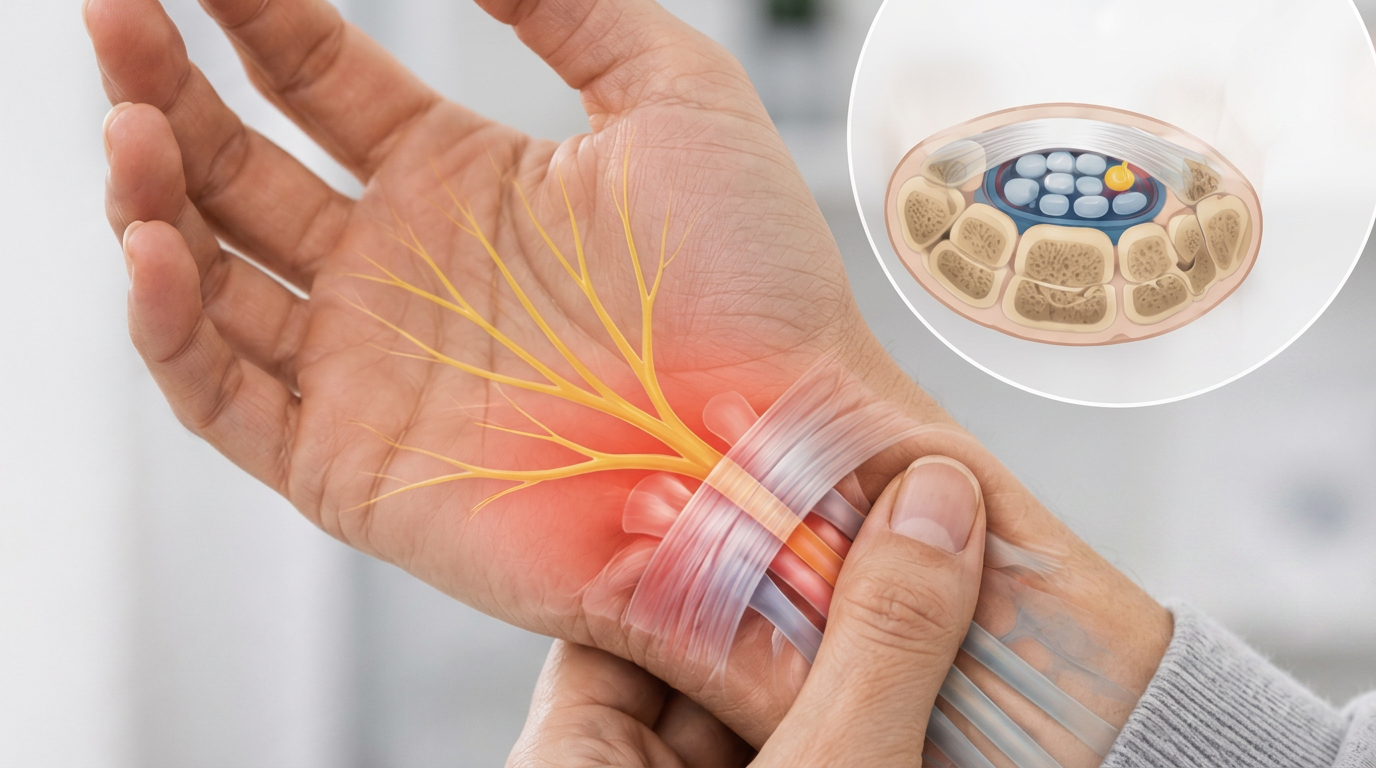
Carpal Tunnel Syndrome: Symptoms, Diagnosis and Treatment
An evidence-based guide to carpal tunnel syndrome: why the median nerve becomes compressed, night-time symptoms, splints, injections, surgery and recovery.
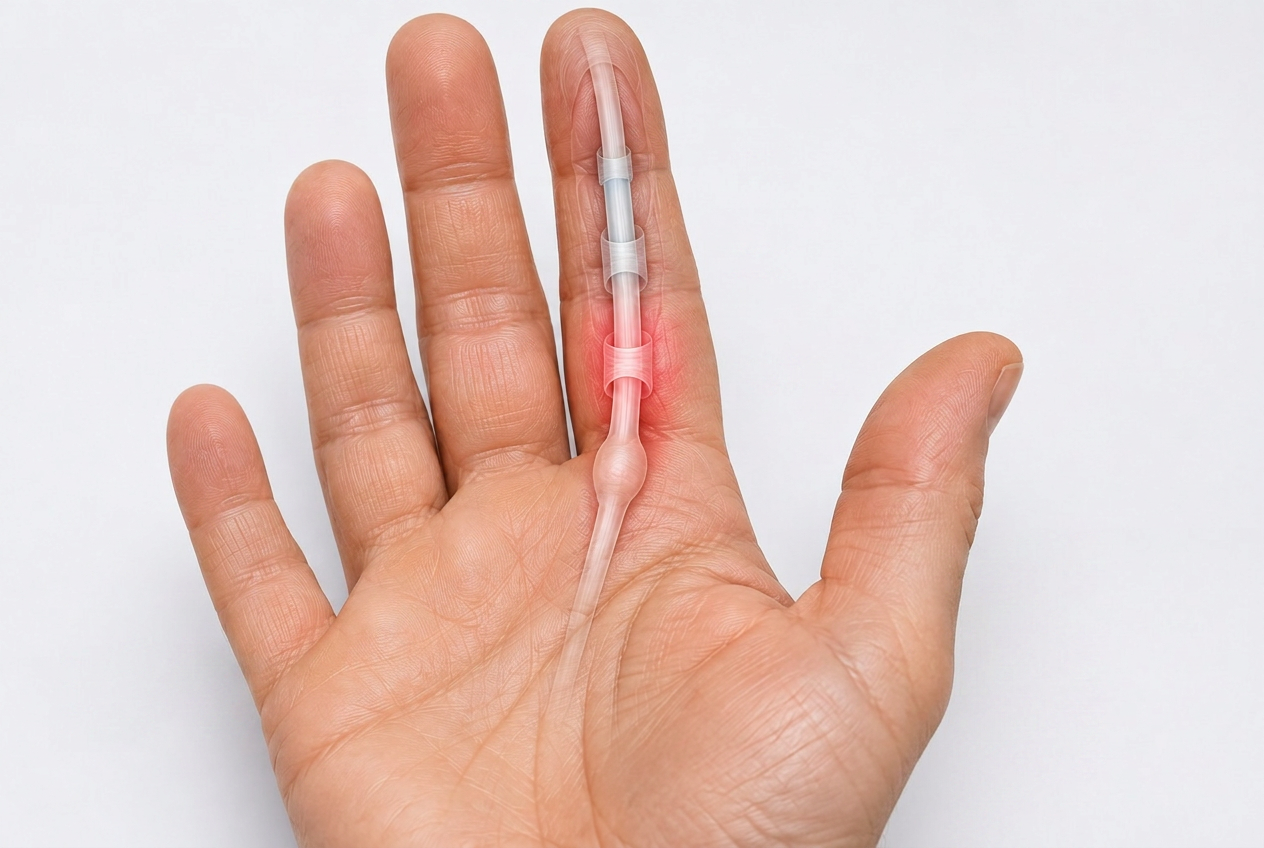
Trigger Finger (Stenosing Tenosynovitis): Symptoms, Causes, Treatment and Recovery
An evidence-based guide to trigger finger: why the tendon catches at the A1 pulley, splinting, steroid injections, surgical release and recovery.
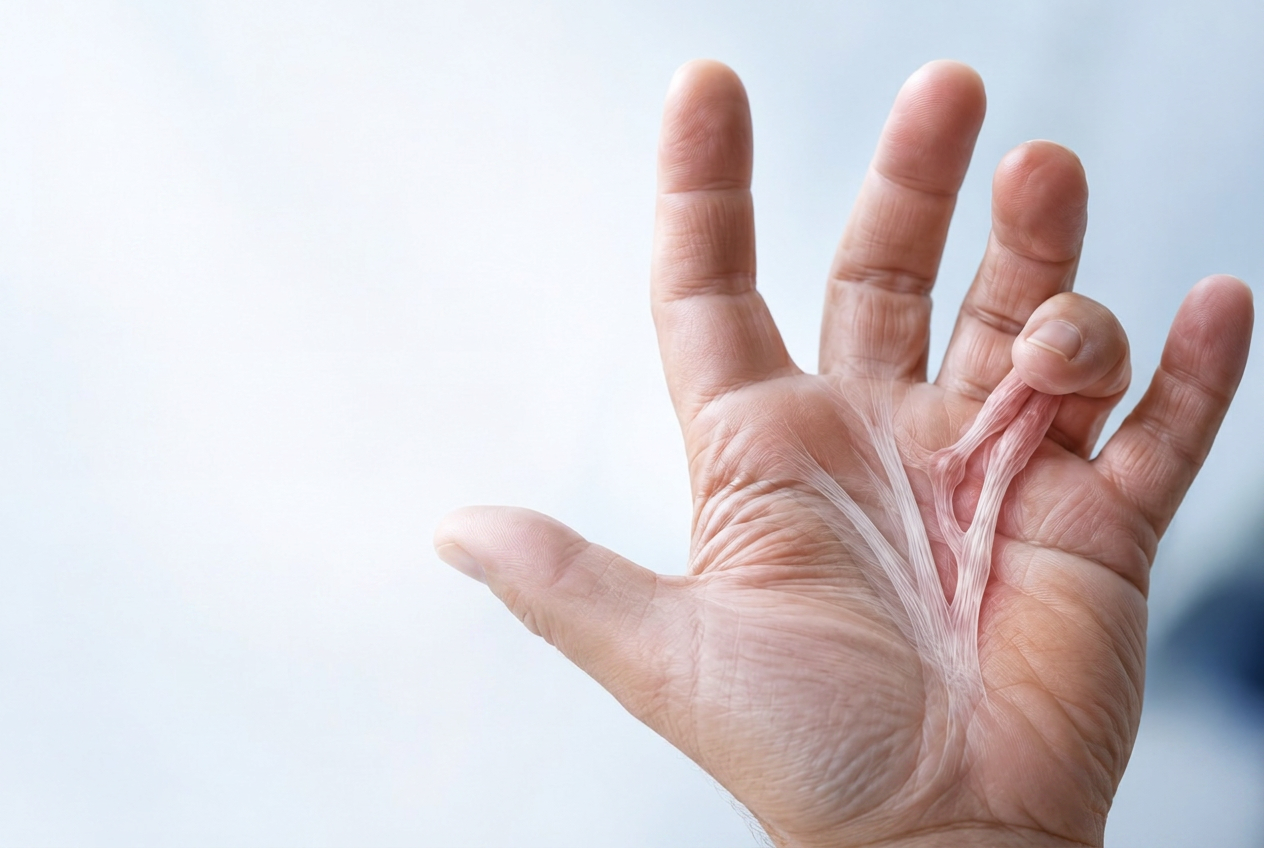
Dupuytren's Disease (Dupuytren's Contracture): Symptoms, Causes, Treatment and Recovery
An evidence-based guide to Dupuytren's disease: palm nodules, finger contracture, the tabletop test, needle fasciotomy, fasciectomy, recovery and recurrence.