Hip Arthritis and Hip Replacement: Benefits, Risks, Recovery and What to Expect
Hip replacement surgery is an operation that replaces the damaged surfaces of the hip with artificial components. It is most often considered when hip arthritis causes persistent pain, stiffness and loss of mobility despite appropriate non-surgical treatment.
For many people, the main goal is not simply to improve an X-ray. It is to reduce pain, restore independence and make everyday activities — such as walking, sleeping, climbing stairs and putting on shoes — easier again.
This guide explains when hip replacement may be considered, what the operation involves, how to prepare, the potential benefits and risks, and what recovery commonly looks like. Individual pathways vary between hospitals and surgeons, so your own surgical team's advice should always take priority.
Key points
- Hip replacement is usually considered when hip pain and loss of function remain significant despite non-surgical treatment.
- The damaged ball and socket are replaced with metal, ceramic and/or highly durable plastic components.
- The main expected benefit is substantial pain relief, with improved walking and day-to-day function.
- Recovery begins soon after surgery, often with assisted walking on the day of the operation.
- Preparation, exercise, wound care and following your own team's rehabilitation advice all influence recovery.
What is a hip replacement?
The hip is a ball-and-socket joint. The ball is formed by the head of the thigh bone, or femur, and the socket is part of the pelvis, called the acetabulum. Smooth cartilage normally allows these surfaces to move against one another with very little friction.
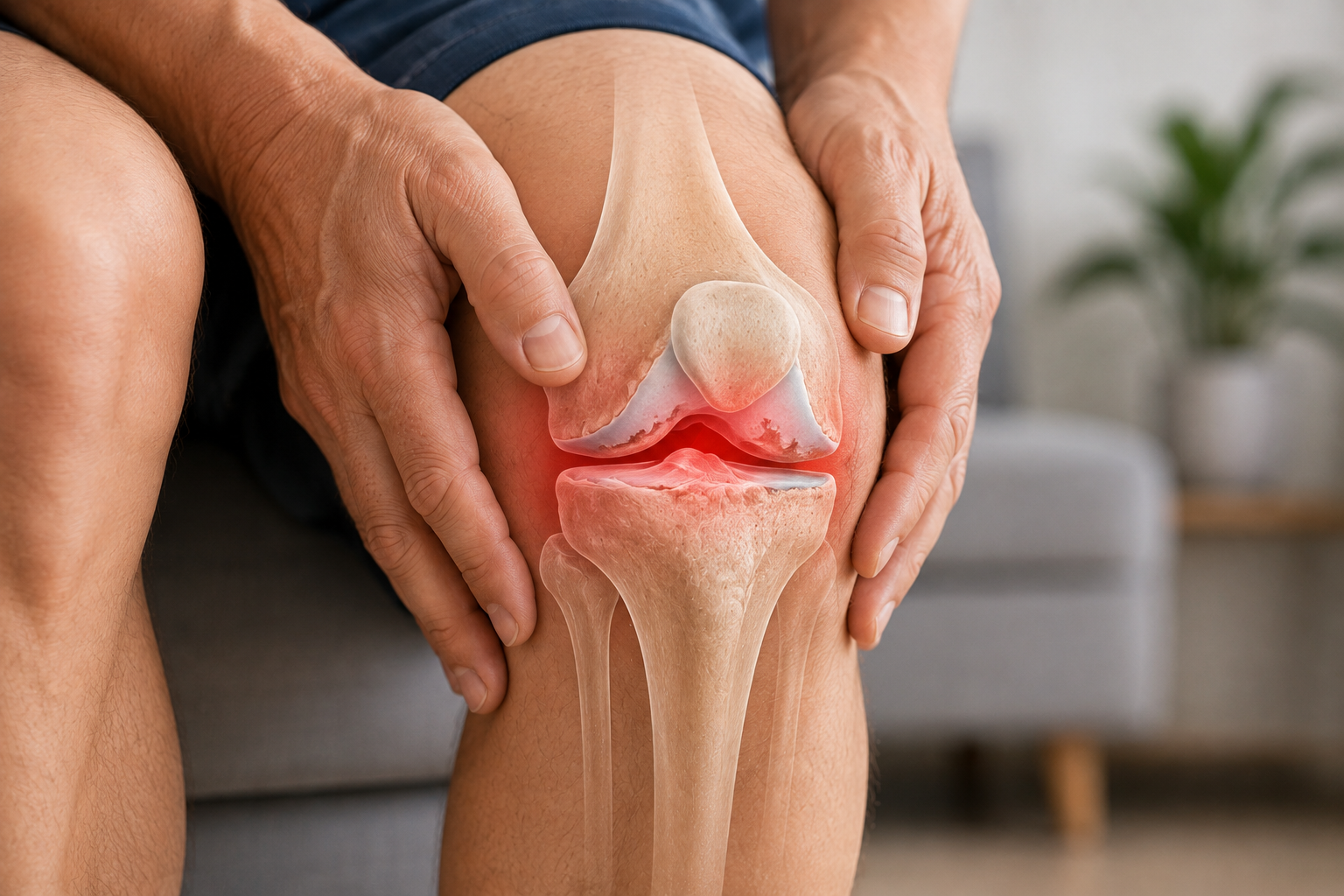
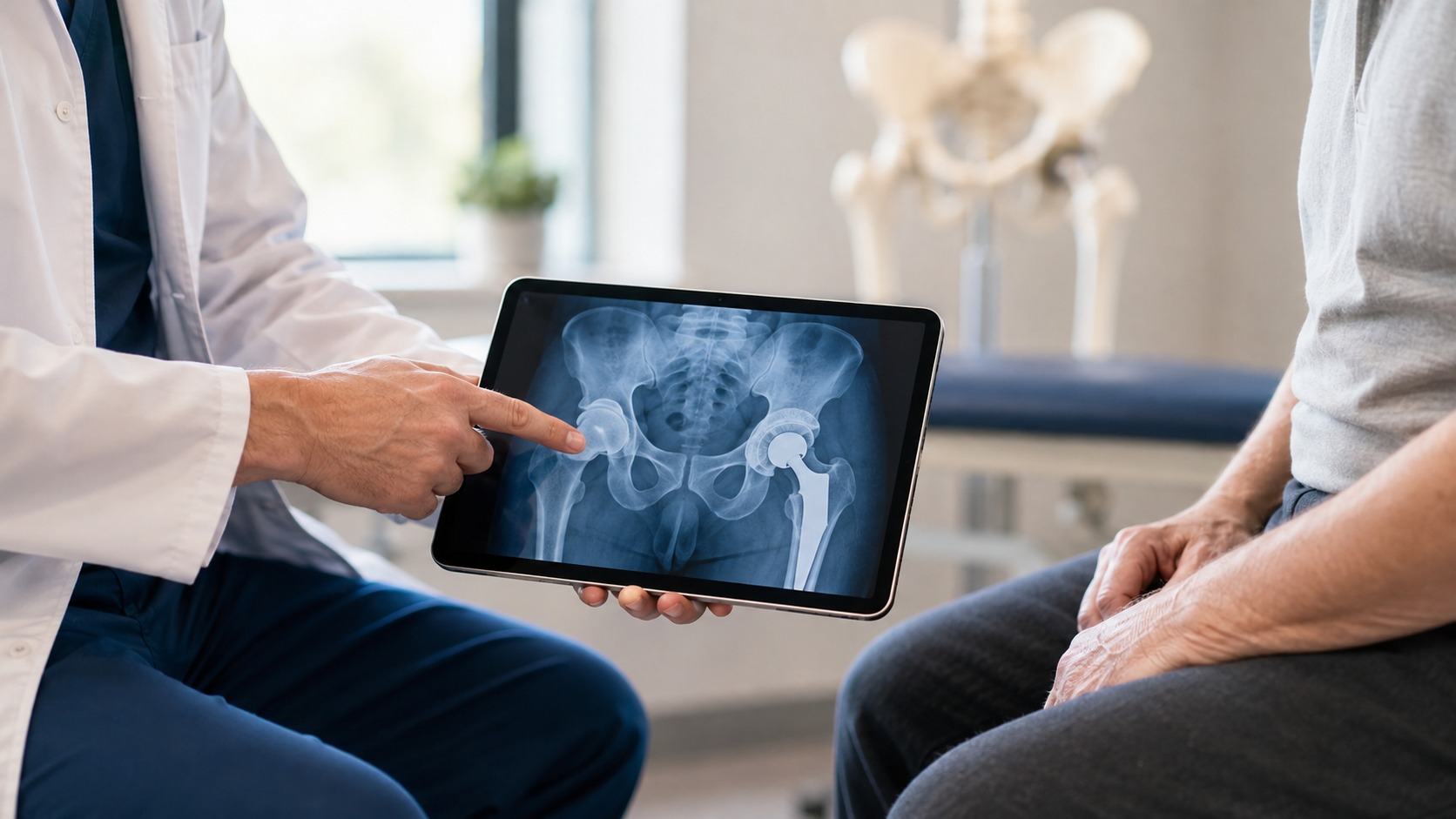
In osteoarthritis, the cartilage becomes thinner and the joint surfaces become rougher. The joint space may narrow, additional bone may form around the edges and the surrounding muscles can weaken. Importantly, the amount of change visible on an X-ray does not always match the amount of pain a person experiences.
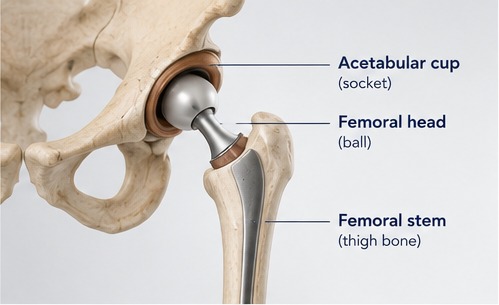
During a total hip replacement, the damaged femoral head is removed and replaced with a ball attached to a stem inside the femur. The damaged socket is replaced with an artificial cup. The components may use combinations of metal, ceramic, highly durable plastic, bone cement, or special uncemented surfaces designed to allow bone to grow onto the implant.
In practice, the ball is replaced with a metal or ceramic component and the socket with a metal shell lined with ceramic or hard plastic. Components may be cemented or uncemented.
Why might someone need hip replacement surgery?
The most common reason is osteoarthritis of the hip. Other causes of severe joint damage can include inflammatory arthritis, previous injury, infection or developmental abnormalities.
Typical symptoms of advanced hip arthritis include deep pain in the groin or front of the thigh; pain spreading to the buttock or knee; stiffness after rest; reduced hip movement; difficulty walking or climbing stairs; trouble putting on socks and shoes; disturbed sleep; a limp; and reduced strength around the hip and thigh.
Hip arthritis symptoms often fluctuate. People may experience good days and bad days, and pain can be felt in the groin, buttock, lower back, thigh or knee.
When is surgery usually considered?
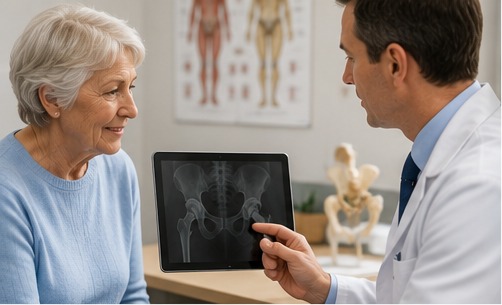
A hip replacement is not normally recommended solely because an X-ray looks severe. The decision should reflect the severity and persistence of pain; the effect on sleep and everyday life; walking distance and mobility; your ability to work or care for others; your response to exercise, pain relief and other treatment; your general health and ability to undergo surgery; and your own goals and preferences.
Surgery is consistently presented as a later option, after non-surgical measures have been tried.
What treatments are usually tried before surgery?
Not everyone with hip osteoarthritis needs an operation. Symptoms may sometimes be managed with a combination of tailored exercise, physiotherapy, pacing of activity, weight management where appropriate, walking aids, pain-relieving medication, occupational therapy and selected injections.
Exercise can improve strength, mobility and confidence. Hip osteoarthritis guidance recommends maintaining movement and strengthening the muscles around the hip, particularly the gluteal and thigh muscles.
A walking stick may reduce load through the painful hip when used in the opposite hand.
Surgery should not be rushed
Hip replacement can be highly effective, but it is still major surgery. If pain is manageable and daily function remains acceptable, continuing non-surgical treatment may be reasonable. A minority of patients remain dissatisfied after surgery, which reinforces the importance of realistic expectations and shared decision-making.
What happens during hip replacement surgery?
The operation removes the damaged joint surfaces and replaces them with artificial components. A typical procedure involves making an incision over the hip; removing the damaged femoral head; preparing the socket and inserting an artificial cup; preparing the femur and inserting a stem; attaching a new ball to the stem; then reconstructing the joint and closing the wound.
The operation may be performed using different surgical approaches. The choice of approach, implant and fixation depends on factors such as bone quality, anatomy, age, surgeon preference and implant system.

Cemented versus uncemented fixation
| Fixation | How it works | Potential advantages | Potential limitations |
|---|---|---|---|
| Cemented | Bone cement secures the implant immediately | Reliable early fixation; commonly used where bone quality is reduced | Cement technique and implant choice must be carefully matched to the patient |
| Uncemented | Bone grows onto or into a porous implant surface | Biological fixation over time | Initial stability and bone quality are important |
| Hybrid | One component is cemented and the other uncemented | Allows fixation to be tailored to the femur and socket | Depends on implant design and surgeon judgement |
What type of anaesthetic is used?
Hip replacement may be performed under a spinal anaesthetic, which numbs the lower part of the body; a general anaesthetic, which makes you unconscious; or a combination of spinal anaesthesia, sedation and local anaesthetic techniques.
The anaesthetist will discuss the most suitable option based on your health, preferences and planned procedure. Local anaesthetic is sometimes added for pain relief.
What are the benefits of hip replacement?
The main aim is to substantially reduce hip pain. Many people also experience better walking, improved sleep, greater independence, easier stair use, improved ability to dress and increased participation in normal daily activities.
However, a hip replacement does not necessarily restore the hip to how it felt before arthritis developed. The principal goals are pain relief, mobility and improved everyday function rather than a perfectly normal hip.
How long does a hip replacement last?
Most hip replacements last at least 15 years. Longevity varies according to implant type, age and activity level, body weight, bone quality, surgical factors, infection, and wear and loosening over time.
A younger patient may be more likely to require further surgery during their lifetime simply because they have more years of use ahead.
What are the risks of hip replacement?
Hip surgery is generally safe, with low overall early complication and reoperation rates. The following are recognised risks that should be discussed as part of consent: infection; blood clots in the leg or lungs; dislocation; fracture; bleeding or need for transfusion; nerve or blood-vessel injury; leg-length difference; persistent pain or stiffness; implant wear or loosening; anaesthetic complications; and the need for further surgery.
Your personal risk may be different from another patient's. It depends on factors such as age, medical conditions, medication, smoking, weight, previous surgery and the complexity of the operation.
Infection
Infection can occur in the skin, wound or around the implant. Contact your surgical team if you develop increasing redness, heat, wound discharge, fever or swelling that does not settle. Urgent review is advised for persistent swelling, redness, heat, fever or wound discharge.
Blood clots
Early movement is encouraged partly to reduce the risk of blood clots and chest complications. Hospitals may also use a combination of blood-thinning medication, compression devices or stockings, ankle exercises and early walking. The exact plan varies, so follow your own hospital's instructions rather than applying a generic timetable.
Dislocation
A dislocation occurs when the artificial ball comes out of the socket. Some patients are advised to avoid particular positions temporarily while the tissues heal. Restrictions vary according to the surgical approach and surgeon — six-week precautions are common, but these may differ between procedures and consultants.
How should you prepare for hip replacement?
Good preparation can make the early recovery period safer and more manageable.
Pre-operative assessment
Your pre-operative assessment may include a review of your medical history and medication, blood tests, a heart tracing where appropriate, infection screening, anaesthetic assessment, and planning for discharge and home support. This typically includes assessment of fitness for anaesthesia, infection screening and an occupational-therapy review of how you are likely to manage at home.
Optimising your health
Before surgery: stop smoking where possible; improve control of long-term conditions; report infections, open wounds or broken skin; maintain a balanced diet; discuss all medication with the team; and work on strength and mobility within comfortable limits.
Report infections, coughs, colds, open wounds or irritated skin, because these may delay surgery. Do not stop prescribed medication without advice — some medicines need to be altered before surgery, but the timing is individual.
Prepare your home
Useful steps include removing loose rugs and trailing cables; placing frequently used items within easy reach; arranging support for shopping, cleaning and meals; preparing comfortable, supportive footwear; checking that chairs, the bed and toilet are easy to use; and making space to move safely with crutches or a frame.

Should you exercise before surgery?
Within the limits of your pain, maintaining movement and muscle strength before surgery may make post-operative exercises easier. Pre-operative exercises can improve movement, strengthen the muscles and help you become familiar with the exercises used after surgery.
Examples may include ankle pumps, thigh-muscle contractions, gluteal contractions, supported hip abduction, gentle hip flexion and extension, sit-to-stand practice, and walking or cycling within tolerance. Your programme should be adapted if an exercise causes a marked or lasting increase in pain.

What happens in hospital?
Hospital pathways vary, but common elements include admission and final checks, confirmation of consent, review by the anaesthetist, surgery, monitoring in recovery, pain relief, eating and drinking when safe, a post-operative X-ray, assisted mobilisation, physiotherapy assessment and discharge planning.
Most people wake in the recovery area, receive fluids if needed, have post-operative imaging and begin early assisted mobilisation.

How soon will you walk?
Many patients stand and begin walking on the day of surgery or the following day, with support from a nurse or physiotherapist.
Unless instructed otherwise, some patients are allowed to place full weight through the operated leg. Your own surgeon's instructions take priority, because weight-bearing may be restricted in certain situations.
How long will you stay in hospital?
Length of stay depends on your general health, mobility, pain control, home circumstances, the hospital pathway and whether any complications occur.
Some modern programmes discharge suitable patients on the same day or the following day; other pathways describe a stay of up to 48 hours. Neither should be treated as universal.
Hip replacement recovery timeline
Recovery is gradual rather than immediate. Swelling, bruising, tiredness and muscle soreness are common in the early weeks.
| Stage | What commonly happens | Main priorities |
|---|---|---|
| Day 0–2 | Assisted standing and walking; pain relief; exercises begin | Safe mobilisation, clot prevention, wound monitoring |
| Weeks 1–2 | Walking with aids; swelling and bruising; home exercises | Regular movement, medication, wound care, rest |
| Weeks 3–6 | Gradual increase in walking and confidence | Improve gait, strength and independence |
| Weeks 6–12 | Many daily activities become easier | Progressive strengthening and endurance |
| 3–6 months | Continued gains in strength and function | Return towards normal activity where appropriate |
| Up to 12 months | Subtle improvements may continue | Maintain fitness, strength and healthy habits |

Exercises after hip replacement
Exercise is an important part of recovery, but the correct programme varies. Start with simpler exercises and progress as they become easier, building up gradually — early exercise may be challenging.
Early exercises may include ankle pumps, quadriceps contractions, gluteal contractions, supported hip movements, weight shifting and walking practice.
Later progression may include step-ups, partial squats, hip abductor strengthening, balance work and more demanding walking.
Do not use a generic online exercise plan as a substitute for your own rehabilitation instructions. Surgical approach, muscle repair, bone quality and complications can all alter what is safe.
What discomfort is normal?
Mild muscle soreness and some swelling can occur as activity increases. Swelling may temporarily increase after exercise but should improve with rest and elevation.
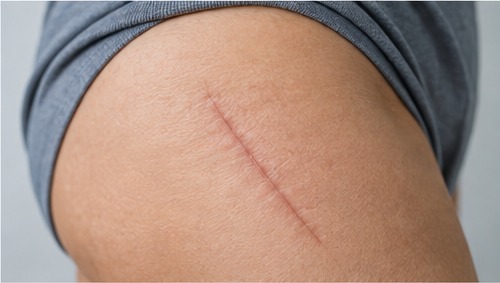
Seek advice if pain or swelling is severe, worsening or associated with redness, heat, fever or wound leakage.
Driving, work and everyday activities
Driving
Return to driving depends on which hip was operated on, the type of car, your pain and strength, whether you are still using sedating medication, your ability to perform an emergency stop, and advice from your surgeon and insurer.
Do not drive until you can control the vehicle safely and have been cleared according to your local pathway.
Work
Return to work varies greatly. Desk-based work may be possible earlier, while jobs involving prolonged standing, lifting, climbing or manual work usually require longer. A phased return may be helpful.
Sleeping
Many people sleep on their back initially. Side sleeping may be allowed later, sometimes with a pillow between the knees. Follow the instructions from your surgical team, particularly if movement restrictions have been prescribed.
Stairs
Before discharge, patients may practise stairs if needed. One common method is to lead with the non-operated leg going up and the operated leg going down, one step at a time, but technique should be taught individually.
What activities are possible after recovery?
Most people are encouraged to remain active after hip replacement. Common lower-impact activities include walking, cycling, swimming, golf, gentle gym work and low-impact exercise classes.
Higher-impact activities place greater repetitive load through the implant. Whether running, jumping or contact sport is appropriate should be discussed with your surgeon.
The aim is not inactivity. Regular exercise supports cardiovascular health, muscle strength, balance and long-term function.

When should you seek medical advice after surgery?
Contact your surgical team urgently if you develop increasing wound redness, heat or discharge; fever or feeling systemically unwell; worsening swelling that does not settle; sudden severe pain; inability to bear weight; new shortening or deformity of the leg; calf pain or marked one-sided leg swelling; chest pain; or sudden breathlessness.
Urgent assessment is advised for a suddenly swollen, hard or painful leg, or wound inflammation or discharge, and emergency assessment for sudden severe pain preventing weight-bearing.
Call 999 in the UK for severe breathlessness, chest pain, collapse or another life-threatening emergency.
Non-surgical care versus hip replacement
| Feature | Non-surgical treatment | Hip replacement |
|---|---|---|
| Main aim | Manage pain and maintain function | Replace damaged surfaces and reduce severe joint pain |
| Examples | Exercise, weight management, medication, walking aid, physiotherapy | Total hip replacement |
| Recovery burden | Usually low | Requires surgery and rehabilitation |
| Main advantages | Avoids surgical risk; can be effective for mild or moderate symptoms | Often provides greater pain relief when arthritis is advanced |
| Main limitations | May not adequately control severe symptoms | Surgical risks; recovery period; implant may eventually wear or loosen |
| Best suited to | Manageable symptoms and acceptable function | Persistent pain and disability despite appropriate treatment |
What is the long-term outlook?
For appropriately selected patients, hip replacement can provide substantial pain relief and improved mobility for many years.
However, no operation can guarantee complete elimination of pain, full restoration of movement, equal leg length, unrestricted return to every activity, or that revision surgery will never be required.
The best decision is therefore based on whether the expected improvement is worth the risks and recovery involved for that individual.
Top tips
- Write down your goals — think about which activities pain currently prevents you from doing.
- Build strength before surgery by following a suitable exercise programme within your tolerance.
- Prepare your home early: remove trip hazards and arrange help with heavier tasks.
- Report infections or broken skin — even minor problems may need assessment before surgery.
- Follow your own team's instructions: weight-bearing, wound care, precautions and exercises are not identical for every patient.