

Ankle Sprains: Symptoms, Treatment and Recovery
An ankle sprain is one of the most common injuries seen in emergency departments, sports clubs and GP surgeries. Every year, millions of people twist an ankle while walking, running, playing sport or simply stepping awkwardly off a kerb.
The good news is that most ankle sprains heal completely without surgery. The key is getting the diagnosis right, treating the injury appropriately in the first few days, and following a structured rehabilitation programme.
This guide explains what happens to the ligaments, how sprains are graded, what to do in the first 72 hours, and the rehabilitation that protects you from spraining the same ankle again.
Key points
- Most ankle sprains involve the ligaments on the outside (lateral side) of the ankle.
- Around 80–90% recover without surgery.
- Early movement and gradual weight-bearing usually help recovery.
- Recovery takes around 6 weeks, although swelling may last 3–6 months.
- Balance exercises dramatically reduce the risk of another sprain.
What is an ankle sprain?
An ankle sprain is an injury to one or more ligaments around the ankle. Ligaments are strong bands of connective tissue that connect one bone to another and help stabilise joints.
When the foot twists beyond its normal range, the ligaments become stretched or torn. The most commonly injured ligaments are on the outside (lateral side) of the ankle.
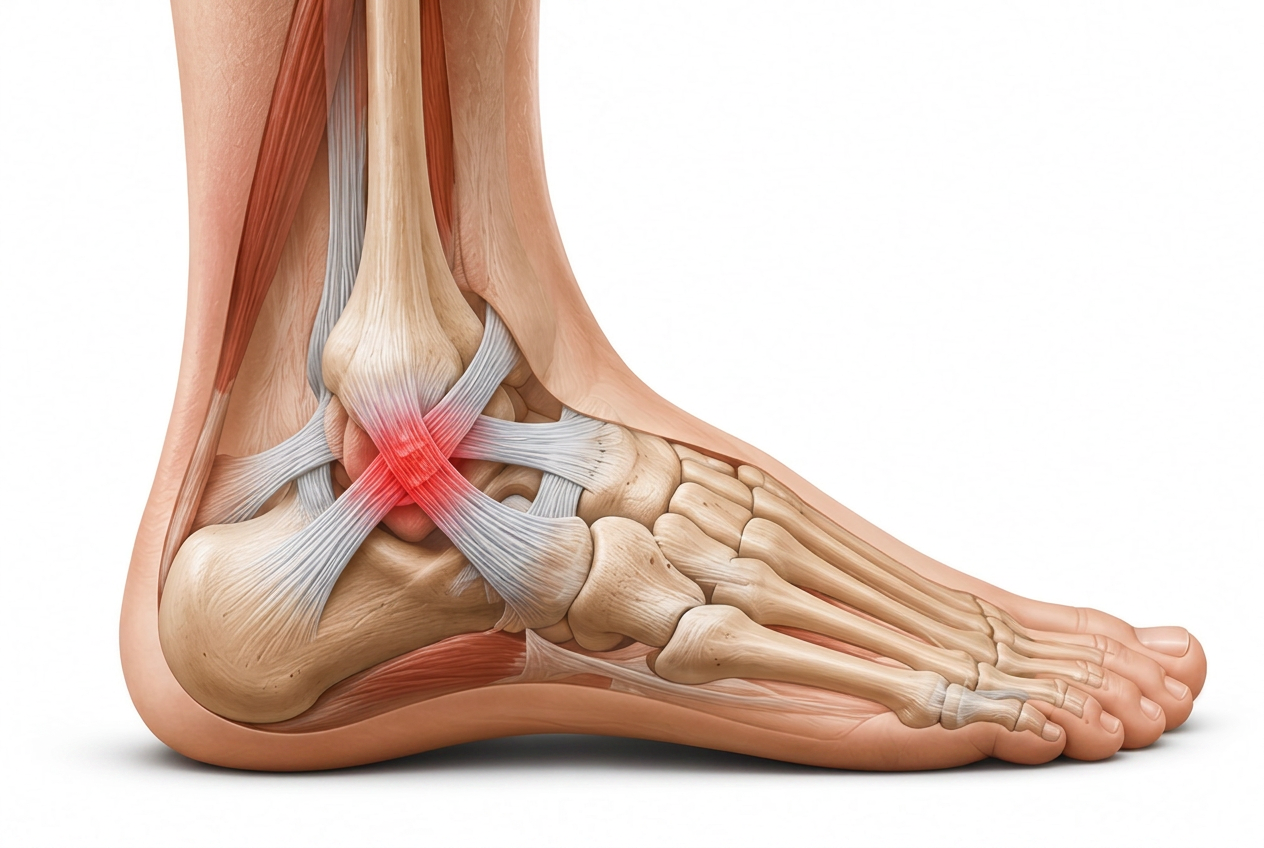
Which ligaments are usually injured?
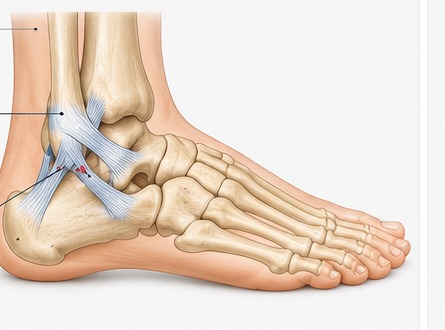
The lateral ligament complex consists of three ligaments:
Anterior talofibular ligament (ATFL) — the most commonly injured ligament, usually torn when the foot rolls inward.
Calcaneofibular ligament (CFL) — often injured with more severe sprains.
Posterior talofibular ligament (PTFL) — rarely injured except in major trauma.
What causes an ankle sprain?
Common causes include sport — particularly football, rugby, netball, basketball, running and hiking — as well as slipping on uneven ground, missing a step and falling awkwardly.
Most injuries occur when the foot suddenly rolls inward (an inversion injury).
What are the symptoms?
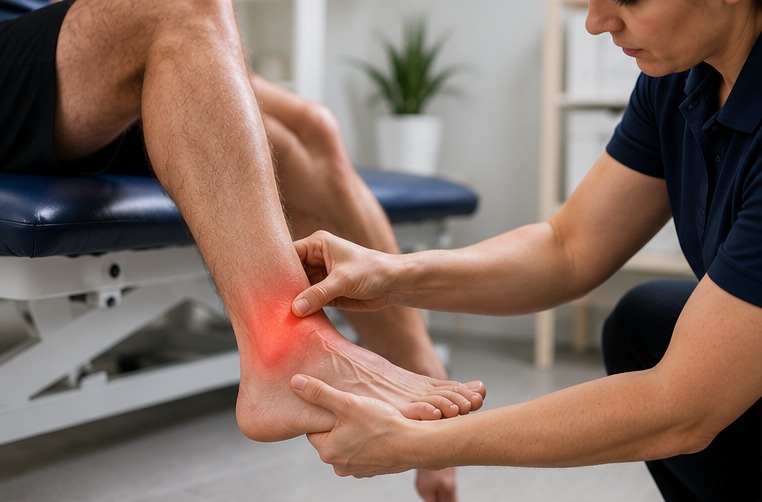
Typical symptoms include sudden pain, swelling, bruising, difficulty walking, tenderness over the ligaments and reduced movement. Some people hear or feel a “pop” at the moment of injury.
Do I need an X-ray?
Not everyone needs an X-ray. Doctors often use the Ottawa Ankle Rules to decide whether an X-ray is necessary. An X-ray is usually recommended if there is bone tenderness, an inability to bear weight, or concern about a fracture.
Many ankle sprains have completely normal X-rays, because ligaments do not show up on standard X-rays.
What happens to the ligament?
Ligaments heal in three overlapping stages. Understanding where you are in that process helps set realistic expectations.
| Stage | Timescale | What is happening |
|---|---|---|
| 1 — Inflammation | 0–5 days | Blood and healing cells arrive; swelling, bruising and pain. |
| 2 — Repair | 1–6 weeks | New collagen fibres form; the ligament heals but remains relatively weak. |
| 3 — Remodelling | 6 weeks to many months | The ligament gradually strengthens; balance, strength and proprioception keep improving. |
How bad is my ankle sprain?
| Grade | Injury | Typical features | Recovery |
|---|---|---|---|
| Grade I | Small stretch of the ligament | Mild swelling, walking possible | 2–4 weeks |
| Grade II | Partial tear | Moderate swelling, bruising, limping | 6–8 weeks |
| Grade III | Complete ligament rupture | Significant swelling, instability, difficulty walking | Specialist assessment may be needed; may sometimes require surgery |
The first 72 hours
Most modern guidelines recommend protecting the ankle, resting relatively rather than completely, and using ice, compression and elevation to control pain and swelling.
Protect
Avoid another twisting injury. Use a supportive shoe, brace or boot if advised.
Relative rest
Avoid high-impact activity, but continue gentle movement.
Ice
Apply wrapped ice for around 10–20 minutes every few hours during the first couple of days to reduce pain and swelling. Never place ice directly onto the skin.
Compression
Some clinicians recommend compression sleeves or bandages. Evidence that they improve healing is limited, although many people find them comfortable.
Elevation
Raise the ankle above heart level whenever possible during the first few days. This helps reduce swelling.
Should I walk on it?
Yes — if you can. Modern research consistently shows that early weight-bearing is usually better than prolonged immobilisation. Walking encourages circulation, ligament healing, reduced stiffness and faster recovery.
You may need crutches initially if walking is very painful, but most people should gradually increase weight-bearing as comfort allows. NHS guidance notes that early weight-bearing generally helps ankle sprains heal more quickly.
Pain relief
Simple painkillers are usually sufficient, such as paracetamol or ibuprofen where appropriate. Always follow the advice on the packaging or from your healthcare professional.
Rehabilitation
Rehabilitation is the most important part of recovery. Without it, the ankle remains weak and unstable.
Stage 1 (Week 1) — gentle movement
Move the ankle up and down, in and out, and in circles. Repeat several times each day.
Stage 2 (Weeks 2–6) — flexibility and strength
Progress to calf stretches, heel raises, towel stretches and walking normally.
Stage 3 (After 6 weeks) — balance training
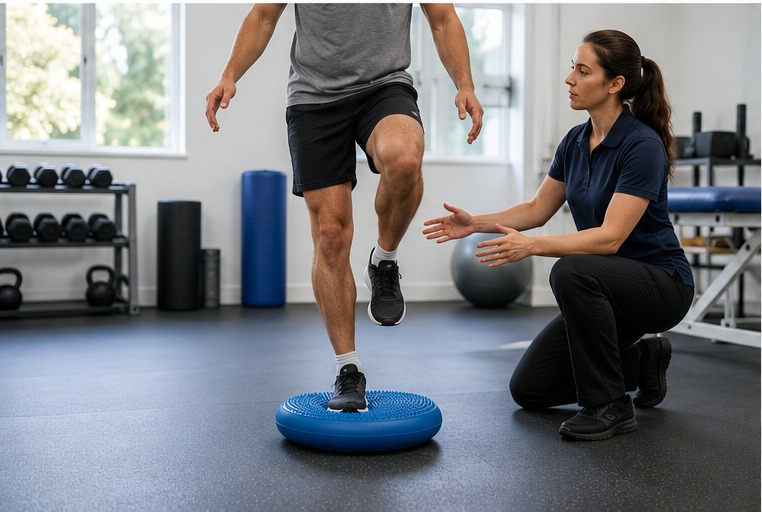
Balance exercises retrain the muscles that protect the ankle. Examples include standing on one leg, balancing with your eyes closed, balancing on a cushion and wobble board exercises. These are among the most effective ways to prevent future sprains.
When can I return to sport?
Before returning to competitive sport you should have full movement, full strength, no swelling, and be able to hop, run and change direction comfortably.
Progress in steps: walking → jogging → running → training → competition.

Will I need surgery?
Almost never — most ankle sprains heal without surgery. Surgery may occasionally be considered if repeated ankle instability persists, multiple sprains continue despite physiotherapy, large ligament injuries fail rehabilitation, or associated cartilage injuries are present.
Possible complications
Most people recover well. Occasionally problems include chronic instability, repeated sprains, persistent swelling, stiffness, cartilage injury and tendon injury.
Persistent pain beyond 8–12 weeks should be reviewed by a healthcare professional.
Red flags — when should I seek urgent medical advice?
Seek urgent assessment if you have severe deformity, an inability to bear weight immediately after injury, numbness, a cold or pale foot, severe pain that is getting worse, increasing redness or fever, or significant calf swelling or chest pain (which could indicate a blood clot).
Frequently asked questions
Can I keep walking?
Usually yes, provided you can tolerate it and gradually increase weight-bearing.
How long will swelling last?
Most swelling settles over 6 weeks, but mild swelling may persist for several months.
Should I wear an ankle brace?
A brace can provide comfort and support in the early stages or when returning to sport, but it should not replace rehabilitation exercises.
Can I drive?
Only drive when you can comfortably perform an emergency stop and fully control the vehicle without pain or restriction.
Will it happen again?
Once you have sprained an ankle, your risk of another sprain increases. Balance and strengthening exercises can significantly reduce this risk.
Top tips
- Move early — gentle movement and gradual weight-bearing beat prolonged rest.
- Protect the ankle from a second twist in the first few weeks, especially on uneven ground.
- Ice for 10–20 minutes at a time, wrapped, never directly on the skin.
- Do not stop rehab when the pain goes: balance training is what prevents the next sprain.
- Get reviewed if you cannot bear weight, or if pain and instability persist beyond 8–12 weeks.
Related articles

Achilles Tendinopathy: Symptoms, Causes, Treatment and Recovery
Learn about Achilles tendinopathy, including symptoms, diagnosis, evidence-based treatment, exercises, recovery and when surgery may be needed.

Plantar Fasciitis (Plantar Fasciopathy): Symptoms, Treatment and Recovery
An evidence-based guide to plantar fasciitis: symptoms, causes, treatments, exercises, recovery and when to seek medical advice.

Bunion (Hallux Valgus): Symptoms, Treatment and Surgery
Learn about bunions (hallux valgus), including symptoms, causes, footwear advice, non-surgical treatment and when surgery may be appropriate.