
Morton's Neuroma: Everything You Need to Know
A sharp, burning pain in the ball of the foot can make even short walks uncomfortable. Many people describe the sensation as though they are walking on a pebble, standing on a marble, or even experiencing an electric shock into their toes. These are classic symptoms of Morton's neuroma.
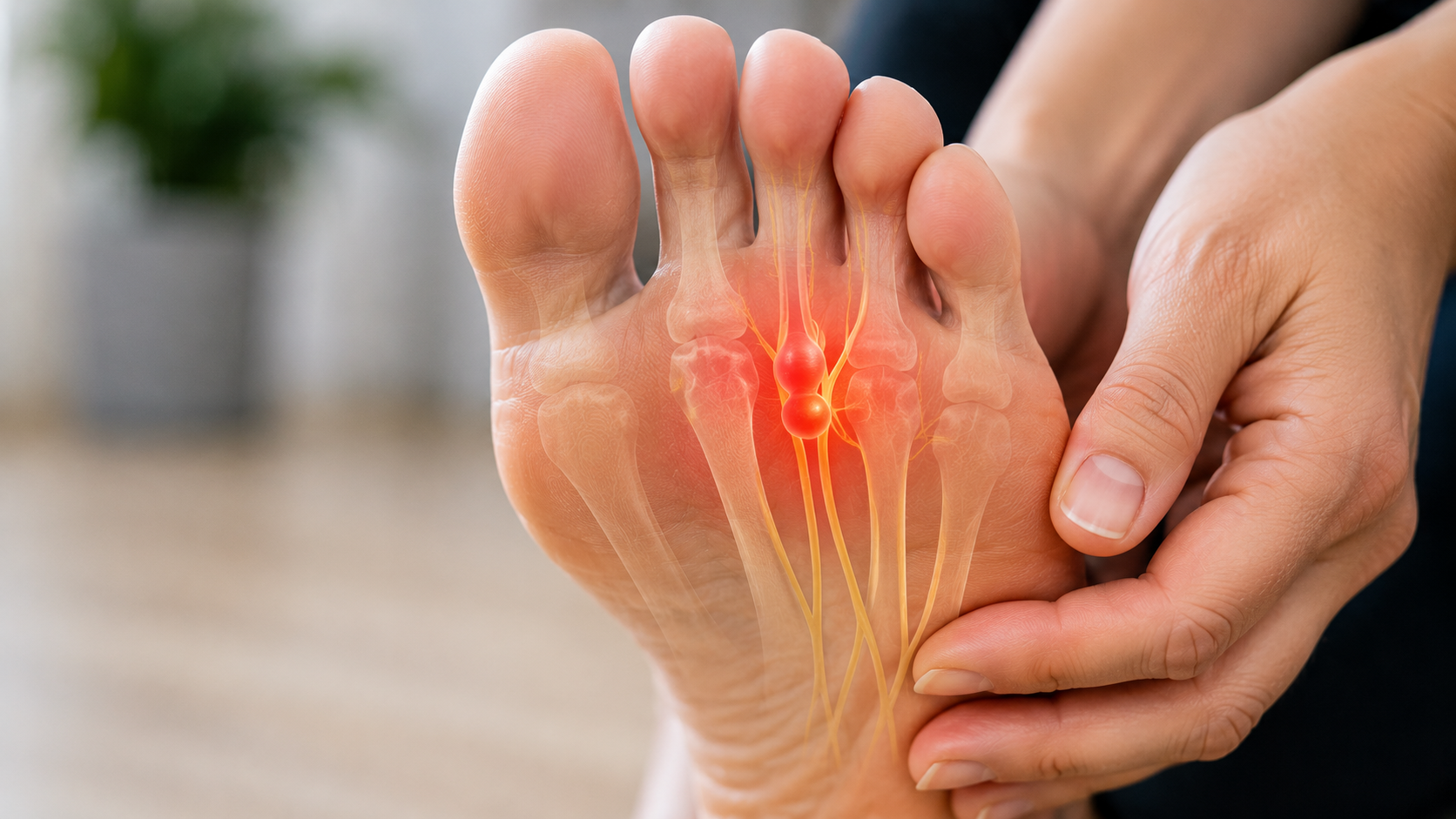
Despite its name, a Morton's neuroma is not a cancer and not a true tumour. Instead, it is a thickening of one of the small nerves that runs between the toes. As the nerve becomes repeatedly irritated and compressed, it becomes swollen and increasingly sensitive, causing pain, tingling and numbness.
The condition most commonly affects the nerve between the third and fourth toes, although it can occasionally occur elsewhere in the forefoot. It is considerably more common in women than men and is often associated with narrow shoes, high heels or foot shape abnormalities.
The encouraging news is that many people improve with simple measures such as changing footwear, using insoles and reducing pressure on the nerve. When symptoms persist despite these treatments, injections or surgery can provide excellent relief.
Key points
- Morton's neuroma is a thickening of one of the small nerves between the toes, most commonly between the third and fourth toes.
- Typical symptoms include burning pain, tingling, numbness and the sensation of walking on a pebble or marble.
- Footwear modification and reducing pressure on the nerve are the cornerstone of treatment.
- Steroid injections can help many people with persistent symptoms.
- Surgery is usually reserved for patients whose symptoms fail to improve with non-surgical treatment and provides good pain relief for most patients.
What is Morton's neuroma?
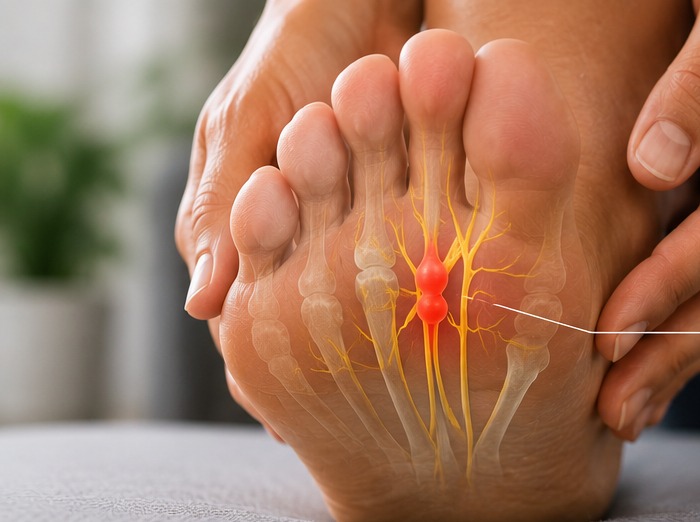
Morton's neuroma is a thickening of one of the plantar digital nerves that runs between the metatarsal bones in the forefoot. These nerves provide sensation to the toes.
As the nerve passes underneath the ligament joining two metatarsal bones, it travels through a naturally tight space. Repeated pressure and irritation can cause the nerve to become swollen and surrounded by scar tissue, making it even more susceptible to compression whenever you stand or walk.
Although the name contains the word neuroma, it is not a true tumour. Instead it represents nerve irritation, thickening of the nerve, inflammation and scar tissue formation around the nerve.
The condition most commonly affects the nerve between the third and fourth toes, accounting for around three-quarters of cases, while the space between the second and third toes is less commonly involved.
Why does it develop?
The exact cause is not fully understood, but repeated compression of the nerve is believed to play the central role. As the nerve is squeezed repeatedly during walking, inflammation develops. Over time the nerve becomes thicker and less able to glide normally, creating a cycle of increasing irritation and pain.
Tight or narrow shoes
One of the most common contributing factors is footwear. Shoes that squeeze the toes together, have a narrow toe box or have high heels increase pressure across the forefoot and compress the nerve. This explains why symptoms often improve after removing shoes.
High heels
High heels shift body weight forwards onto the ball of the foot. This increases pressure directly over the nerve and is one reason why women develop Morton's neuroma much more frequently than men — patient information leaflets report women are affected around 8–10 times more often.
Foot shape
Certain foot shapes increase the likelihood of nerve irritation, including bunions, hammer toes, flat feet and high arches. These conditions alter the mechanics of the forefoot and may increase pressure on the digital nerve.
Sport and repetitive loading
Activities involving repeated impact through the forefoot may contribute, including running, racquet sports, prolonged walking and occupations involving long periods of standing.
Symptoms
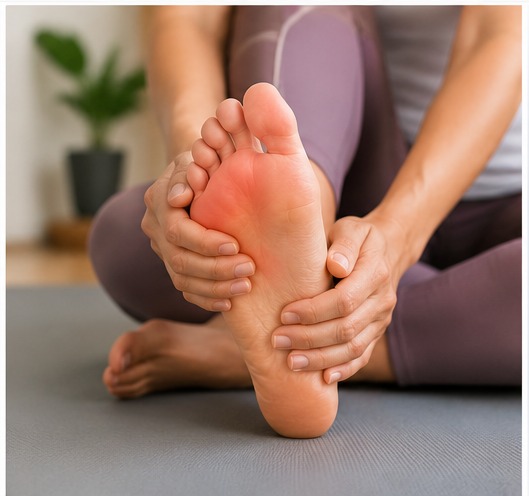
Symptoms usually begin gradually before becoming more frequent over time. Burning pain is typically felt in the ball of the foot, between the third and fourth toes, while standing or walking, and often eases after removing shoes.
Feeling like walking on a pebble
One of the most characteristic descriptions is: "It feels like I'm walking on a marble." Others describe a folded sock, a small stone, or something stuck inside the shoe.
Tingling and numbness
The irritated nerve may produce pins and needles, burning, numbness and electric shock-like sensations into the toes.
Pain with footwear
Symptoms are often made worse by tight shoes, high heels, prolonged standing and walking longer distances. Removing the shoe and massaging the foot frequently provides temporary relief.
Clicking sensation
Some patients notice a clicking sensation within the forefoot. Occasionally the toes appear to spread apart because of the enlarged nerve.
How is Morton's neuroma diagnosed?
Diagnosis usually begins with a careful history and examination. Your clinician will ask where the pain occurs, what shoes make it worse, whether there is numbness or tingling, and about previous foot problems.
Clinical examination
The foot is examined for tenderness between the metatarsal heads, reproduction of symptoms, foot shape, bunions, hammer toes and areas of altered sensation. A common test involves gently squeezing the forefoot while applying pressure between the affected metatarsals. This may reproduce the pain and sometimes causes an audible or palpable Mulder's click, which strongly suggests Morton's neuroma.
Ultrasound and MRI
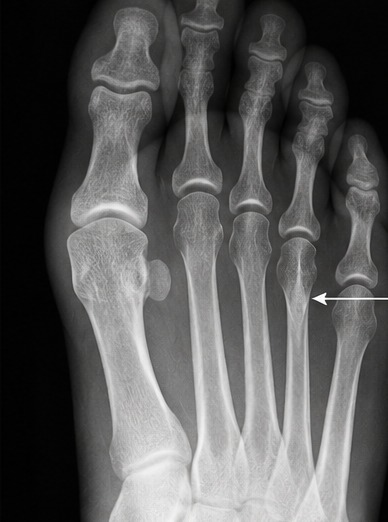
Ultrasound is an excellent investigation for Morton's neuroma: it can identify the swollen nerve, confirm the diagnosis and guide steroid injections. MRI is sometimes performed if the diagnosis is uncertain, other causes of forefoot pain need to be excluded, or surgery is being considered. X-rays do not show the nerve itself but may show narrowed spaces between the metatarsal heads and help exclude other causes of forefoot pain.
Treatment
The majority of people with Morton's neuroma improve without surgery. Treatment aims to reduce pressure on the irritated nerve, allowing symptoms to settle while helping you return to normal activities. Around half of patients can manage their symptoms without surgery, while approximately one-third improve with footwear modification alone.
Footwear modification
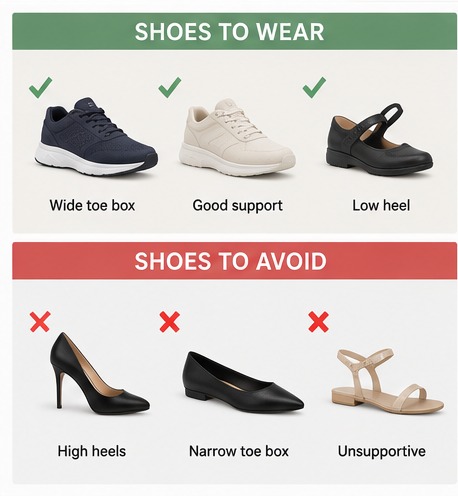
This is the single most important first treatment. Shoes should have a wide toe box, a low heel, a soft supportive sole and enough room for the toes to spread naturally. Avoid high heels, pointed shoes, narrow shoes and tight-fitting footwear.
Activity modification
If your pain is flaring, consider reducing running, jumping, long walks, prolonged standing and court sports. Low-impact alternatives such as cycling or swimming are often better tolerated. The aim is not complete rest, but reducing repetitive pressure on the affected nerve.
Ice and pain relief
Applying ice for 10–15 minutes, wrapped in a towel, several times a day may help reduce discomfort after activity. Never apply ice directly to the skin. Simple pain relief such as paracetamol, topical anti-inflammatory gel or oral anti-inflammatory medication (if appropriate for you) can help you stay active, rather than being a long-term solution.
Orthotic insoles
Many patients benefit from custom or off-the-shelf orthotic inserts. These may reduce pressure beneath the metatarsal heads, spread the forefoot slightly and decrease compression of the nerve. Metatarsal pads placed just behind the painful area can also help by redistributing pressure.
Steroid injections
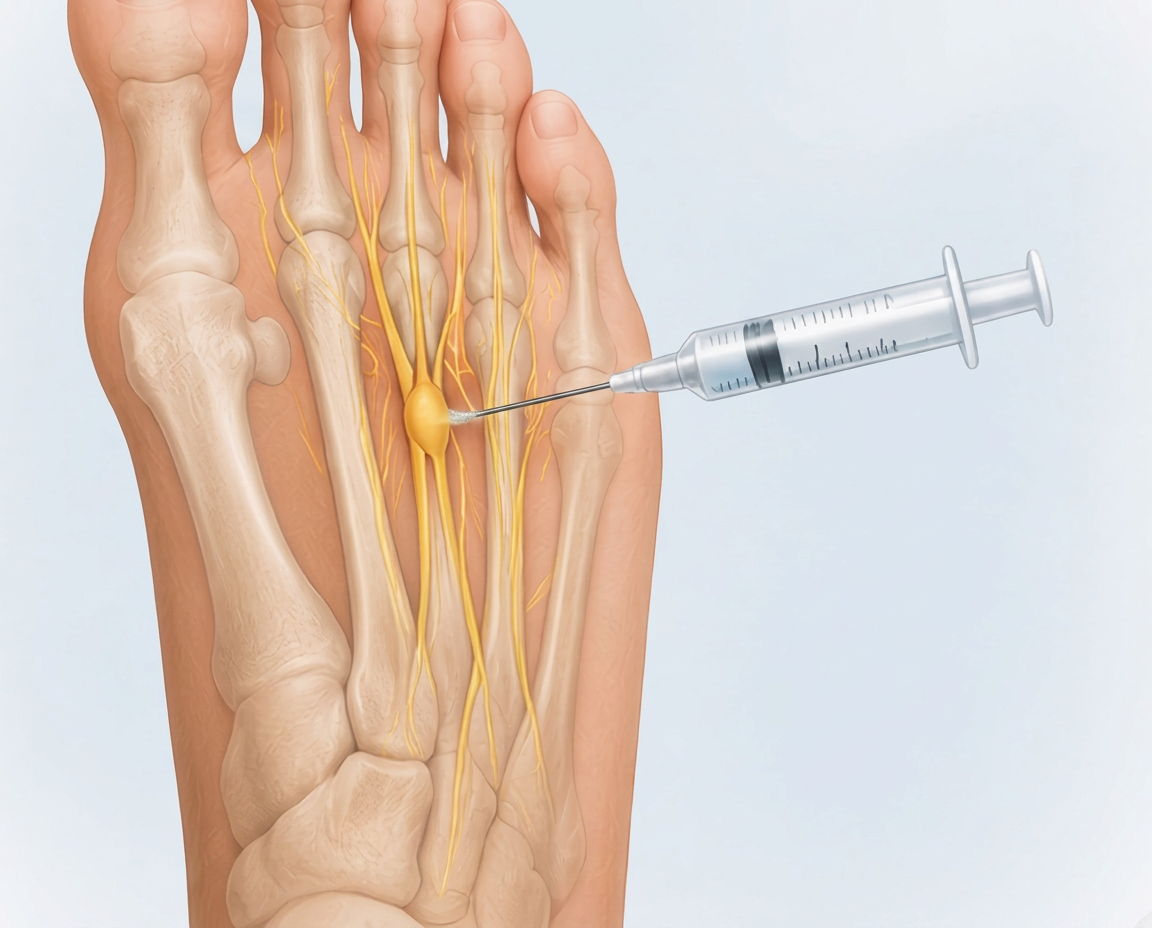
If symptoms continue despite footwear changes, a corticosteroid injection may be recommended. The injection usually contains local anaesthetic and corticosteroid, and works by reducing inflammation and nerve irritation. Patients with more recent symptoms are generally more likely to benefit, and NHS guidance notes injections may even cure the problem in some patients with early disease — although footwear modification should still continue.
Alcohol injections
Some specialist centres also offer alcohol (sclerosant) injections. These are performed under ultrasound guidance and aim to shrink or harden the painful nerve. Although some patients obtain relief, this treatment is not routinely offered everywhere and practice varies between hospitals.
When is surgery needed?
Only a minority of patients require surgery. An operation may be considered if symptoms remain severe, footwear modification has failed, injections have not helped, walking is significantly affected, or symptoms interfere with work or quality of life. The decision should be made after discussing the potential benefits and risks with your foot and ankle surgeon.
Neuroma excision
This is the most common procedure. A small incision is made on the top of the foot, the swollen nerve is identified and the diseased section of nerve is removed. Removing the nerve permanently eliminates sensation in the small area between the affected toes, but most patients do not find this troublesome. The procedure usually takes around 15 minutes and is performed as day-case surgery.
Nerve decompression
Some surgeons choose to release the ligament overlying the nerve rather than removing the nerve itself. This creates more space around the nerve and aims to reduce compression. Whether decompression or excision is more appropriate depends on the individual patient and surgeon preference.
How successful is surgery?
Overall, surgery has a high success rate. NHS patient leaflets report successful symptom relief in approximately 90% of patients, while other guidance notes that around three out of four patients have good outcomes following surgery.
Recovery after surgery
| Timeframe | What to expect |
|---|---|
| First 2 weeks | Dressing stays in place, stiff-soled postoperative shoe, foot elevated as much as possible, walking mainly through the heel |
| 2 weeks | Stitches removed, begin wearing comfortable wide shoes, gradually increase walking |
| 6 weeks | Most patients walking comfortably and returning to normal daily activities |
| 2–3 months | The sole of the foot may still feel bruised |
| 3–6 months | Residual swelling and minor tenderness gradually settle |
Possible complications
Complications are uncommon but include infection, wound healing problems, persistent pain, recurrence, scar sensitivity, permanent numbness between the toes, and formation of a stump neuroma — where the cut nerve forms another painful swelling. A stump neuroma may occasionally require further treatment or revision surgery.
Prognosis
The outlook is generally excellent. Many people obtain good symptom control simply by changing footwear, using orthotic inserts and modifying activities. For those requiring surgery, long-term pain relief is achieved in most patients. Recurrence is uncommon but can occur if a stump neuroma develops.
Frequently asked questions
Is Morton's neuroma a tumour?
No. Despite the name, it is not a cancer and not a true tumour. It is a thickened, irritated nerve.
Will it go away on its own?
Some mild cases improve with footwear modification and reduced pressure on the nerve. Persistent symptoms often require further treatment.
Can I keep running?
Many runners are able to continue after modifying footwear and reducing training temporarily. If running consistently provokes severe symptoms, it is sensible to reduce mileage until the pain settles.
Will surgery leave my toes numb?
Yes. If the nerve is removed, a small area of numbness between the affected toes is expected. Most patients adapt well and find this preferable to the previous pain.
Can it come back?
Recurrence is uncommon but possible. Occasionally the cut end of the nerve develops a stump neuroma, causing similar symptoms.
The OrthoZone take-home message
Morton's neuroma is a common cause of burning pain in the ball of the foot. Although the symptoms can be extremely uncomfortable, many patients improve with simple changes such as wider footwear and orthotic inserts. For those whose symptoms persist, injections and surgery both offer effective treatment, with surgery providing excellent long-term pain relief in appropriately selected patients.
Top tips
- Wear shoes with a wide toe box — avoid narrow or high-heeled shoes that squeeze the forefoot.
- Don't ignore early symptoms: burning pain or the feeling of walking on a pebble is often the first sign.
- Try simple treatments first — footwear changes, metatarsal pads and activity modification help many people avoid surgery.
- Injections can be effective, particularly when symptoms are more recent.
- Surgery has excellent results when needed, with most people returning to normal daily activities.
Related articles
Bunion (Hallux Valgus): Symptoms, Treatment and Surgery
Learn about bunions (hallux valgus), including symptoms, causes, footwear advice, non-surgical treatment and when surgery may be appropriate.
Plantar Fasciitis (Plantar Fasciopathy): Symptoms, Treatment and Recovery
An evidence-based guide to plantar fasciitis: symptoms, causes, treatments, exercises, recovery and when to seek medical advice.

Achilles Tendinopathy: Symptoms, Causes, Treatment and Recovery
Learn about Achilles tendinopathy, including symptoms, diagnosis, evidence-based treatment, exercises, recovery and when surgery may be needed.