
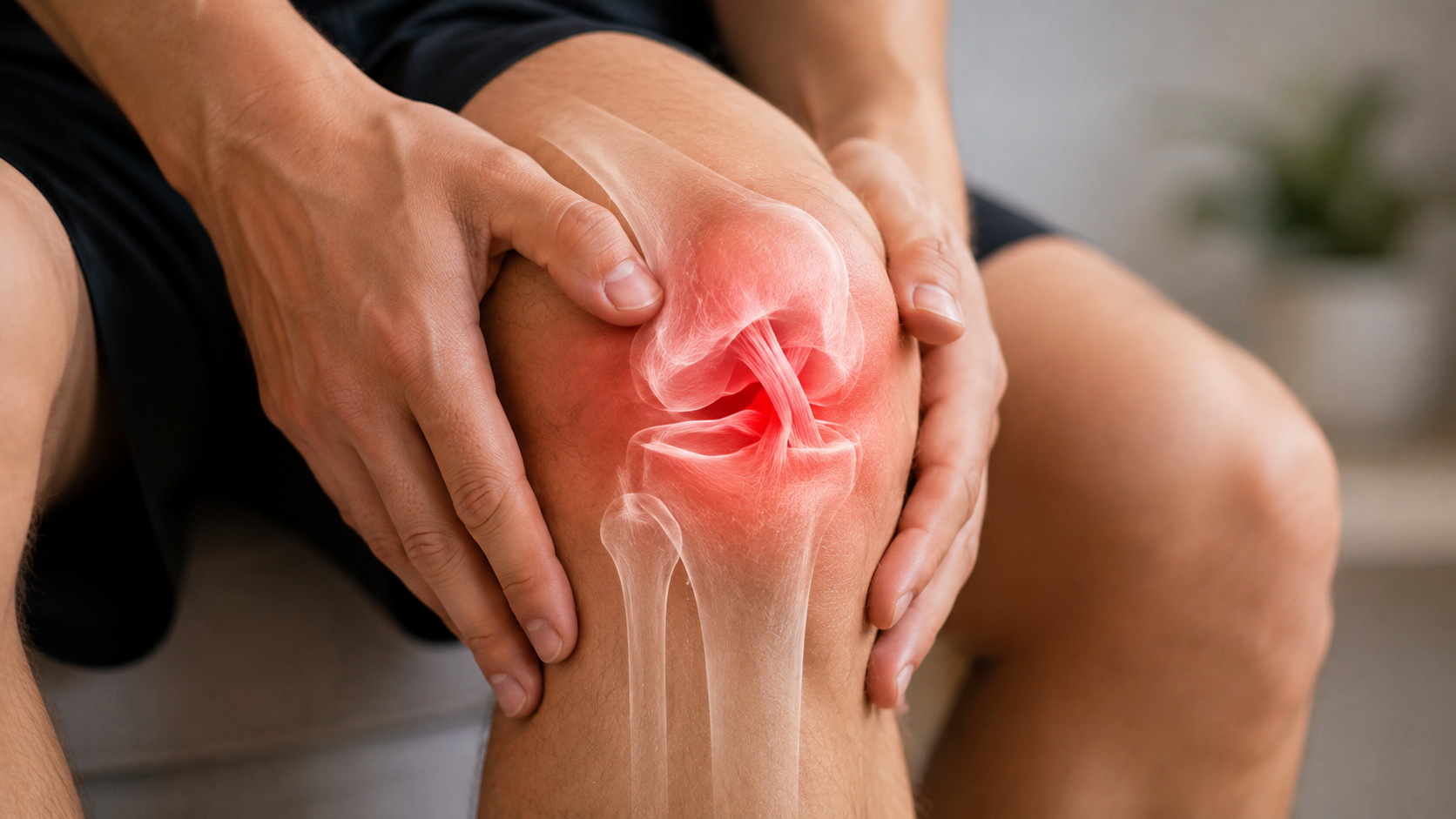
ACL Injury: Symptoms, Treatment, Surgery and Recovery
An anterior cruciate ligament injury can be frightening, particularly when it happens during sport and is followed by a pop, rapid swelling and a feeling that the knee cannot be trusted.
However, an ACL tear does not automatically mean that you need surgery. Some people regain excellent function with structured rehabilitation alone. Others continue to experience giving way, or need a stable knee for pivoting sport or physically demanding work, making ACL reconstruction more appropriate.
The most important question is not simply whether an MRI shows a torn ACL. It is whether the knee remains functionally unstable, what other structures have been damaged and what you need the knee to do.
This guide explains how ACL injuries are diagnosed, how rehabilitation works, why some people need surgery while others do not, how grafts are chosen and how return to sport should be decided.
Key points
- The ACL helps control forward movement and rotation of the shin bone, particularly during pivoting, landing and rapid changes of direction.
- A pop, rapid swelling and inability to continue playing are common, but diagnosis should be based on the history, examination and usually an MRI scan.
- Not every ACL tear requires reconstruction. The main indication for surgery is symptomatic instability, especially repeated giving way.
- Rehabilitation is essential whether treatment is surgical or non-surgical. A swollen, stiff and weak knee should be rehabilitated before reconstruction.
- Return to sport should be based on strength, movement quality, confidence and functional testing — not simply the number of months since injury or surgery.
What is the ACL?
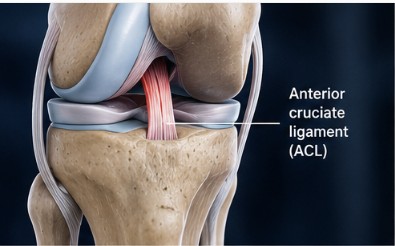
The anterior cruciate ligament, usually shortened to ACL, is one of the main stabilising ligaments inside the knee. It runs diagonally between the femur (thigh bone) and the tibia (shin bone).
The ACL helps prevent the tibia from sliding too far forwards beneath the femur. It also helps control rotation during activities such as changing direction, sidestepping, landing from a jump, stopping suddenly and turning on a planted foot.
The ACL also contributes to proprioception — the nervous system's awareness of the knee's position and movement. This helps the muscles around the knee react quickly and maintain control.
How does an ACL injury happen?
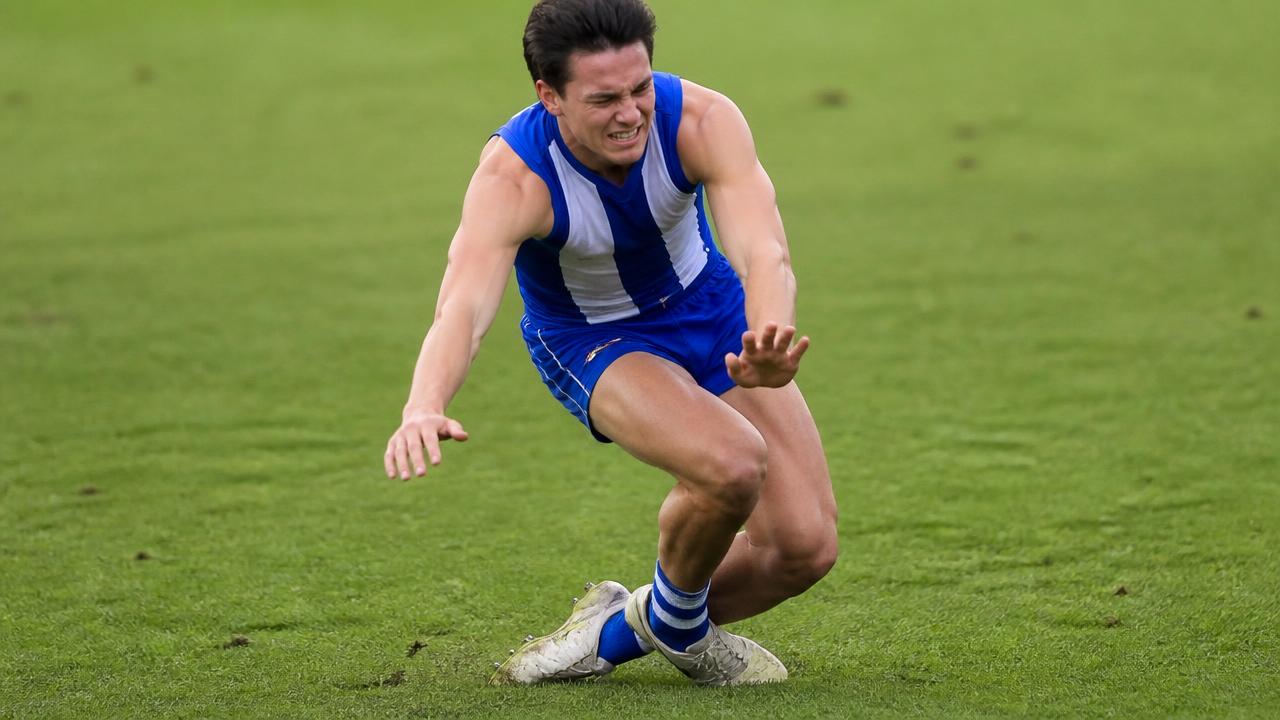
Many ACL injuries are non-contact injuries, meaning the ligament tears without another player directly striking the knee. A typical injury happens when someone lands awkwardly from a jump, stops suddenly, changes direction with the foot planted, pivots while the knee is slightly bent, loses balance while skiing, or turns unexpectedly during football, rugby, netball or basketball.
Contact injuries can also occur, particularly when a force pushes the knee into an abnormal position. Many people describe it simply: “My foot stayed planted, my body turned and my knee went the other way.”
Female athletes have a higher rate of non-contact ACL injury than similarly trained male athletes. The reasons are likely to involve a combination of anatomy, movement patterns, muscle control, hormones and other individual factors rather than one single cause.
What are the symptoms of an ACL tear?
Common symptoms at the time of injury include hearing or feeling a pop, sudden knee pain, rapid swelling (often within a few hours), inability to continue playing, difficulty walking, a sensation that the knee shifted out and back, and loss of movement.
As the swelling settles, the knee may begin to feel relatively normal during straightforward activities. The more characteristic long-term symptom is instability. This may feel like the knee giving way or buckling, a sudden shift during turning, a lack of trust in the knee, fear during pivoting or landing, and difficulty returning to sport.
Some people can run in a straight line without difficulty but experience instability when they turn or change direction.
Can the ACL be partly torn?
Yes. ACL injuries may be described as sprains, partial tears or complete ruptures. A partial tear does not automatically require surgery — what matters is whether enough functional ligament remains to control the knee.
Some partial tears behave like stable injuries. Others leave the knee almost as unstable as a complete rupture. MRI can help assess the ligament, but partial and chronic tears can be more difficult to interpret than acute complete ruptures, so the scan must be considered alongside the examination and your symptoms.
What else may be damaged?
An ACL injury is frequently more than an isolated ligament tear. Associated injuries may involve the medial or lateral meniscus, the medial or lateral collateral ligament, the posterior cruciate ligament, the joint surface cartilage, bone bruising and osteochondral injuries.
In one large series included in the British guidance, only a minority of acute ACL injuries occurred completely in isolation, and meniscal injury was particularly common. This matters because associated injuries may change how urgently treatment is needed, whether weight-bearing is restricted, whether surgery is recommended, the rehabilitation programme and the long-term outlook.
ACL tears and meniscus injuries
The menisci are two shock-absorbing structures between the femur and tibia. They help distribute load, absorb shock, support stability and protect the joint cartilage. When the ACL tears, the abnormal movement may also tear a meniscus.
A displaced meniscal tear can cause locking, catching, inability to straighten the knee, recurrent swelling and pain along the joint line. Meniscal preservation is important where possible: repairable tears are generally repaired rather than removed, particularly when ACL reconstruction is being performed at the same time. A knee that is physically locked and cannot straighten should be assessed promptly, because delay may reduce the chance of repairing a displaced meniscal tear.
When is an ACL injury urgent?
Most isolated ACL tears do not require emergency surgery. However, urgent assessment is needed if the knee is locked and cannot straighten, the knee appears dislocated, the foot is cold, pale or numb, pulses in the foot feel reduced, there is severe deformity, several ligaments may have been torn, pain and swelling are rapidly worsening, you cannot bear weight after significant trauma, or there is concern about a fracture.
A true knee dislocation or multiligament injury can damage nerves and blood vessels and may threaten the limb.
How is an ACL injury diagnosed?
Diagnosis begins with the story of the injury. Your clinician will ask how the injury happened, whether there was a pop, how quickly the knee swelled, whether you could continue playing, whether the knee has given way since, whether it locks or catches, which sports or activities you want to return to and what your work requires.
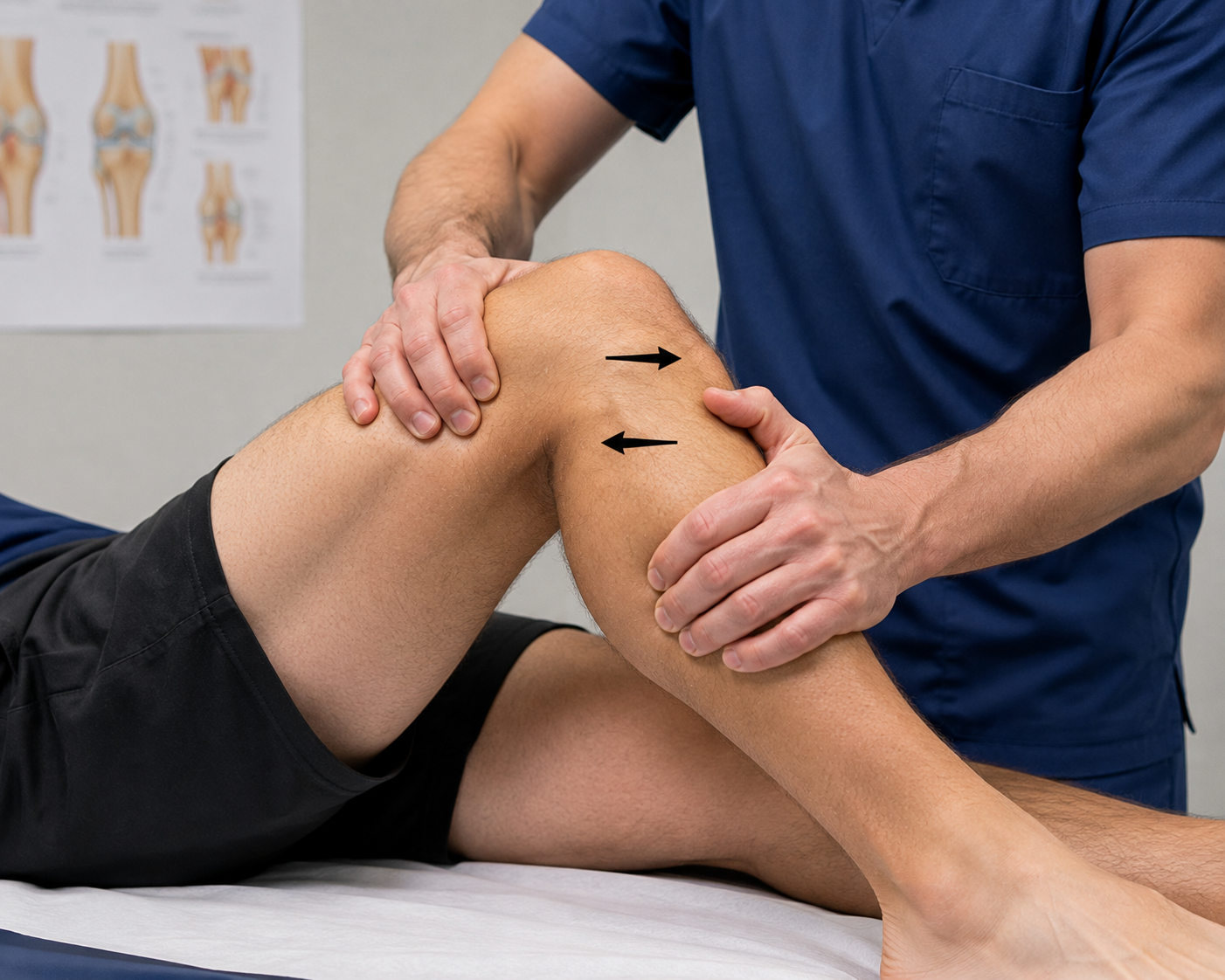
The examination assesses the whole lower limb rather than only the ACL: knee movement, swelling, ability to straighten the knee, ligament stability, meniscal signs, hip and ankle function, walking pattern and muscle strength. Common ACL tests include the Lachman test, the anterior drawer test and the pivot-shift test.
Do I need an X-ray?
An X-ray does not show the ACL itself. It may be used after an acute injury to look for fractures, an avulsion injury, changes in alignment, pre-existing arthritis, or a small fracture associated with ACL injury such as a Segond fracture. The ACL and menisci are better assessed with MRI.
Do I need an MRI scan?
MRI is usually the main scan used to assess a suspected ACL injury and associated internal damage. It can show complete or partial ACL tears, meniscal tears, collateral ligament injuries, bone bruising, cartilage injuries, osteochondral fractures and other ligament injuries. British best-practice guidance describes MRI as the imaging method of choice.
An MRI is important, but it does not make the treatment decision by itself. A dramatic-looking tear on MRI does not automatically require reconstruction if the knee functions well. Equally, persistent giving way may justify surgery even when there is little pain.
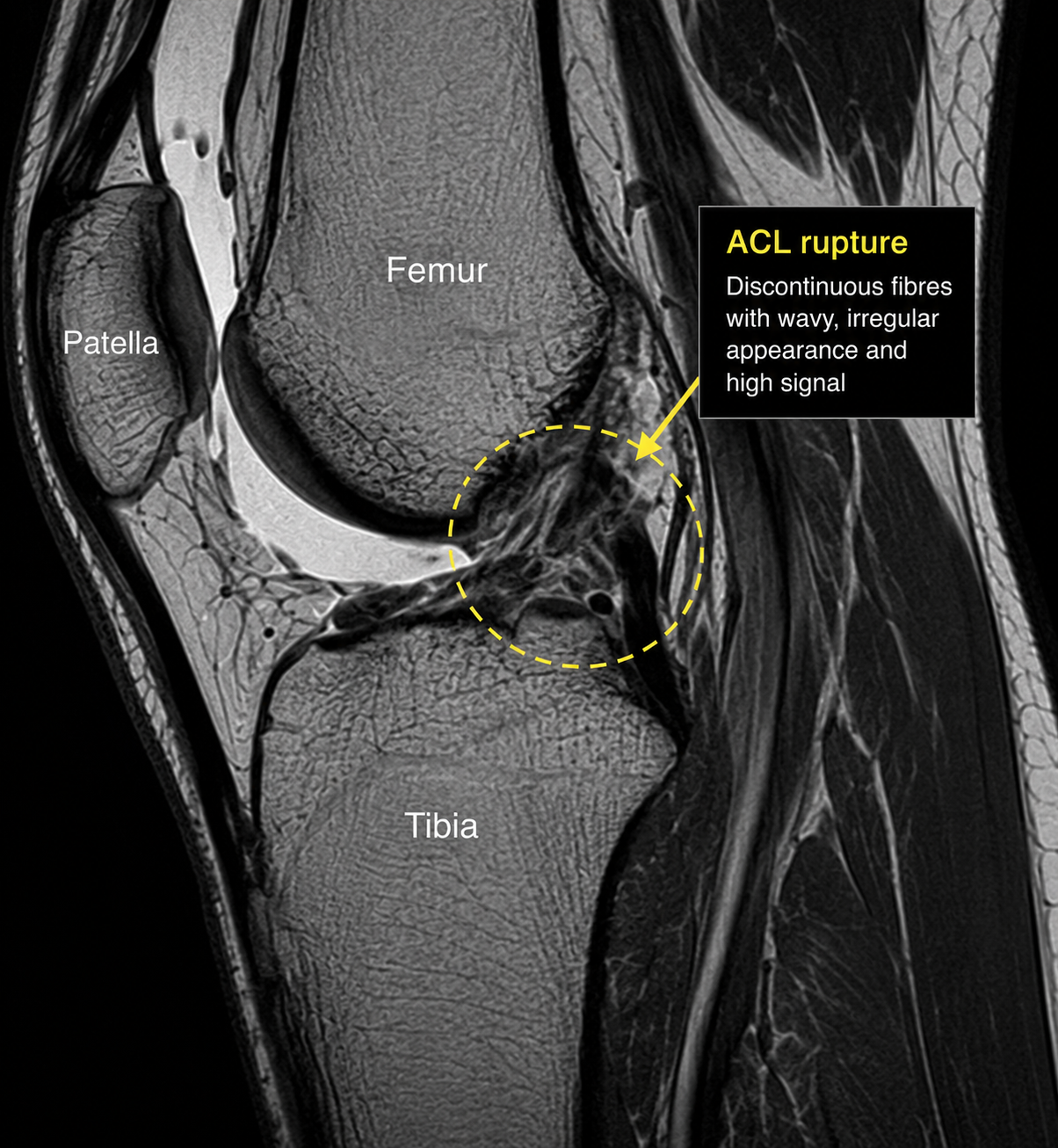
What should happen immediately after an ACL injury?
The early priorities are to settle pain, reduce swelling, regain full knee extension, restore bending, reactivate the quadriceps, walk normally and identify associated injuries.
Useful early measures include temporarily reducing activity, ice wrapped in a cloth, compression, elevation, crutches if you are limping, appropriate pain relief and early physiotherapy. The knee should not remain unnecessarily immobilised: once serious associated injuries have been excluded, gradual movement is usually encouraged.
Why is full knee extension so important?
A knee that does not fully straighten can lead to persistent limping, quadriceps weakness, altered kneecap loading, difficulty walking, poorer function and a greater risk of stiffness after surgery. For this reason, one of the first goals of rehabilitation is to regain a straight knee. Swelling often switches off the quadriceps, so treatment also focuses on restoring thigh-muscle activation.
Does every ACL tear need surgery?
No. This is one of the most important messages in modern ACL management. Some people function extremely well without an intact ACL and are sometimes described as copers. Others continue to experience giving way despite good rehabilitation and are sometimes called non-copers.
The decision should not be based solely on age, MRI appearance, whether the ligament is completely torn, being labelled “sporty”, or an assumption that all ACLs require reconstruction. The central question is whether the knee can provide reliable functional stability for the activities that matter to you. British guidance identifies symptomatic instability as the main indication for ACL reconstruction.
Who may manage an ACL tear without surgery?
Non-operative treatment may be reasonable when the knee does not repeatedly give way, straight-line activity is the main goal, the person is willing to modify high-risk sports, there is no unstable repairable meniscal tear, there is no major associated ligament injury, rehabilitation restores good strength and control, daily activities can be performed confidently, and the person prefers to avoid surgery.
Someone who mainly wants to walk, cycle, swim, use the gym, hike or run in a straight line may cope very well without reconstruction, provided the knee remains stable. Approximately half of patients in one NHS resource did not report recurrent instability after appropriate physiotherapy, although this should not be interpreted as a guaranteed figure for every population.
What does non-operative treatment involve?
Non-operative management is not simply “waiting to see what happens”. It requires a structured rehabilitation programme.
Early phase
The aims are to reduce swelling, regain full extension, restore knee bending, reactivate the quadriceps, walk without a limp and restore confidence. Exercises may include heel slides, quadriceps contractions, straight-leg raises, bridges and gentle range-of-movement work.
Strength phase
Rehabilitation then progresses to strengthening the quadriceps, hamstrings, gluteal muscles, calf muscles and the trunk and hip muscles. Exercises may include squats, split squats, sit-to-stand work, bridges, deadlifts, step exercises and single-leg strengthening.
Neuromuscular phase
The muscles must learn to respond quickly during movement. Training may include balance work, single-leg control, landing drills, hopping, acceleration and deceleration, change-of-direction drills and sport-specific tasks. Rehabilitation trains strength, but also proprioception, coordination and trust in the knee.
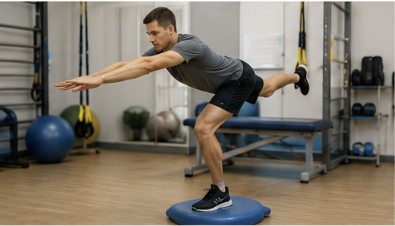
How do you know whether rehabilitation is working?
Positive signs include swelling settling, full extension returning, walking becoming normal, improving strength, the knee feeling more trustworthy, better balance and single-leg control, no giving-way episodes and confident completion of advanced drills.
Non-operative treatment may be failing when the knee repeatedly gives way, instability occurs during daily activity, attempts to return to sport cause buckling, the knee cannot be trusted, recurrent swelling follows instability, work requirements cannot be met, or an associated meniscal injury remains symptomatic.
Who is more likely to need ACL reconstruction?
Surgery becomes more likely when there is repeated giving way, instability during ordinary activity, a desire to return to pivoting or contact sport, a physically demanding occupation, a high-grade pivot shift, an unstable repairable meniscal tear, additional ligament injury, failure of structured rehabilitation, or an inability to accept the necessary activity modification.
A young athlete returning to football, rugby, netball or basketball has different demands from someone happy to cycle, swim and run straight ahead. Age matters, but it is not an absolute rule: older active patients can still benefit from reconstruction, while some younger patients manage successfully without surgery.
Surgery or rehabilitation: how is the decision made?
A useful decision pathway considers six questions.
1. Does the knee give way? This is usually the most important factor. Pain alone is not the primary indication for reconstruction; surgery is mainly intended to improve stability.
2. What activities do you need to return to? High-risk activities include football, rugby, netball, basketball, combat sports, skiing, repeated pivoting and some military or emergency-service roles.
3. What other damage is present? A repairable meniscal tear, cartilage injury or additional ligament tear can change the plan.
4. Has good rehabilitation been completed? Poor strength and movement control can make any knee feel unstable, so a rehabilitation programme should normally be completed before deciding it has failed.
5. Are you prepared for postoperative rehabilitation? Reconstruction requires many months of structured work.
6. What are your preferences? Some people accept modifying sport to avoid an operation; others place a high value on returning to pivoting sport.
Does ACL reconstruction prevent arthritis?
This is uncertain. An ACL injury increases the future risk of osteoarthritis, particularly when there is also meniscal damage, cartilage injury, repeated instability, meniscus removal or further trauma.
However, there is currently no convincing evidence that ACL reconstruction reliably prevents knee arthritis. Reconstruction may reduce later meniscal injury in some patients by improving stability, but it should not be presented as a guaranteed way of preventing osteoarthritis. The main purpose of reconstruction is to restore functional stability, not to make the knee biologically normal again.
What is ACL reconstruction?
ACL reconstruction replaces the torn ligament with a graft. The torn ACL is not usually stitched back together, because reconstruction has historically produced a lower risk of revision than routine repair in patients who need surgery.
During the operation a camera is inserted into the knee through small incisions, the menisci and cartilage are inspected, a tendon graft is prepared, bone tunnels or sockets are created in the femur and tibia, the graft is passed through the knee in the position of the ACL and secured using buttons, screws or other fixation devices, and any associated meniscal injuries may be repaired. The graft gradually heals into the bone and remodels over time.
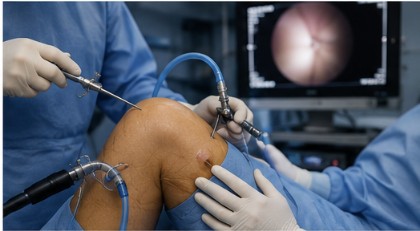
When should ACL surgery be performed?
Two principles need to be balanced. First, the knee should be ready: ideally with little or no swelling, full extension, good bending, good quadriceps activation and a normal walking pattern. Operating on a hot, swollen and stiff knee may increase the risk of postoperative stiffness. This preparatory phase is called prehabilitation.
Second, unnecessary delay should be avoided once surgery is indicated. The AAOS guideline states that, when reconstruction is indicated for an acute isolated tear, earlier surgery is preferred because additional meniscal and cartilage injury begins to increase within three months. In practice this means allowing the acute knee to settle and regain movement, but avoiding prolonged delay once surgery is clearly indicated.
What is prehabilitation?
Prehabilitation is physiotherapy completed before reconstruction. The goals are minimal swelling, full knee extension, near-normal bending, good quadriceps strength, normal walking, improved hip and lower-limb control, and an understanding of the postoperative exercises. It helps prepare both the knee and the patient for the rehabilitation that follows surgery.
Which graft is used for ACL reconstruction?
Common graft choices include hamstring tendon autograft, bone–patellar tendon–bone autograft, quadriceps tendon autograft and donor tendon (allograft). An autograft comes from your own body; an allograft comes from a donor.
Graft choice should be individualised according to age, sport, activity level, occupation, kneeling requirements, previous surgery, other ligament injuries, surgeon experience and personal preference.
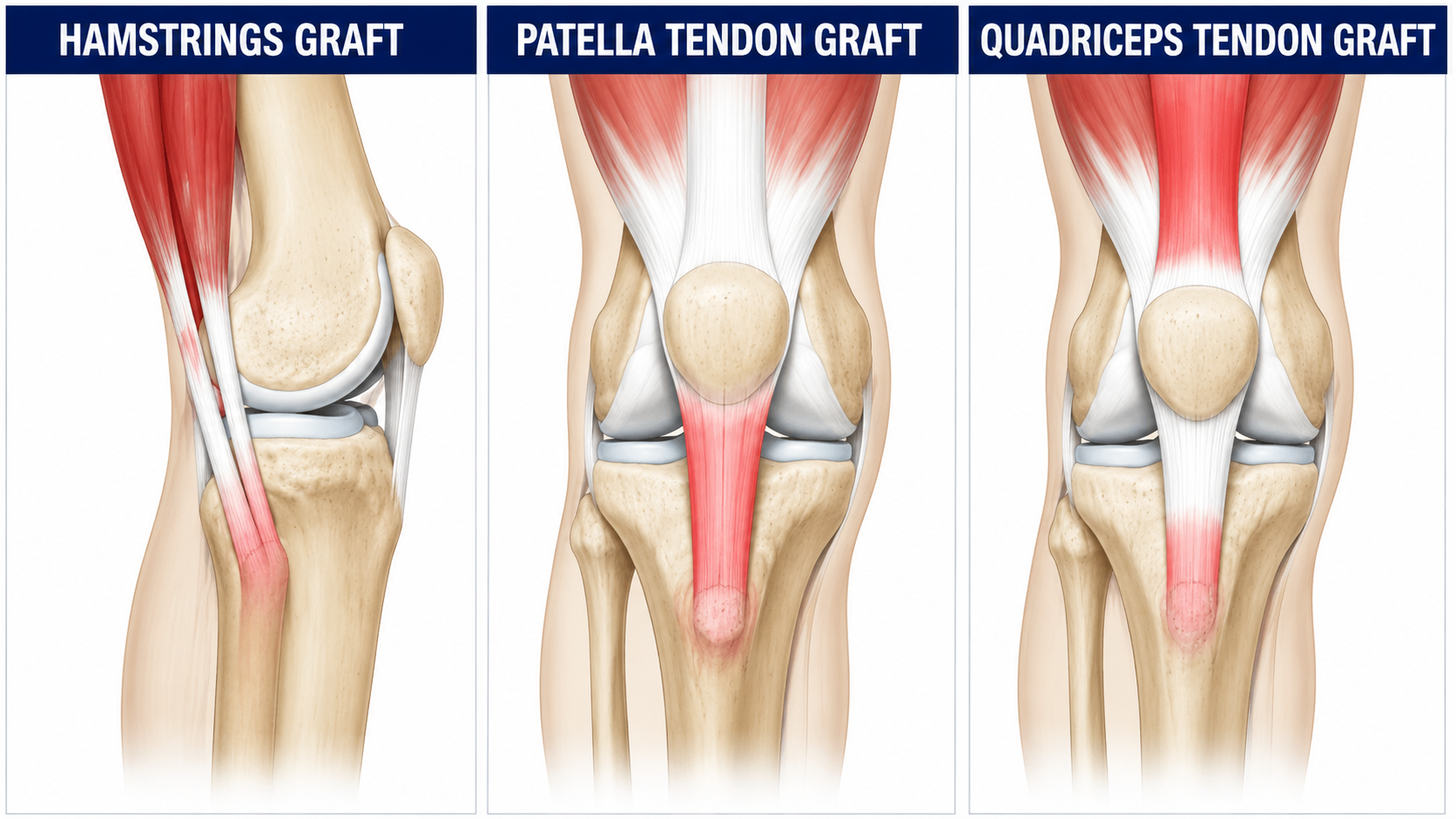
| Graft | Potential advantages | Potential disadvantages |
|---|---|---|
| Hamstring tendon | Smaller harvest incision; less kneeling and anterior knee pain; no bone block taken from the kneecap | Temporary hamstring weakness; graft size can vary; slightly greater graft-failure concern in some high-risk groups; harvest-site tenderness |
| Bone–patellar tendon–bone | Strong bone-to-bone healing; lower graft-failure risk in some young, high-demand patients; widely established | Pain at the front of the knee; kneeling discomfort; discomfort with jumping; risk of stiffness; rare kneecap complications |
| Quadriceps tendon | Substantial graft size; less kneeling discomfort than some patellar tendon grafts; useful for revision surgery | Specific harvest-site effects that should be discussed with your surgeon |
| Donor graft (allograft) | No harvest-site problems; useful in multiligament or revision surgery | Higher failure rate in young or active patients |
For young or active patients, autograft is generally preferred because donor grafts have a higher failure rate in this group. Donor graft may still be considered for some older, lower-demand patients, complex multiligament reconstruction, revision surgery or where autograft tissue is limited.
What is a lateral extra-articular tenodesis?
Some patients have a higher risk of graft failure or persistent rotational instability. In selected cases, surgeons may add a procedure on the outer side of the knee, commonly called a lateral extra-articular tenodesis (LET). It may be considered in people who are young, play high-risk pivoting sport, have marked rotational laxity or generalised ligament laxity, are having revision reconstruction, or in selected hamstring-graft reconstructions.
The aim is to provide additional control of rotation. Evidence suggests LET can reduce graft failure in selected patients, but long-term outcomes and the best indications continue to evolve. It is not required for every ACL reconstruction.
What happens to a meniscal tear during surgery?
The surgeon will try to preserve the meniscus where reasonably possible. Options include leaving a small stable tear alone, repairing the meniscus, or trimming only irreparable unstable tissue.
Meniscus repair is often preferred because removing meniscal tissue increases joint loading and may contribute to later arthritis. Rehabilitation may be slower after repair, with temporary restrictions on weight-bearing, knee bending, squatting and running. This does not mean the ACL surgery has gone badly — it means the meniscus needs protection while it heals.
Risks of ACL reconstruction
ACL reconstruction is commonly performed, but it is not risk-free. Possible complications include infection, blood clot, stiffness or arthrofibrosis, persistent pain, loss of movement, numbness around the incision, kneeling pain, weakness at the graft-harvest site, recurrent instability, graft rupture, injury to the opposite ACL, persistent inability to return to the previous sporting level and further surgery.
Surgery improves stability in most appropriately selected patients, but it cannot guarantee return to the same sport, complete freedom from pain, prevention of arthritis or protection from future injury.
Rehabilitation after ACL reconstruction
Rehabilitation begins early and typically continues for 9–12 months, sometimes longer. It should be based on achieving functional criteria rather than simply moving through fixed dates.
Early phase priorities include pain and swelling control, full knee extension, gradual restoration of bending, quadriceps activation, safe weight-bearing, normal walking and wound care. Crutches may be used initially, and the programme may be modified if meniscal repair or additional ligament surgery has been performed.
The strength and control phase focuses on quadriceps, hamstring, gluteal and calf strength, single-leg control, balance and cardiovascular fitness. Before running, the knee usually needs minimal or no swelling, good movement, adequate strength, good single-leg control and tolerance of lower-level impact.
Later, sport-specific rehabilitation includes acceleration, deceleration, jumping, landing, hopping, turning, unplanned changes of direction, sport-specific skills, fatigue-based drills and contact preparation where relevant. Psychological readiness matters too: a knee can test strongly but still feel unsafe, and fear of re-injury should be addressed rather than ignored.
When can you return to sport?
Return to sport should not be based on time alone. British best-practice guidance states that return to sport should rarely occur before nine months after reconstruction, because earlier return is associated with greater re-injury risk. However, reaching nine months does not automatically mean someone is ready.
Assessment should consider knee movement, absence of significant swelling, quadriceps and hamstring strength, hop testing, landing quality, change-of-direction control, sport-specific ability, confidence, fear of re-injury, fatigue tolerance and the demands of the sport. Functional testing such as hop tests may contribute to the decision, but no single test can prove that return is safe.
Typical ACL recovery pathway
| Stage | Typical priorities |
|---|---|
| First 2 weeks | Control swelling, regain extension, activate quadriceps, walk safely |
| 2–6 weeks | Improve bending, normalise gait, progress basic strength |
| 6–12 weeks | Build lower-limb strength and single-leg control |
| 3–5 months | Advanced strengthening, balance and early impact preparation |
| 4–6 months or later | Running may begin when functional criteria are met |
| 6–9 months | Plyometrics, agility and sport-specific rehabilitation |
| 9–12 months or later | Possible return to pivoting sport after satisfactory testing |
| Beyond 12 months | Continued strength, conditioning and injury-prevention training |
Can you return to sport without surgery?
Some people can. Successful return is more likely when the knee does not give way, strength is restored, neuromuscular control is good, the sport has limited pivoting demands, the person accepts activity modification and rehabilitation is completed properly.
Returning to high-risk pivoting sport with an unstable ACL-deficient knee may lead to further giving-way episodes and additional meniscal or cartilage damage. The question is therefore not only “Can I play?” but “Can I play repeatedly without the knee giving way?”
Can a brace replace the ACL?
No brace can fully reproduce the ACL's function. A functional brace may provide confidence, compression, awareness of the knee and some support during selected activities. It may be useful for certain patients choosing non-operative management. However, braces are not routinely recommended after isolated primary ACL reconstruction because they have not shown clear clinical benefit, and bracing should never replace strength, movement control or rehabilitation.
ACL treatment comparison
| Approach | Most suitable for | Main advantage | Important limitation |
|---|---|---|---|
| Structured rehabilitation alone | Stable knee, lower pivoting demands, willingness to modify activity | Avoids surgery and its risks | Instability may persist |
| Rehabilitation with delayed surgery if required | Uncertain initial stability or preference to try non-operative care | Surgery reserved for those who continue to need it | Giving-way episodes may cause further injury |
| Early reconstruction after prehabilitation | High-risk activity, symptomatic instability or repairable meniscal injury | Restores mechanical stability and may reduce later meniscal injury | Major rehabilitation commitment and surgical risks |
| Functional brace | Selected non-operative patients or specific sports | May improve confidence | Does not replace the ACL |
| Meniscal repair with ACL reconstruction | Repairable unstable meniscal tear with ACL insufficiency | Preserves meniscal tissue and improves stability | Rehabilitation may be slower |
| ACL reconstruction with LET | Selected high-risk patients | May reduce graft failure and rotational instability | Additional procedure with evolving long-term evidence |
What is the outlook after an ACL injury?
Many people regain excellent function, whether managed surgically or non-surgically. However, an ACL injury remains a significant knee injury, and long-term outcome depends on more than the ACL itself. Important factors include meniscal damage, cartilage damage, recurrent instability, strength recovery, movement quality, adherence to rehabilitation, psychological readiness, re-injury and activity demands.
Not everyone returns to exactly the same sporting level, even after technically successful surgery. A stable knee and a successful life after ACL injury do not always require returning to the identical sport at the identical level.
Can ACL injuries be prevented?
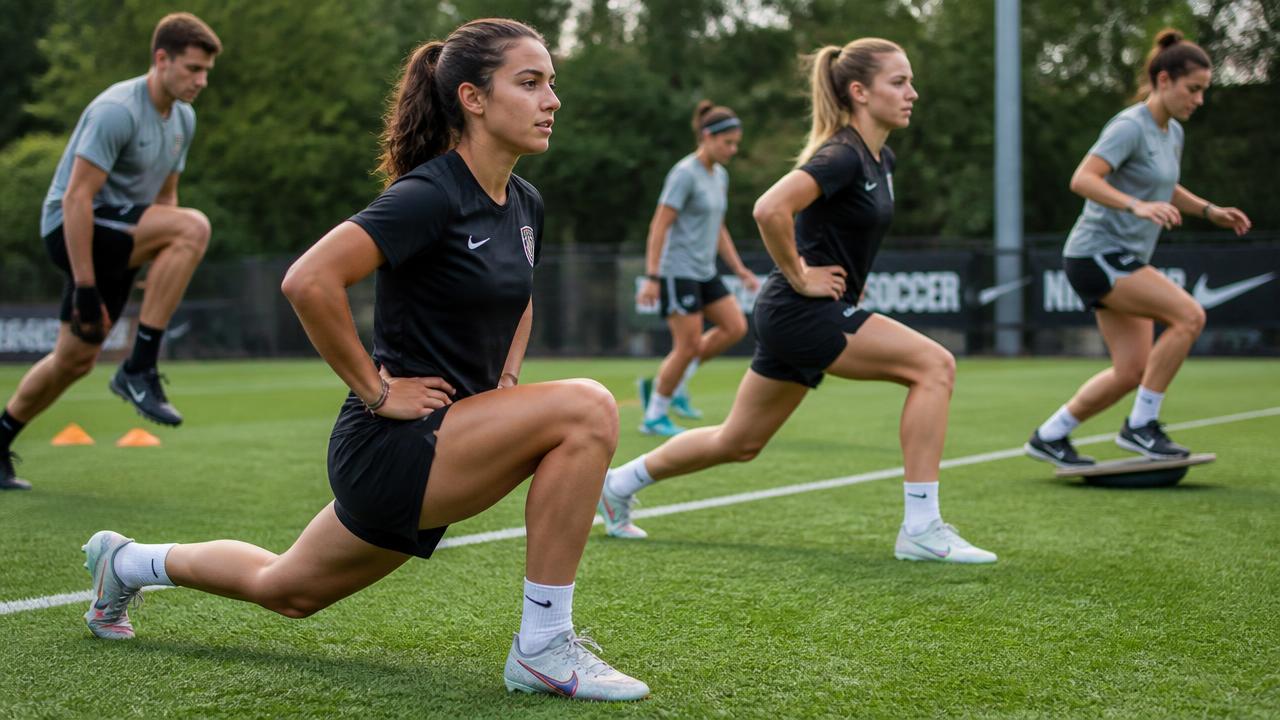
Not every ACL injury is preventable. However, structured neuromuscular programmes can reduce risk, particularly in high-risk sports. Effective programmes commonly include landing technique, cutting and deceleration technique, balance, strength, plyometrics, trunk control, hip control and agility. These programmes need to be performed regularly, not simply once or twice at the start of a season.
When should you seek medical advice?
Arrange an assessment if you heard or felt a pop, the knee swelled rapidly after injury, you could not continue playing, the knee repeatedly gives way, you cannot fully straighten the knee, the knee locks or catches, swelling keeps returning, you cannot return to normal activity, symptoms continue despite rehabilitation, or you are planning to return to pivoting sport.
Seek urgent help if the knee appears dislocated, the foot becomes cold, pale or numb, pulses feel reduced, you cannot straighten a locked knee, severe pain follows high-energy trauma, there is major calf swelling or breathlessness after surgery, a surgical wound becomes increasingly red, hot or discharges fluid, or you develop a fever or feel systemically unwell.
The OrthoZone take-home message
An ACL tear does not have one automatic treatment. Some people regain a stable, confident knee through rehabilitation alone, while others need reconstruction because the knee continues to give way or must tolerate high-demand pivoting activity. The main indication for surgery is symptomatic instability — not simply an abnormal MRI scan. Associated meniscal and cartilage injuries, sporting goals, occupation, rehabilitation response and personal preferences all matter. Whether treatment is operative or non-operative, high-quality rehabilitation is the foundation of recovery.
Top tips
- Do not assume that a torn ACL automatically means surgery — the key issue is whether the knee remains functionally unstable.
- Take rehabilitation seriously from the beginning: full extension, less swelling and quadriceps strength matter whether or not you have surgery.
- Avoid repeated giving-way episodes, as each one may place the menisci and joint cartilage at further risk.
- Ask why a particular graft has been recommended — hamstring, patellar tendon and quadriceps grafts have different trade-offs.
- Do not return to pivoting sport based only on time; strength, control, movement quality, confidence and testing should all influence the decision.