
How Many Steps Should You Walk Each Day? The Evidence-Based Guide
For years, 10,000 steps a day has been promoted as the gold standard for good health. Fitness watches, smartphones and activity trackers all encourage us to reach this number, and many people feel they have failed if they don't.
But does everyone really need to walk 10,000 steps every day? The answer is no.
Modern research shows that important health benefits begin at much lower step counts. Even relatively small increases in the number of steps you take each day can reduce your risk of heart disease, diabetes, dementia and premature death. While walking more is generally better, the "perfect" number depends on your age, current activity level, overall health and personal goals.
In this article, we explain where the famous 10,000-step target came from, what the latest scientific evidence actually shows, how many steps different people should aim for, and practical ways to become more active without feeling overwhelmed.
Key points
- The 10,000-step target began as a marketing campaign, not a scientific recommendation.
- Health benefits begin at far fewer than 10,000 steps each day.
- Around 7,000–8,000 daily steps appears sufficient for substantial health benefits for many adults.
- Older adults often gain most of the benefit between 6,000 and 8,000 steps per day.
- The best step goal is one that is realistic, sustainable and represents an improvement on your current activity level.
Do you really need 10,000 steps every day?
The simple answer is no.
If you have recently bought a smartwatch or fitness tracker, you have probably noticed that it automatically sets a goal of 10,000 steps every day. Many people assume this number comes from decades of medical research. Surprisingly, it doesn't.
The 10,000-step goal originated from a Japanese pedometer called the Manpo-kei, which translates as “10,000-step meter”. It was launched during the build-up to the 1964 Tokyo Olympics as part of a marketing campaign. The number was memorable, easy to understand and visually appealing, because the Japanese character for 10,000 resembles a person walking.
Although it was never intended to be a medical recommendation, the message spread across the world and gradually became accepted as a health target. Ironically, modern research has shown that the campaign wasn't entirely wrong — but it wasn't completely right either. There is no single magical number of daily steps that everyone needs. Walking works on a spectrum: the more you move, the greater your health benefits — up to a point.

Why does walking matter so much?
Walking is one of the simplest forms of physical activity available. Unlike many forms of exercise, it requires no special equipment, costs nothing, places relatively little stress on joints, can be performed almost anywhere, suits almost every age group and is easy to build into everyday life.
Regular walking has consistently been shown to improve cardiovascular fitness, lower blood pressure, reduce the risk of type 2 diabetes, improve cholesterol levels, help maintain a healthy body weight, strengthen bones and muscles, improve balance, reduce anxiety, improve mood, reduce symptoms of depression, improve sleep quality, reduce the risk of dementia and reduce premature death.
Importantly, walking is associated with health benefits even if you don't achieve 10,000 steps every day.
What does the latest research show?
During the past decade, researchers have analysed hundreds of thousands of people wearing activity trackers to determine how many steps produce meaningful health benefits.
One of the largest reviews ever performed combined results from over 200,000 adults across 17 studies. Rather than identifying one perfect number, researchers found that the relationship between walking and health is gradual. The largest improvements occur when people move from being very inactive to moderately active.
In other words, going from 2,000 steps to 5,000 steps appears to provide much larger health benefits than increasing from 10,000 to 13,000 steps. This is encouraging, because it means people who currently walk very little may gain the greatest improvements by making relatively modest changes.
The research also found that health benefits begin at surprisingly low step counts; that every additional 1,000 daily steps is associated with further reductions in the risk of premature death; that the benefits eventually level off rather than increasing indefinitely; and that the point where benefits plateau varies according to age.
Earlier consensus work translating physical activity guidelines into step counts also concluded that accumulating around 7,000–8,000 daily steps is broadly consistent with meeting minimum public health recommendations for moderate-to-vigorous physical activity, while recognising that some physical activity is better than none.
How many steps should you aim for each day?
The ideal daily step count depends on your age, current activity level, overall health and personal goals. The encouraging news is that almost everyone can improve their health by becoming slightly more active than they are today.
Rather than thinking of daily steps as a pass-or-fail target, it is more helpful to think of them as a continuum. Every additional step contributes to better health, particularly if you are currently inactive.
| Age group | Evidence-based daily step target | What the research suggests |
|---|---|---|
| Children and teenagers | Around 6,000–15,000+ | Children naturally accumulate more steps through play and physical activity. |
| Adults under 60 | Around 8,000–10,000 | Most adults achieve substantial health benefits within this range, although some continue to benefit up to 12,000–13,000 steps. |
| Adults over 60 | Around 6,000–8,000 | Health benefits appear to plateau earlier in older adults. |
| Starting from a very low activity level | Increase by 500–1,000 steps/day above your usual level | Small, sustainable increases provide significant health benefits. |
Is 10,000 steps still a good goal?
Yes — but it shouldn't be viewed as the only goal. If you already comfortably walk 10,000 steps each day, there is no reason to reduce your activity; walking this amount is associated with excellent health outcomes.
However, if you currently average only 3,000 or 4,000 steps per day, aiming immediately for 10,000 can feel overwhelming. Setting unrealistic targets often causes people to give up completely. A much better strategy is to improve gradually: 3,500 steps to 4,500 steps, 5,000 to 6,000, or 6,500 to 7,500.
These small improvements may appear modest, but research suggests they can produce meaningful reductions in the risk of chronic disease and premature death. Increasing activity above your own baseline matters far more than chasing a single universal target.
How many steps do you need for weight loss?
There isn't a specific number of steps that guarantees weight loss. Weight loss occurs when you consistently burn more calories than you consume, creating a calorie deficit. Walking contributes to this by increasing the number of calories your body burns.
However, weight loss also depends on your diet, sleep quality, age, body weight, muscle mass, medications, hormonal factors and genetics. Walking more can certainly support weight loss, but increasing your daily step count without making any dietary changes may not be enough for everyone.
Studies suggest that people aiming to lose weight often benefit from accumulating around 8,000–10,000 steps per day, particularly when combined with a healthy diet and other forms of exercise. The important message is consistency: walking an additional 2,000 steps every day for a year is likely to have a much greater impact than one 20,000-step walk each weekend.
How many calories does walking burn?
The exact number depends on body weight, walking speed, terrain, fitness level and stride length. As a rough guide:
| Daily steps | Approximate distance | Estimated calories burned |
|---|---|---|
| 5,000 | 2.5 miles (4 km) | 150–300 kcal |
| 7,000 | 3.5 miles (5.6 km) | 220–420 kcal |
| 10,000 | 5 miles (8 km) | 300–800 kcal |
| 15,000 | 7.5 miles (12 km) | 500–1,000 kcal |
Does walking speed matter?
Absolutely. While total daily steps are important, how quickly you walk also influences the health benefits you receive. Brisk walking produces greater improvements in cardiovascular fitness than leisurely strolling.
A useful guide is the talk test: you should be able to hold a conversation, but be too breathless to comfortably sing. This level of effort corresponds to moderate-intensity exercise for most adults.
Research examining walking cadence has shown that approximately 100 steps per minute represents a practical marker of moderate-intensity walking. Walking at this pace for around 30 minutes equates to roughly 3,000 purposeful steps, in addition to your normal daily activity.

Is it better to walk faster or walk further?
Ideally, both. If you have limited time, increasing your walking speed allows you to gain more cardiovascular benefit in a shorter period. If your goal is weight management or increasing your daily activity, walking further also provides additional calorie expenditure.
The ideal combination is to increase your total daily steps, include at least one brisk walk most days, and reduce long periods of sitting whenever possible.
Is walking enough exercise?
Walking is one of the healthiest activities you can do, but it should ideally form part of a broader exercise programme. Current physical activity guidelines recommend that adults also include muscle-strengthening exercise at least twice each week, balance exercises as they get older, flexibility and mobility work, and activities they enjoy and can sustain long term.
Examples include resistance training, swimming, cycling, Pilates, yoga, racquet sports, gardening and dancing. Walking provides an excellent foundation, but combining it with strength training offers additional benefits for bone health, muscle mass and long-term independence.

How to increase your daily step count safely
One of the biggest mistakes people make is trying to double their daily step count overnight. Increasing your activity too quickly can lead to sore muscles, blisters, tendon pain or overuse injuries, particularly if you have arthritis or haven't exercised regularly for some time.
If you currently average around 4,000 steps per day, try increasing this by 500 to 1,000 steps each day for one to two weeks before increasing again. The exact number matters far less than creating a routine you can maintain for months and years.
| Current daily steps | First goal | Next goal |
|---|---|---|
| Under 3,000 | 3,500 | 4,500 |
| 3,000–5,000 | 5,500 | 6,500 |
| 5,000–7,000 | 7,500 | 8,500 |
| 7,000–8,000 | Maintain, or aim for 9,000–10,000 if appropriate | — |
| Above 10,000 | Maintain your current activity | Focus on walking quality, not numbers |
Practical ways to walk more every day
Many people assume they need to dedicate an hour each day to walking. In reality, small changes throughout the day often make the biggest difference.
Walk during your lunch break — even a 15-minute walk can add around 1,500 to 2,000 steps. Take the stairs whenever practical instead of lifts or escalators. Park slightly further away, as parking at the far end of a car park can add several hundred extra steps. Walk while talking on the phone rather than sitting. Break up long periods of sitting by standing up every hour and walking for two or three minutes.
Walking with friends or family also helps: many people find they stay motivated when walking regularly with a partner, neighbour or walking group. Fitness watches and apps can provide useful feedback, but try not to become obsessed with hitting an exact number every day — the aim is to encourage healthy habits, not create unnecessary stress.
Common myths about daily steps
Myth 1: You must walk 10,000 steps every day
False. Current evidence suggests substantial health benefits begin well below 10,000 daily steps, particularly in people who are currently inactive. The most important message is simply to move more than you do now.
Myth 2: Only walking counts
False. Step counters do not capture every form of physical activity. Cycling, swimming, rowing, resistance training and yoga all contribute to your health despite generating few or no recorded steps.
Myth 3: Every step must be completed in one walk
False. Daily steps accumulate throughout the day. Walking around your house, shopping, gardening and climbing stairs all contribute towards your total.
Myth 4: Slow walking has no benefit
False. Even gentle walking is better than remaining sedentary. However, if you are physically able, including periods of brisk walking provides additional cardiovascular benefits.
Frequently asked questions
Is 5,000 steps a day enough?
Five thousand daily steps is certainly better than very little activity and is a reasonable starting point for many people. However, most research suggests that larger health benefits occur once people regularly achieve around 7,000–8,000 daily steps.
Is 20,000 steps too much?
For healthy, active individuals, 20,000 daily steps is not necessarily harmful. However, the additional health benefits become progressively smaller once you reach higher daily step counts. For most people there is no need to aim for such a high number unless it fits naturally with their occupation, hobbies or sporting activities.
Should I walk every day?
Ideally, yes. Regular daily movement is preferable to completing all your activity on one or two days each week. That said, missing the occasional day is completely normal. Focus on your activity over weeks and months rather than judging yourself on a single day.
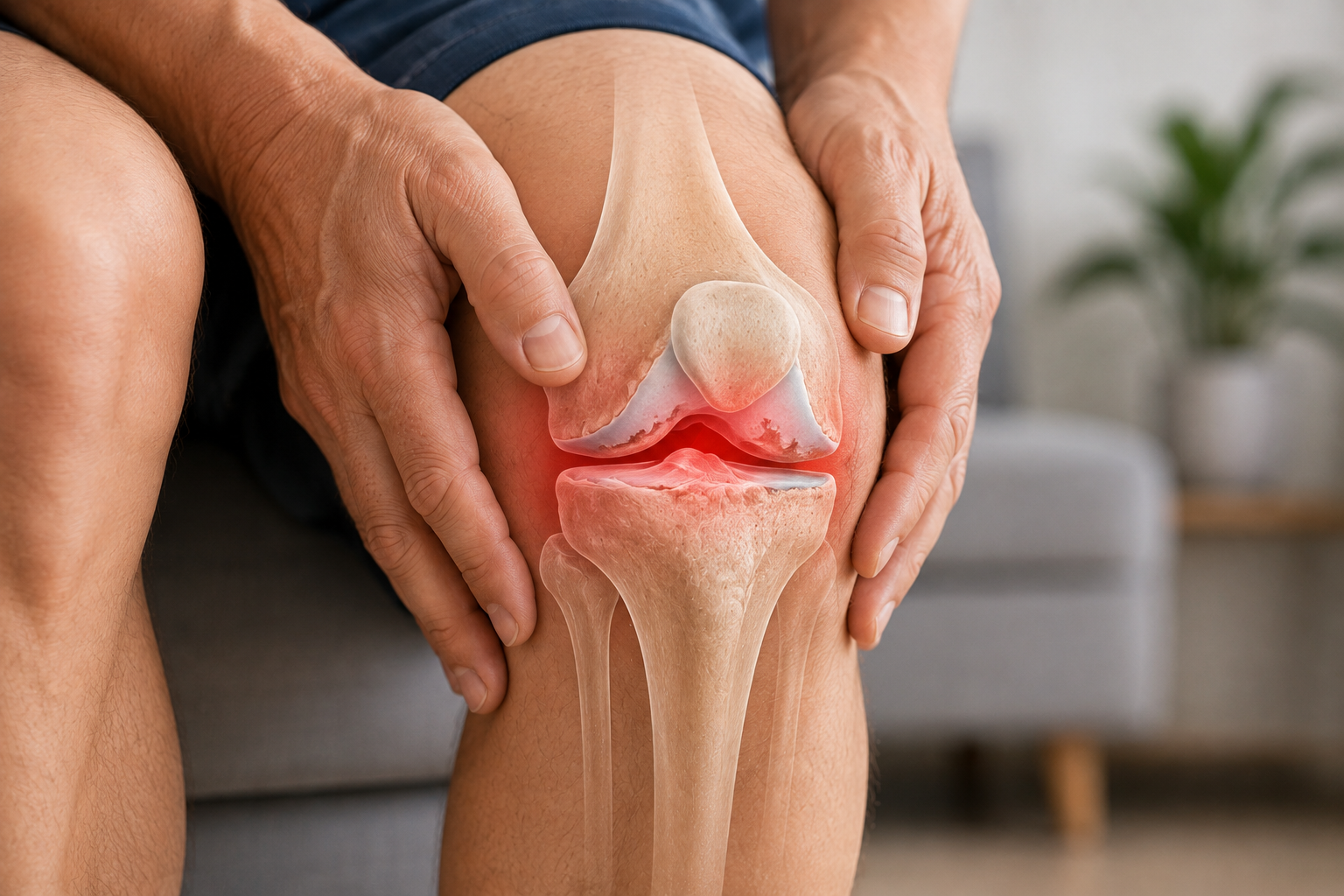
Does walking help arthritis?
Yes. For most people with osteoarthritis, regular walking is one of the safest and most effective forms of exercise. Walking helps strengthen the muscles around joints, improve joint lubrication, reduce stiffness, improve balance, support weight management and improve confidence.
If walking causes severe or persistent pain, discuss this with your healthcare professional before significantly increasing your activity.
Conclusion
Walking is one of the simplest, safest and most effective ways to improve your health. While the idea of walking 10,000 steps a day has become deeply embedded in popular culture, modern research tells a more reassuring story: there is no single magic number that everyone must achieve.
For many adults, 7,000 to 8,000 daily steps is associated with substantial health benefits, while older adults may gain most of the benefit at slightly lower step counts. Walking more than this is perfectly reasonable if you enjoy it and your health allows, but chasing an arbitrary target is less important than remaining consistently active.
Perhaps the most encouraging finding from recent research is that every step counts. Rather than comparing yourself with others, focus on becoming a little more active than you were yesterday.
Top tips
- Don't worry if you don't reach 10,000 steps — meaningful health benefits begin much earlier.
- Increase your daily steps gradually rather than making dramatic changes overnight.
- Around 7,000–8,000 daily steps suits many adults; older adults gain most benefit between 6,000 and 8,000.
- Include some brisk walking whenever possible — around 100 steps per minute is a practical guide.
- The best exercise programme is one you enjoy and can maintain for years, not weeks.