

Frozen Shoulder (Adhesive Capsulitis): Symptoms, Treatment and Recovery
Few shoulder conditions are as frustrating as frozen shoulder. Many people describe it as pain that gradually becomes so severe it affects sleep every night, followed by increasing stiffness that makes simple activities such as dressing, washing your hair or fastening a seatbelt surprisingly difficult.
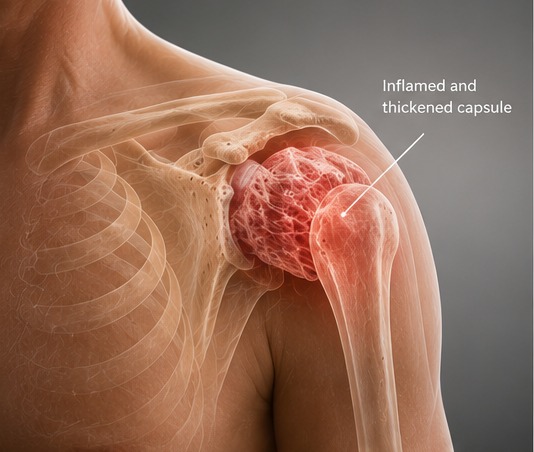
Unlike many shoulder problems, frozen shoulder is not caused by a torn tendon or worn cartilage. Instead, it develops because the lining around the shoulder joint — the joint capsule — becomes inflamed, thickened and progressively tighter. As the capsule tightens, the shoulder gradually loses movement in every direction.
The good news is that frozen shoulder almost always improves with time. The challenge is that recovery is often slow, and choosing the right treatment depends very much on which stage of the condition you are in.
This guide explains exactly what frozen shoulder is, why it develops, how it is diagnosed, what treatments actually help, when surgery is considered, and what you can realistically expect during recovery.
Key points
- Frozen shoulder is caused by inflammation and tightening of the capsule surrounding the shoulder joint.
- It usually progresses through a painful phase, a stiff phase and finally a gradual recovery phase, although these stages often overlap.
- It most commonly affects people between 40 and 70 years old and is more common in people with diabetes and thyroid disease.
- Most people improve without surgery, although recovery may take many months and occasionally more than two years.
- Treatment should be tailored to the stage of the condition rather than using the same approach throughout recovery.
What is frozen shoulder?
Frozen shoulder, also known as adhesive capsulitis, is a condition in which the shoulder becomes painful, stiff and difficult to move.
The shoulder is a ball-and-socket joint. The ball (the top of the humerus) sits within a shallow socket (the glenoid). Surrounding both is a thin but flexible sleeve of tissue called the joint capsule. Normally this capsule is loose enough to allow the shoulder to move through the widest range of motion of any joint in the body.
In frozen shoulder the capsule becomes inflamed, thickens, develops scar tissue and gradually contracts. As the capsule shrinks, the space inside the joint becomes much smaller and movement becomes increasingly restricted. This is why people with frozen shoulder lose movement in every direction, rather than only in one or two specific movements.
Why does frozen shoulder develop?
One of the most frustrating aspects of frozen shoulder is that we still do not know exactly why it occurs. In many people it develops without any obvious injury or warning. Doctors generally divide frozen shoulder into two groups.
Primary frozen shoulder
This is the commonest type. There is no clear trigger, and symptoms simply begin gradually before worsening over the following weeks. Many patients cannot remember any injury at all.
Secondary frozen shoulder
Sometimes the condition develops after something affects normal shoulder movement — a fall, a fracture, shoulder surgery, rotator cuff problems, prolonged immobilisation, a stroke or a major illness. In these situations, inflammation around the joint may trigger the same process of capsular tightening.
Who is most at risk?
Frozen shoulder can affect anyone, but certain groups develop it much more frequently. Risk factors include age between 40 and 70 years, diabetes, thyroid disorders, a previous frozen shoulder on the opposite side, shoulder injury, shoulder surgery and reduced shoulder movement for prolonged periods.
People with diabetes deserve particular mention. Not only are they significantly more likely to develop frozen shoulder, but symptoms often last longer and may be more resistant to treatment. Fortunately, even in these patients recovery still occurs — it simply tends to take longer.
What does frozen shoulder feel like?
Frozen shoulder does not usually begin dramatically. Instead, symptoms typically creep up over several weeks. Most people first notice a dull ache around the shoulder. The pain gradually becomes deeper, more constant and more severe at night, and is worse when reaching, dressing, fastening a bra or reaching into a back pocket, washing or brushing hair, putting on a coat and reaching overhead.
Many patients tell us that sleep becomes the biggest problem. Lying on the affected shoulder is often impossible, while even lying on the opposite side may pull on the painful capsule enough to wake them repeatedly during the night. This pattern of severe night pain is one of the classic features of frozen shoulder.

The three stages of frozen shoulder
One of the biggest misconceptions is that frozen shoulder is a single condition that behaves the same throughout recovery. In reality it evolves over time, and understanding which stage you are in is one of the most important parts of deciding the best treatment.

Stage 1 — the painful (“freezing”) phase
This is usually the most miserable stage. Pain steadily increases over weeks or months, with severe aching pain at rest and on movement, disturbed sleep, increasing difficulty using the arm and early stiffness beginning to develop. This stage commonly lasts 2–9 months, and during it pain is often far more limiting than stiffness.
The capsule surrounding the shoulder becomes inflamed, and inflammation stimulates pain-sensitive nerve endings, meaning even relatively small movements become extremely uncomfortable. Because the capsule is inflamed, aggressively stretching the shoulder at this stage often makes symptoms worse rather than better.
One of the most reassuring things to know is that pain does not necessarily mean damage. Although movement hurts, you are not tearing muscles or causing further injury by gently using the arm within comfortable limits.
Stage 2 — the stiff (“frozen”) phase
Gradually the intense pain begins to settle, but it is replaced by increasing stiffness. Patients often say: “The pain is a bit better … but now I simply can't move my arm.” This happens because the capsule has become significantly thicker and tighter.
Movements that become particularly difficult include reaching overhead, fastening a seatbelt, reaching behind your back, putting on a jacket, washing your hair, reaching into a high cupboard, fastening a bra and putting on a belt. One movement is particularly affected: external rotation — rotating the arm outwards with the elbow tucked against the body. Loss of external rotation is one of the hallmark findings doctors look for, because it reflects tightening of the capsule itself rather than weakness of the muscles.
Unlike the first stage, discomfort is usually greatest at the end of movement rather than constantly throughout the day.

Stage 3 — the recovery (“thawing”) phase
The final stage is when the shoulder gradually begins to loosen. Many patients become discouraged because progress often feels frustratingly slow — improvement usually happens over many months rather than weeks. The good news is that this stage is a sign that the inflammation is settling and the capsule is slowly becoming more flexible.
People commonly notice that they can reach slightly higher than before, dressing becomes easier, sleep gradually improves, pain continues to reduce and strength slowly returns as movement improves. This phase may last anywhere from 6 months to 2 years. Most patients regain very good function, although a small proportion are left with some mild loss of movement, particularly external rotation.
Frozen shoulder is usually a self-limiting condition. Even though recovery can be slow, the vast majority of people improve without needing surgery.
How is frozen shoulder diagnosed?
Frozen shoulder is primarily a clinical diagnosis, meaning your clinician usually makes the diagnosis by listening to your symptoms and examining your shoulder rather than relying on scans. Typical features include gradual onset, increasing pain, progressive stiffness, night pain, loss of both active and passive movement, and marked restriction of external rotation.
One important feature is that both you and the examiner are unable to move the shoulder normally. This helps distinguish frozen shoulder from conditions such as a rotator cuff tear, where the examiner may still be able to move the shoulder through a greater range even though you cannot lift the arm yourself.
Do I need an X-ray?
Usually, yes. An X-ray is often requested to make sure another condition is not causing the stiffness, such as shoulder arthritis, previous fractures, calcific tendinitis or other bony abnormalities. The X-ray in frozen shoulder is usually normal, and seeing a normal X-ray alongside significant stiffness is actually reassuring and supports the diagnosis.
Do I need an MRI scan?
Not usually. MRI scans are generally reserved for situations where another diagnosis is suspected — a rotator cuff tear, shoulder instability, a tumour, unusual symptoms, significant weakness or previous major trauma. An MRI is not routinely required because the diagnosis is usually clear from the history and examination.
Treatment
One of the biggest misconceptions about frozen shoulder is that there is a single treatment that cures it. Unfortunately there is not. Instead, treatment aims to reduce pain, maintain movement, restore function, help you through each stage of the condition and speed recovery where possible.
Perhaps the most important principle is this: the best treatment depends on which stage of frozen shoulder you are currently in. A treatment that helps during the painful stage may actually make symptoms worse later, and vice versa.
Pain relief
During the painful stage, controlling pain is often the priority. Pain relief allows people to sleep better, continue using the shoulder, participate in physiotherapy and maintain normal daily activities. Depending on your medical history, options may include paracetamol, anti-inflammatory medication (NSAIDs), topical anti-inflammatory gels and occasionally stronger medication prescribed by your doctor.
Medication does not shorten the duration of frozen shoulder, but it can make the condition much easier to live with.
Should I keep moving my shoulder?
Yes — but within reason. Completely resting the shoulder usually leads to increasing stiffness. On the other hand, forcing painful stretches, particularly during the early inflammatory stage, may aggravate symptoms. A useful principle is that gentle movement is helpful, whereas aggressive stretching during the painful phase usually is not.
Physiotherapy
Physiotherapy is one of the cornerstones of treatment. However, the exercises used should change as the condition evolves.

During the painful phase
The aim is not to force movement. Instead, physiotherapy focuses on pain management, posture, gentle mobility, maintaining confidence and preventing unnecessary muscle weakness. Trying to “push through the pain” at this stage often makes the shoulder more irritable.
During the stiff phase
Once pain has begun to settle, stretching becomes much more important. Exercises may include pendulum exercises, wall slides, assisted elevation, towel stretches, external rotation stretches and gentle strengthening. Stretches should be firm but controlled rather than excessively painful, and regular short sessions are generally more effective than occasional aggressive stretching.
During recovery
As movement improves, rehabilitation gradually progresses to strengthening the rotator cuff, improving shoulder blade control, restoring endurance, overhead strengthening and return-to-work or return-to-sport exercises. Recovery is gradual, and improvement often continues for many months after the shoulder first begins to loosen.
Steroid injections
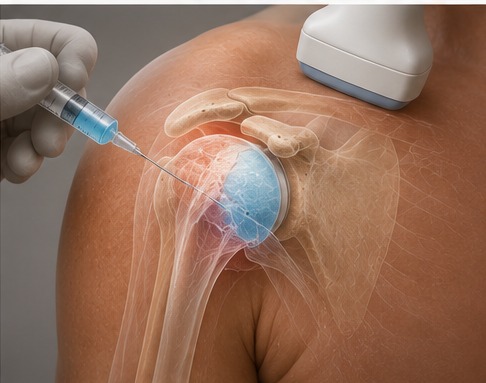
A corticosteroid injection into the shoulder joint can reduce inflammation and pain. Research suggests injections are most helpful early in the condition, when inflammation is the main problem. Benefits may include reduced pain, improved sleep, easier physiotherapy and improved short-term movement, often lasting several weeks or months.
Steroid injections are less effective once stiffness rather than inflammation has become the dominant problem. Like all treatments, injections have potential risks, including infection, a temporary increase in blood sugar (particularly in people with diabetes) and short-lived discomfort after the injection.
What is hydrodilatation?
Hydrodilatation is sometimes recommended when stiffness is becoming the main problem. During the procedure, fluid is injected into the shoulder joint under imaging guidance to stretch the tight capsule, improve movement and reduce pain.
It is usually combined with physiotherapy afterwards to help maintain the additional movement gained. Some studies suggest it can improve symptoms in selected patients, particularly during the early stiff phase, although the overall evidence remains mixed and benefits vary between individuals.
When is surgery considered?
Fortunately, most people never need surgery. It is usually reserved for people who have persistent severe stiffness, continue to have major functional limitation, have not improved despite appropriate physiotherapy and other non-operative treatment, and who understand the risks and benefits of surgery. Because frozen shoulder often improves naturally, surgery is usually considered only after giving the condition sufficient time to recover.
Manipulation under anaesthetic (MUA)
Manipulation under anaesthetic involves gently moving the shoulder while you are asleep under a general anaesthetic. The aim is to stretch or break some of the tight scar tissue within the capsule. Potential benefits include improved movement and quicker recovery of function. Potential risks include fractures, rotator cuff injury, dislocation and nerve injury. Although these complications are uncommon, they explain why manipulation is reserved for carefully selected patients.
Arthroscopic capsular release
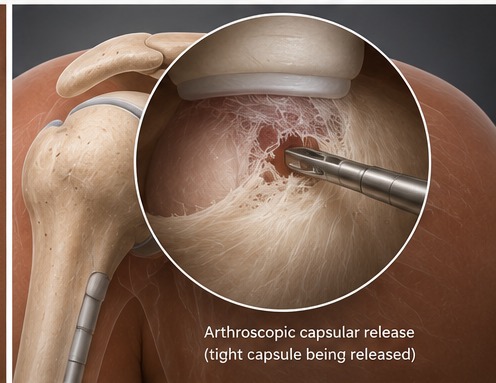
This is a keyhole operation. Through small incisions, the surgeon divides the tight portions of the capsule using specialised instruments. Unlike manipulation alone, arthroscopic surgery allows the surgeon to see inside the joint, confirm the diagnosis, release specific areas of tightness and treat associated problems if present. Most patients begin physiotherapy almost immediately afterwards to prevent the capsule tightening again.
Which operation is better?
This is an area where there is still some uncertainty. Both manipulation under anaesthetic and arthroscopic capsular release can improve movement in carefully selected patients. Some surgeons prefer arthroscopic release because it allows controlled release of the capsule under direct vision; others reserve surgery only for patients who have failed prolonged conservative treatment. The decision depends on symptom severity, the stage of frozen shoulder, associated shoulder problems, patient preference and surgeon experience.
Recovery timeline
| Time | What usually happens |
|---|---|
| 0–3 months | Pain often increases and the shoulder becomes progressively stiffer |
| 3–9 months | Pain gradually settles but stiffness becomes the main problem |
| 9–24 months | Movement slowly returns and shoulder function improves |
| After surgery | Physiotherapy usually begins immediately to maintain movement |
Will my shoulder ever return to normal?
Most people recover very well, although recovery is rarely quick. Some patients regain almost normal movement; others are left with mild residual stiffness, particularly when reaching behind their back or rotating the arm outwards. Fortunately, even when a small restriction remains, pain usually improves dramatically and everyday function becomes much easier.
Treatment comparison
| Treatment | Best stage | Main benefit | Limitation |
|---|---|---|---|
| Pain relief | Painful phase | Reduces pain and improves sleep | Does not shorten the condition |
| Physiotherapy | All stages | Maintains movement and restores function | Requires patience and regular exercise |
| Steroid injection | Early painful phase | Reduces inflammation and pain | Less effective once stiffness dominates |
| Hydrodilatation | Early stiff phase | May improve movement in selected patients | Benefit varies between individuals |
| Manipulation under anaesthetic | Persistent stiffness | Can improve movement | Small risk of complications |
| Arthroscopic capsular release | Resistant frozen shoulder | Directly releases the tight capsule | Requires surgery and rehabilitation |
Frequently asked questions
Can frozen shoulder come back?
It is uncommon for the same shoulder to develop frozen shoulder again, although the opposite shoulder may be affected in some people.
Should I push through the pain?
No. Gentle regular movement is encouraged, but forcing severe pain usually aggravates symptoms, particularly during the early inflammatory stage.
Is frozen shoulder arthritis?
No. Although both conditions cause stiffness, frozen shoulder results from tightening of the capsule, whereas arthritis is caused by cartilage wear.
Can exercise make it worse?
Appropriate exercises are helpful. The key is matching the exercises to the stage of the condition.
Does diabetes affect recovery?
Yes. People with diabetes are more likely to develop frozen shoulder and recovery may take longer, although most still improve over time.
The OrthoZone take-home message
Frozen shoulder is a condition in which the capsule surrounding the shoulder becomes inflamed and progressively tightens, leading to pain followed by stiffness. Although recovery can take many months, the outlook is generally very good. Most people improve without surgery, particularly when treatment is tailored to the stage of the condition. Understanding where you are in the recovery journey is one of the most important steps towards choosing the right treatment and setting realistic expectations.
Top tips
- Be patient. Frozen shoulder almost always improves, but recovery takes time.
- Don't force painful stretches during the early stage — gentle movement is usually more helpful while the shoulder is highly inflamed.
- Keep using the shoulder within comfortable limits. Avoiding movement altogether usually leads to more stiffness.
- Sleep with the arm supported on a pillow if night pain is a problem — many people find this more comfortable than lying directly on the affected shoulder.
- Remember that treatment changes with the stage of the condition. The right approach early on is often different from the best treatment later in recovery.
Related articles
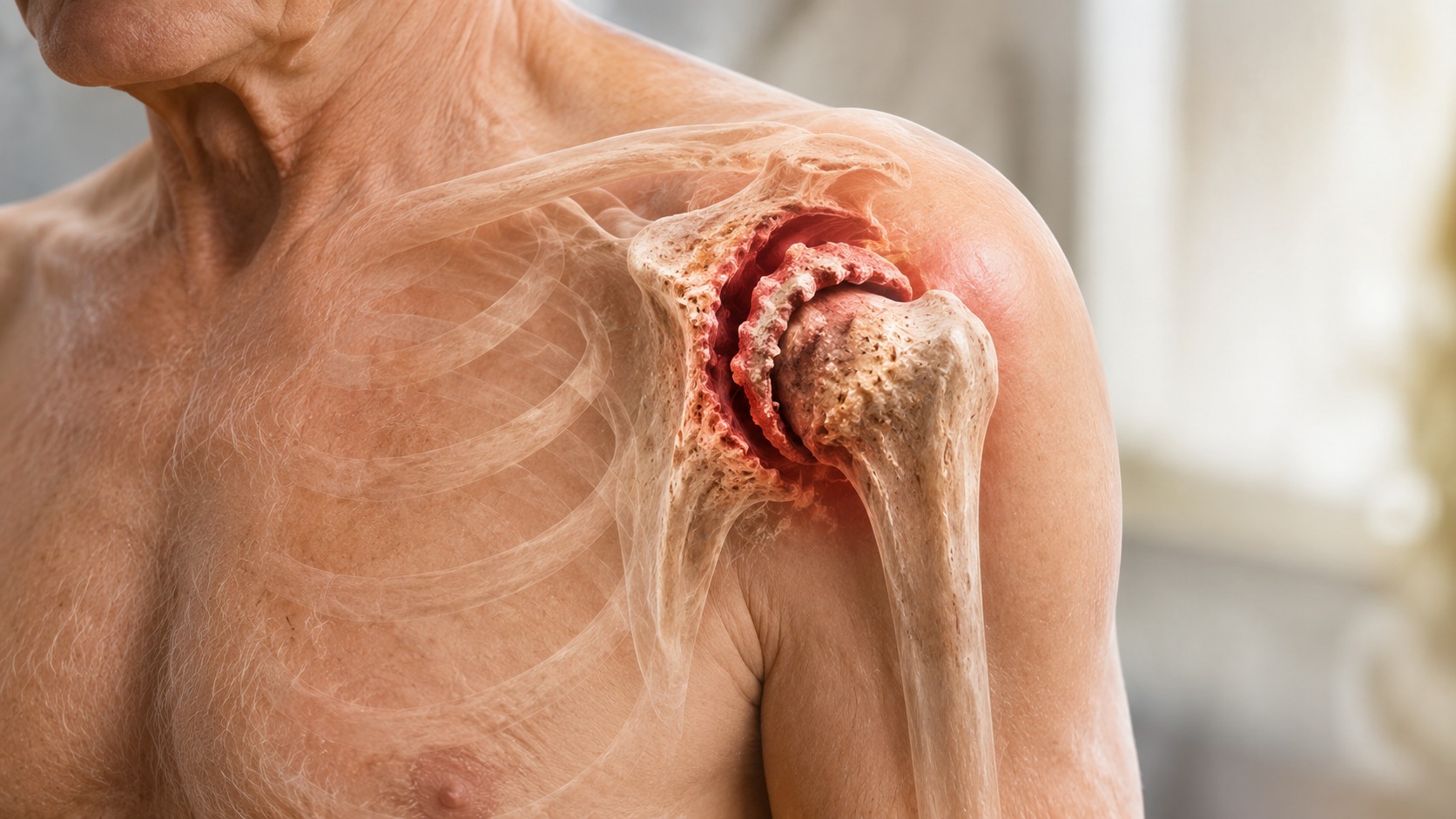
Shoulder Arthritis: Symptoms, Treatment and Shoulder Replacement Surgery
An evidence-based guide to shoulder (glenohumeral) arthritis: symptoms, diagnosis, exercises, injections, shoulder replacement surgery and recovery.
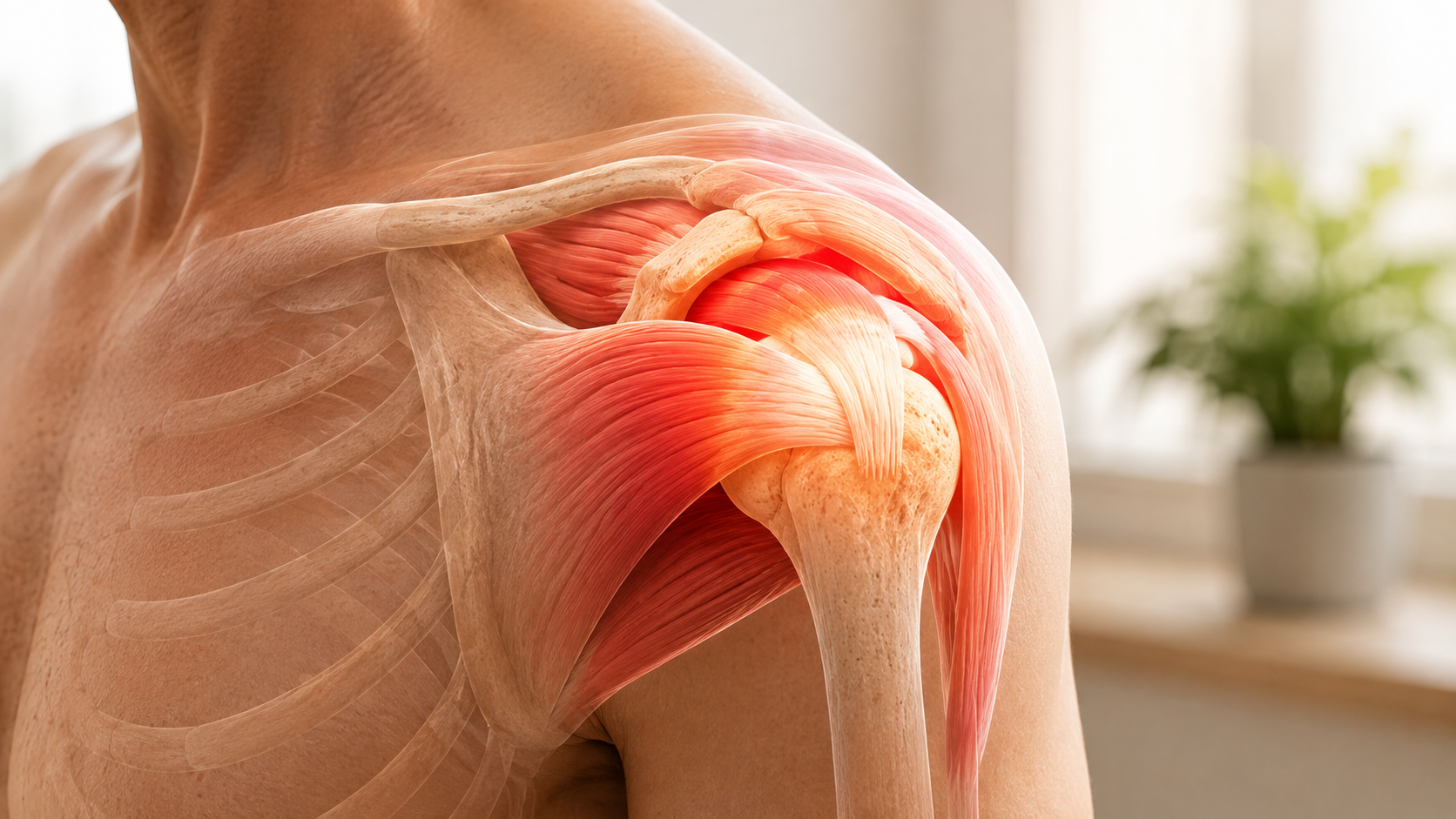
Rotator Cuff Tear: Symptoms, Treatment, Surgery and Recovery
An evidence-based guide to rotator cuff tears: symptoms, diagnosis, physiotherapy, injections, surgery and recovery.
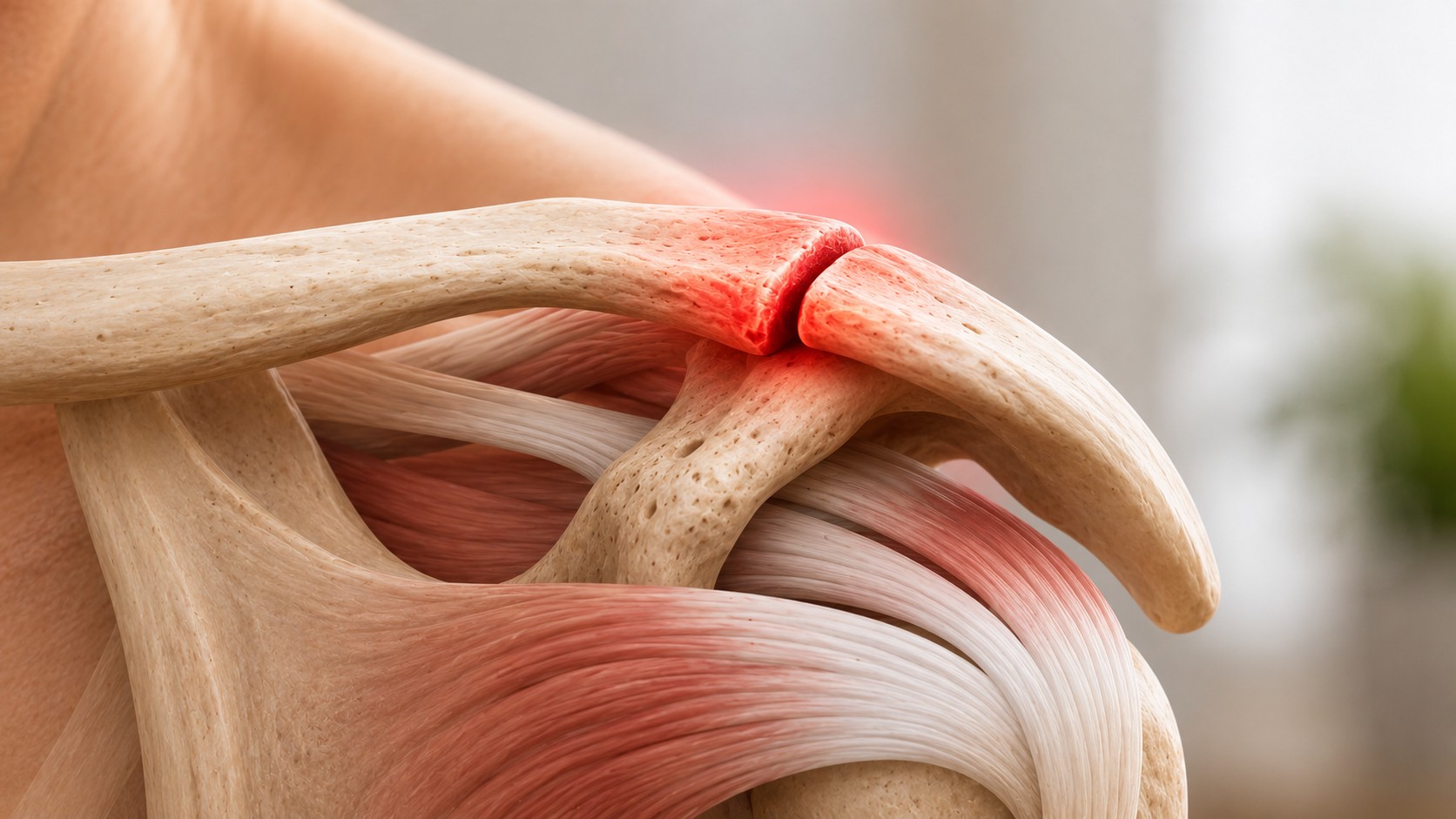
Shoulder Impingement: Symptoms, Exercises, Treatment and Recovery
An evidence-based guide to shoulder impingement (subacromial pain syndrome): symptoms, diagnosis, exercises, injections, surgery and recovery.