
Shoulder Impingement: Symptoms, Exercises, Treatment and Recovery
Shoulder impingement is a common term used to describe pain around the outer shoulder and upper arm, particularly when lifting the arm overhead. You may also hear it called subacromial pain syndrome, rotator cuff-related shoulder pain, subacromial bursitis or painful arc syndrome.
The traditional explanation was that a tendon or bursa became physically "pinched" beneath the bone at the top of the shoulder. We now understand that the condition is usually more complex. Pain may involve the rotator cuff tendons, the subacromial bursa, changes in shoulder loading and movement, and other individual factors. There is no single scan finding or examination test that explains every case.
The encouraging news is that most people improve without surgery. Education, sensible activity modification and progressive shoulder exercises form the basis of treatment.
Key points
- Shoulder impingement usually causes pain over the outer shoulder or upper arm, especially during overhead activity.
- The modern term subacromial pain syndrome is often more accurate, because symptoms are not always caused by simple mechanical pinching.
- Diagnosis is usually based on the history and clinical examination; a scan is not normally needed at the start.
- Physiotherapy and progressive exercise are the main treatments and are more effective than doing nothing.
- Steroid injections may provide short-term relief, but they do not improve the long-term outcome.
- Routine subacromial decompression surgery does not provide a meaningful advantage over physiotherapy or placebo surgery for most patients.
What is shoulder impingement?
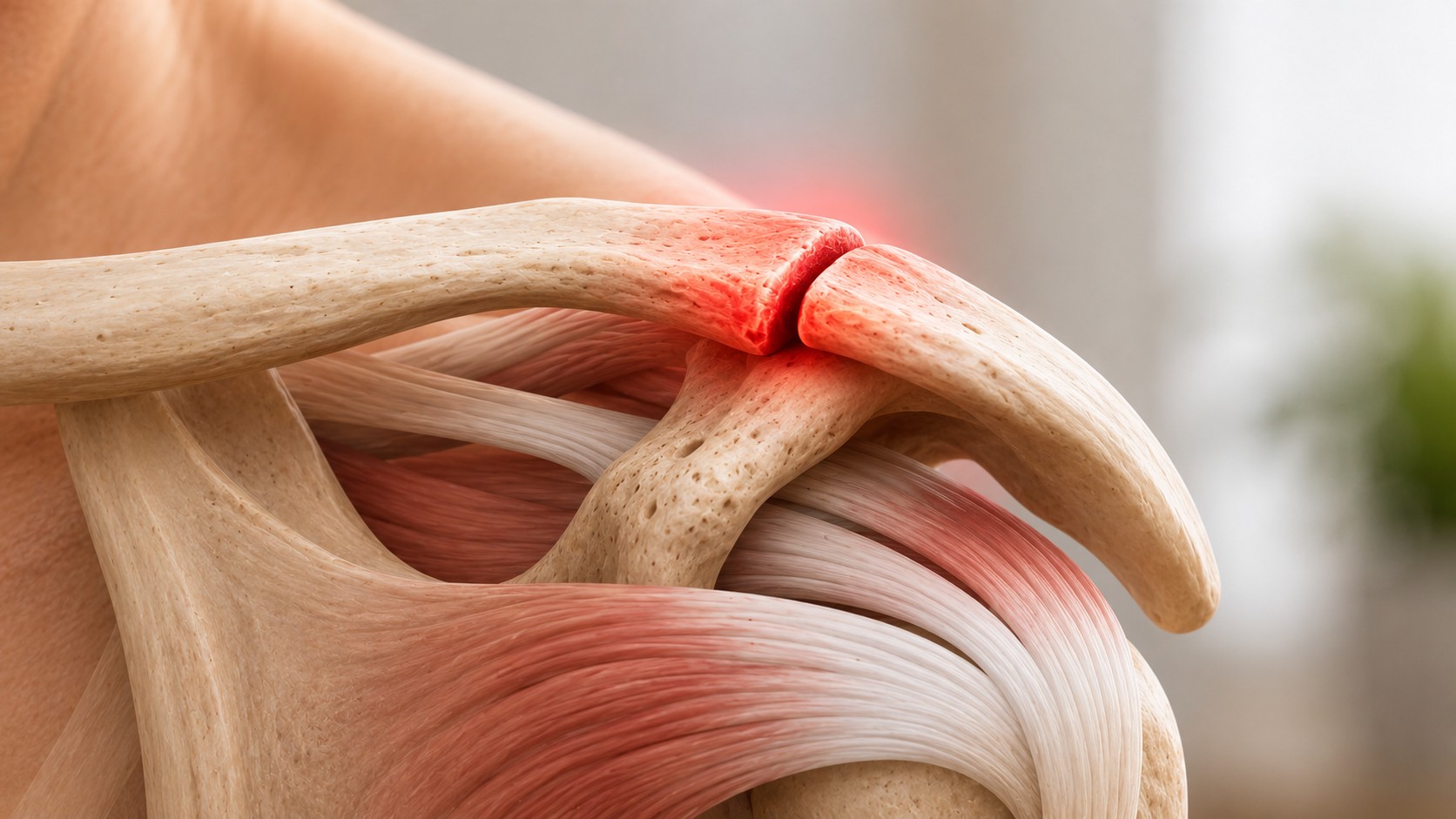
The shoulder is a ball-and-socket joint. The ball at the top of the upper arm bone, called the humeral head, sits within a shallow socket on the shoulder blade. Above the joint is a bony projection called the acromion.
The area between the humeral head and the acromion is called the subacromial space. Within this space lie part of the rotator cuff tendons, the subacromial bursa and supporting soft tissues.
The rotator cuff is a group of four muscles and their tendons that help control movement and keep the humeral head centred within the shoulder socket. The bursa is a thin, fluid-filled sac that helps the tendons glide smoothly beneath the acromion. When these tissues become painful, the symptoms are often described as shoulder impingement or subacromial pain.
Is “shoulder impingement” still the correct term?
The phrase remains widely used, but specialists increasingly prefer subacromial pain syndrome or rotator cuff-related shoulder pain. This is because the traditional idea of a tendon repeatedly being trapped by bone does not explain every patient's symptoms.
Subacromial pain may be associated with rotator cuff tendinopathy, irritation of the subacromial bursa, changes in how the shoulder tolerates load, altered shoulder blade or arm movement, stiffness in surrounding tissues, changes in activity, age-related structural findings, and psychological and general health factors.
There is no universally accepted definition or single structural cause — more than 20 different terms have historically been used to describe this group of symptoms. For patients, the most useful message is that pain during arm elevation does not necessarily mean that the shoulder is being damaged or that a tendon is being trapped each time you move.
What causes shoulder impingement?
There is rarely one single cause. Symptoms may begin when the load placed on the shoulder exceeds the current capacity of the muscles and tendons.
Examples include suddenly increasing gym activity, decorating or painting overhead, hedge trimming, throwing sports, swimming, repeated lifting, prolonged work with the arm raised, and returning to activity after a period of rest. The pain may also begin after a minor injury, although a clear cause is not always identified.
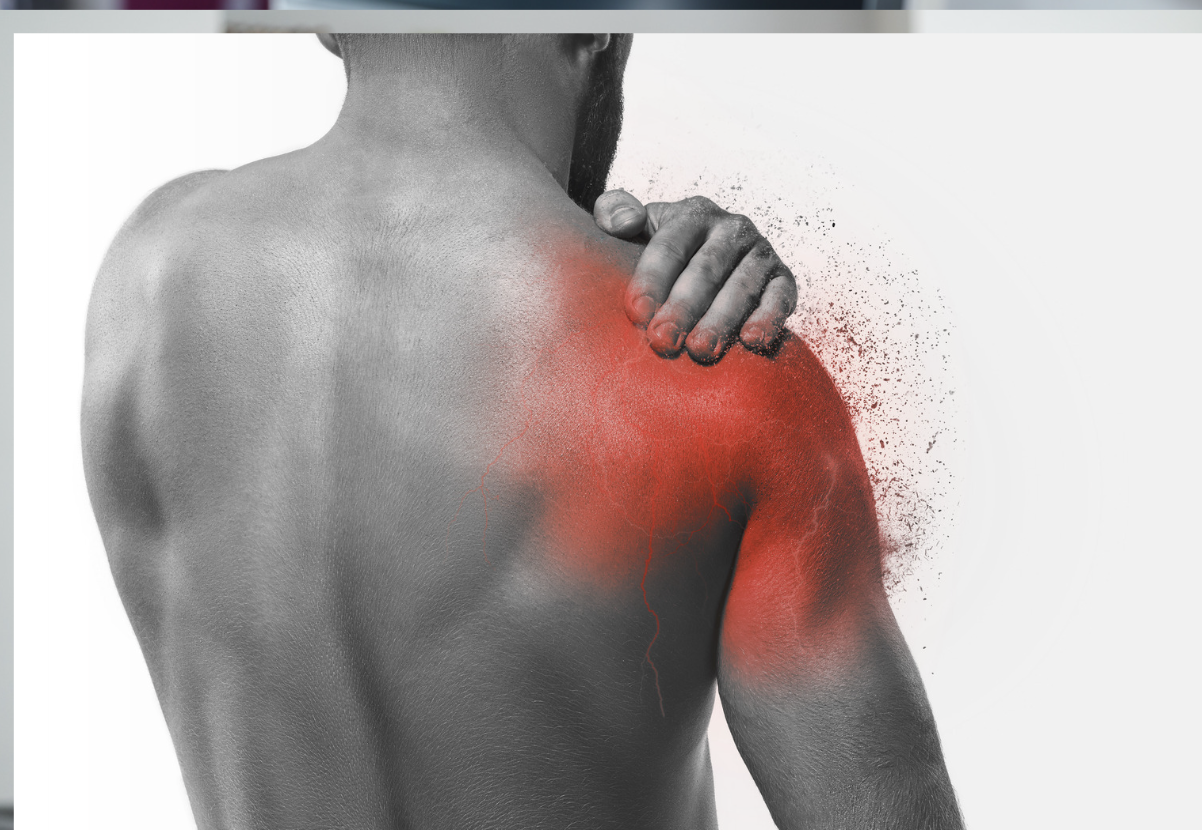
Rotator cuff tendon irritation
The rotator cuff tendons may become painful following repeated or unfamiliar loading. This does not necessarily mean the tendon is torn — tendons can become sensitive and painful while remaining structurally intact.
Subacromial bursitis
The bursa may become irritated and sensitive. This can contribute to pain when lifting the arm or lying on the affected side.
Changes in shoulder movement
The shoulder depends on coordinated movement between the humeral head, the shoulder blade, the rotator cuff, the deltoid and the upper back and trunk. Changes in strength, control or movement may increase stress on painful tissues.
Age-related structural changes
Bone spurs, tendon thickening and changes in acromial shape are often seen on scans. However, these findings are also common in people without shoulder pain, so they should not automatically be assumed to be the cause.
General health and psychological factors
Pain and recovery may also be influenced by diabetes, high blood pressure, abnormal cholesterol, central obesity, poor sleep, anxiety, fear of movement, low confidence in recovery, and stress or depression. These factors do not mean the pain is “in your head” — they can alter pain sensitivity, tissue health and rehabilitation outcomes.
Who is affected?
Subacromial pain is common, particularly in middle age. Around 2.4% of people in the UK consult primary care about shoulder pain each year, and shoulder pain appears to be more common in women than men.
People may be more likely to develop symptoms if their work or hobbies involve repeated overhead movement, throwing, lifting away from the body, prolonged manual activity or sudden changes in exercise volume. However, many people develop shoulder pain without any obvious trigger.
What are the symptoms of shoulder impingement?
The most common symptom is pain around the outer shoulder or upper arm. Pain is often worse when raising the arm, reaching overhead, lifting a weight, reaching behind the back, putting on a coat, brushing or drying the hair, reaching into a cupboard, hanging washing, driving or lying on the affected side.
Other symptoms may include a painful arc during arm elevation, a catching sensation, night pain, reduced movement because of pain, weakness caused by pain, and difficulty with work, sport or household tasks. The pain may travel down the upper arm but usually does not extend into the hand.
What is a painful arc?
A painful arc means that shoulder pain is most noticeable during a particular part of arm elevation. A typical pattern is little pain at the beginning of movement, pain as the arm rises through the middle range, and less pain again near the top. A painful arc can support the diagnosis of subacromial pain, but it is not specific enough to make the diagnosis by itself.
Is shoulder impingement the same as a rotator cuff tear?
No. The two conditions can produce similar symptoms, but they are not the same. Subacromial pain syndrome usually refers to non-traumatic shoulder pain without clear evidence of a full-thickness rotator cuff tear, frozen shoulder, arthritis, shoulder instability, calcific tendinitis or neck and neurological disease.
A rotator cuff tear is a structural defect in one or more tendons. A person may have subacromial pain without a tear, a rotator cuff tear without pain, or both a tear and pain. This is why clinical assessment matters.
How is shoulder impingement diagnosed?
Shoulder impingement is primarily a clinical diagnosis. Your clinician will ask about when the pain began, whether there was an injury, which movements are painful, night pain, weakness, stiffness, work and sport, neck symptoms, numbness or tingling, general health, and the effect of pain on sleep and daily life.
The examination may assess active and passive shoulder movement, rotator cuff strength, the painful arc, pain during resisted movements, shoulder stability, neck movement, nerve function, and signs of frozen shoulder or arthritis. Tests such as the Hawkins–Kennedy, Neer, Jobe and resisted external rotation tests may be used together, but no single test is completely reliable.
Do I need an X-ray, ultrasound or MRI?
Not usually at the beginning. Most cases can be diagnosed and treated based on the history and examination, and additional imaging is not essential before beginning rehabilitation.
An X-ray may be considered if there is a history of trauma, severe pain, significant stiffness, concern about arthritis, a suspected fracture, long-lasting symptoms or a red flag. Ultrasound or MRI may be considered when symptoms persist despite treatment, the diagnosis remains uncertain, there is marked weakness, a rotator cuff tear is suspected, surgery is being considered, or another shoulder condition needs to be excluded.
Ultrasound is usually a good first-line investigation when performed by an experienced clinician, while MRI provides more detailed assessment of the tendons, muscles and other structures. A scan should only be requested when the result is likely to change treatment.
What else can cause similar shoulder pain?
Several conditions can resemble shoulder impingement, including rotator cuff tear, frozen shoulder, shoulder arthritis, acromioclavicular joint arthritis, calcific tendinitis, shoulder instability, biceps tendon problems, pain referred from the neck, nerve compression and inflammatory arthritis. A careful assessment helps distinguish these conditions.
Will shoulder impingement get better?
Most people improve without surgery. Subacromial pain is often self-limiting, and many patients respond within approximately three months. Some people improve in 6–12 weeks, while others need several months of rehabilitation.
Recovery is rarely perfectly smooth. It is normal to experience good and bad days, short flare-ups, slower progress after increasing activity and temporary soreness after exercise. A flare-up does not necessarily mean that damage has occurred.
Treatment for shoulder impingement
Treatment aims to reduce pain, restore movement, improve shoulder strength, increase tolerance of activity, help you return to work, sport and daily tasks, and reduce the likelihood of recurring symptoms. The main treatments are education, activity modification and exercise.
Activity modification
Complete rest is usually not helpful. Instead, temporarily change activities that repeatedly provoke severe pain. Helpful approaches include reducing prolonged overhead tasks, breaking large jobs into shorter periods, bringing objects closer to the body, stepping towards an object instead of reaching, alternating heavier and lighter tasks, taking regular breaks, adjusting work height and gradually rebuilding activity.
Avoiding all shoulder movement for a prolonged period may cause weakness, stiffness, loss of confidence and reduced exercise tolerance. The aim is to keep the shoulder moving within a manageable range while gradually increasing capacity.
Physiotherapy and shoulder impingement exercises
Physiotherapy is the main evidence-based treatment. Exercise is more effective than doing nothing and can improve pain and function over both short- and longer-term follow-up. A programme may include shoulder movement exercises, rotator cuff strengthening, shoulder blade exercises, progressive resistance training, gradual overhead loading, work- or sport-specific rehabilitation, and advice about pacing and flare-ups.
There is no single exercise programme proven to be best for everyone. The most appropriate programme depends on current pain levels, movement, strength, activity goals, work or sport, confidence and the irritability of symptoms.

Supported table slide
Place both hands on a towel on a table or worktop. Gently slide the hands forwards as far as comfortable, then return. This helps maintain shoulder elevation without lifting the full weight of the arm.
Wall slide
Place the hand or forearm against a wall and slowly slide upwards. Move only as far as feels manageable.
Isometric external rotation
Keep the elbow close to the side and bent to 90 degrees. Press the back of the hand gently against the opposite hand or a wall without allowing movement.
Isometric internal rotation
Keep the elbow close to the side. Press the palm into the opposite hand without moving the arm.
Shoulder blade exercise
Gently draw the shoulder blades backwards and slightly down without forcefully squeezing or shrugging.
How should exercises progress?
Rehabilitation usually progresses from lower-load exercises towards more demanding movements.
Early phase: maintain movement, reduce fear, begin gentle loading, prevent stiffness and settle highly irritable symptoms.
Middle phase: improve rotator cuff strength, increase shoulder control, build tolerance through different ranges and restore daily function. Examples include side-lying external rotation, supported rotation, wall slides, light resistance-band exercises and shoulder blade strengthening.
Later phase: restore overhead function, improve endurance, return to work or sport and build confidence under load. Examples include resisted arm elevation, heavier band work, wall press-ups, functional lifting and throwing or sport-specific exercises. Progress should be based on symptoms and function rather than a fixed calendar.
Is pain during exercise acceptable?
Some discomfort can be acceptable during rehabilitation. Exercise does not always need to be completely pain-free, but the response should remain manageable: mild or moderate discomfort during exercise may be acceptable, symptoms should settle reasonably soon afterwards, and the shoulder should not remain substantially worse into the next day. Repeated prolonged flare-ups suggest the programme is progressing too quickly.
If symptoms increase significantly, reduce the resistance, the number of repetitions, the movement range or the exercise frequency. There remains uncertainty about whether exercises performed below or above the pain threshold are better — the most important factor is a programme that you can tolerate and continue.
How long does physiotherapy take?
Many people begin to improve within 6–12 weeks. However, the optimum duration of physiotherapy is not known, and some people need longer; rehabilitation may continue for three to six months or occasionally more. A lack of improvement after a few weeks does not automatically mean that exercise has failed — consistency and gradual progression are important.
Do I need several physiotherapy appointments?
Not necessarily. Both a single well-structured physiotherapy session with a home exercise programme and multiple supervised sessions may be helpful, and current evidence does not show a clear long-term advantage of multiple sessions for everyone. Some patients benefit from closer supervision when they are unsure how to exercise, have significant weakness, struggle to progress, have complex work or sporting goals, lack confidence, or have other health conditions.
Pain relief
Pain relief may help you sleep, remain active and complete rehabilitation. Options may include paracetamol, topical anti-inflammatory gel, oral anti-inflammatory medication, ice and heat.
Medication should be discussed with a pharmacist, GP or other healthcare professional. Anti-inflammatory medication may not be suitable if you have certain stomach conditions, kidney problems, heart disease, respiratory problems or medication interactions.
Steroid injections
A steroid injection into the subacromial bursa can provide short-term relief. It may help when pain is preventing sleep, normal movement, participation in physiotherapy or basic daily activities. Evidence suggests a subacromial steroid injection can temporarily improve pain, function and range of movement, but the benefit usually lasts less than 12 weeks and does not improve the long-term outcome.
Is more than one injection better?
There is no clear additional benefit from multiple injections compared with a single injection. Repeated injections should therefore be approached cautiously.
Does the injection need ultrasound guidance?
Ultrasound-guided injections do not appear to provide better overall outcomes than injections performed using anatomical landmarks when the procedure is carried out by a suitably trained clinician.
Injection plus physiotherapy
Combining a steroid injection with physiotherapy does not appear to produce better long-term pain or function than physiotherapy alone. The main role of the injection is temporary pain relief that may help someone engage in rehabilitation.
What about PRP, hyaluronic acid and other treatments?
Treatments sometimes promoted for shoulder impingement include platelet-rich plasma injections, hyaluronic acid injections, dry needling, shockwave therapy, laser therapy, therapeutic ultrasound, acupuncture and electrotherapy.
The current evidence is uncertain or low quality. PRP results are mixed. Hyaluronic acid may have some benefit, but the evidence is not strong enough for a clear recommendation. Laser therapy may provide small short-term improvements, while dry needling, shockwave therapy and therapeutic ultrasound have not shown important consistent benefits. These treatments should not replace a progressive exercise programme.
Does posture cause shoulder impingement?
Posture may influence symptoms in some people, but there is no single “perfect posture” that everyone must maintain. Shoulder pain is unlikely to be explained simply by rounded shoulders, sitting at a desk, a slightly forward head position or one shoulder sitting lower than the other. Changing position regularly and improving general movement may help more than trying to hold the body rigidly in one ideal posture.
When is surgery considered?
Surgery is not first-line treatment for uncomplicated subacromial pain. It may only be discussed after the diagnosis has been reviewed, an appropriate course of non-surgical treatment has been completed, symptoms remain significantly disabling, imaging has excluded or identified other relevant pathology, and the benefits, limitations and risks have been discussed.
Persistent symptoms after around 12 weeks should prompt reassessment rather than an automatic decision to operate. If symptoms remain despite comprehensive non-operative treatment for around six months, surgical options may be discussed in selected cases.
What is subacromial decompression surgery?
Subacromial decompression is a keyhole operation. During surgery, the surgeon may inspect the shoulder, remove inflamed bursal tissue, smooth part of the underside of the acromion and create more space around the rotator cuff tendons. The operation was traditionally based on the idea that increasing the subacromial space would stop the tendon being pinched, but high-quality studies have challenged this explanation and the routine use of the procedure.
Does shoulder impingement surgery work?
Subacromial decompression surgery does not provide a clinically important benefit over placebo or sham surgery, physiotherapy or other conservative treatment for most adults with uncomplicated subacromial pain. It should not be used as first-line treatment, and patients should be informed that improvements after surgery may not be caused by removal of bone itself.
Some patients improve after surgery, but similar improvement may occur with time, rehabilitation and the non-specific effects of treatment. This does not mean surgery is never appropriate — it means careful reassessment is essential to identify whether there is another treatable problem, such as a significant rotator cuff tear, acromioclavicular joint arthritis, calcific tendinitis or another structural condition.
Treatment comparison
| Treatment | Potential benefit | Important limitation |
|---|---|---|
| Education and activity modification | Helps maintain movement and reduce repeated aggravation | Complete rest can lead to weakness and stiffness |
| Progressive physiotherapy | Improves pain and function; recommended first-line | Requires consistency and may take several months |
| Pain relief medication | May improve sleep and participation in exercise | Does not restore strength or change long-term recovery |
| Steroid injection | Short-term relief for pain, function and movement | Benefit usually does not last beyond 12 weeks |
| PRP or hyaluronic acid | Possible benefit in some studies | Evidence is mixed or very low quality |
| Subacromial decompression | Some patients improve after surgery | No meaningful advantage over sham surgery or physiotherapy for most patients |
How should I sleep with shoulder impingement?
Shoulder pain often feels worse at night. Helpful positions include sleeping on your back with a pillow under the upper arm, lying on the unaffected side with the painful arm supported on pillows, placing a pillow behind your back to reduce rolling onto the painful shoulder, and avoiding prolonged direct pressure on the affected side. A pillow should support the arm rather than push the shoulder upwards.
Can I continue working?
Many people can continue working with temporary adjustments. Helpful changes may include reducing overhead work, lowering the working height, keeping loads close to the body, taking regular breaks, alternating tasks, temporarily reducing repetitive lifting and using the other arm for selected tasks. A gradual return to normal duties is usually better than prolonged complete avoidance.
Can I continue exercising or going to the gym?
Yes, in most cases. You may need to modify overhead pressing, heavy lateral raises, deep dips, repeated throwing, painful bench positions and high-volume swimming. Continue activities that are tolerable and rebuild painful movements gradually. The aim is not to avoid overhead movement forever — it is to restore the shoulder's ability to tolerate it.
What is the outlook?
Most people improve with non-surgical care. Factors associated with better outcomes after physiotherapy may include confidence that rehabilitation will help, greater confidence managing pain, lower pain severity at rest and remaining engaged in work or education.
Factors associated with a less favourable outcome may include very high pain levels, symptoms present for a long time, fear of movement, significant emotional distress, poor sleep and low expectations of recovery. These factors are not fixed — many can be addressed as part of treatment.
When should you seek medical advice?
Arrange an assessment if shoulder pain persists for more than several weeks, symptoms are getting worse, night pain is affecting sleep, weakness interferes with daily activities, movement is becoming increasingly restricted, the pain began after an injury, or rehabilitation has not produced improvement.
Seek urgent medical advice if you develop severe pain after a significant injury, obvious deformity, inability to move the arm after trauma, a hot, red or swollen joint, fever or feeling generally unwell, a new lump or unexplained swelling, unexplained weight loss, persistent numbness or tingling, loss of hand strength or control, or pain associated with multiple inflamed joints.
The OrthoZone take-home message
Shoulder impingement is better understood as subacromial pain rather than a tendon simply being trapped by bone. The condition is usually diagnosed clinically, and most people improve with education, sensible activity modification and progressive shoulder strengthening. Steroid injections may provide short-term relief, but routine decompression surgery does not offer a meaningful advantage over good non-surgical treatment for most patients.
Top tips
- Keep the shoulder moving — avoid prolonged complete rest, modify painful tasks but continue comfortable daily movement.
- Give exercise enough time: most programmes need at least 6–12 weeks, and improvement may continue for several months.
- Do not assume that pain means damage — pain during arm elevation does not necessarily mean the tendon is being harmed.
- Use injections strategically: a steroid injection may reduce pain temporarily, but rehabilitation remains the main long-term treatment.
- Think carefully before surgery — routine subacromial decompression does not provide better outcomes than physiotherapy or placebo surgery for most patients.
Related articles
Rotator Cuff Tear: Symptoms, Treatment, Surgery and Recovery
An evidence-based guide to rotator cuff tears: symptoms, diagnosis, physiotherapy, injections, surgery and recovery.
Shoulder Dislocation and Instability: Treatment, Surgery and Recovery
Understand shoulder dislocation and instability, recurrence risk, physiotherapy, surgery options and recovery in this evidence-based guide.