
Rotator Cuff Tear: Symptoms, Treatment, Surgery and Recovery
A rotator cuff tear is a common cause of shoulder pain and weakness, particularly after the age of 50. Some tears develop gradually as the tendon changes with age, while others happen suddenly after a fall, shoulder dislocation or forceful lifting injury.
Finding a rotator cuff tear on an ultrasound or MRI scan does not automatically mean that surgery is needed. Many people have tears without knowing they are there, and even painful tears can often be managed successfully with physiotherapy and gradual strengthening.
This guide explains what the rotator cuff does, why tears occur, which symptoms matter, when scans are helpful, how non-surgical treatment works, when an operation may be considered and what recovery after rotator cuff repair usually involves.
Key points
- The rotator cuff is a group of four muscles and tendons that help move and stabilise the shoulder.
- Rotator cuff tears become increasingly common with age, and many do not cause symptoms.
- Most gradual, age-related tears are treated with physiotherapy before surgery is considered.
- A sudden tear after an injury may need earlier specialist assessment, particularly if the arm has become markedly weak.
- Recovery after rotator cuff repair is gradual and may continue for a year or longer.
What is the rotator cuff?
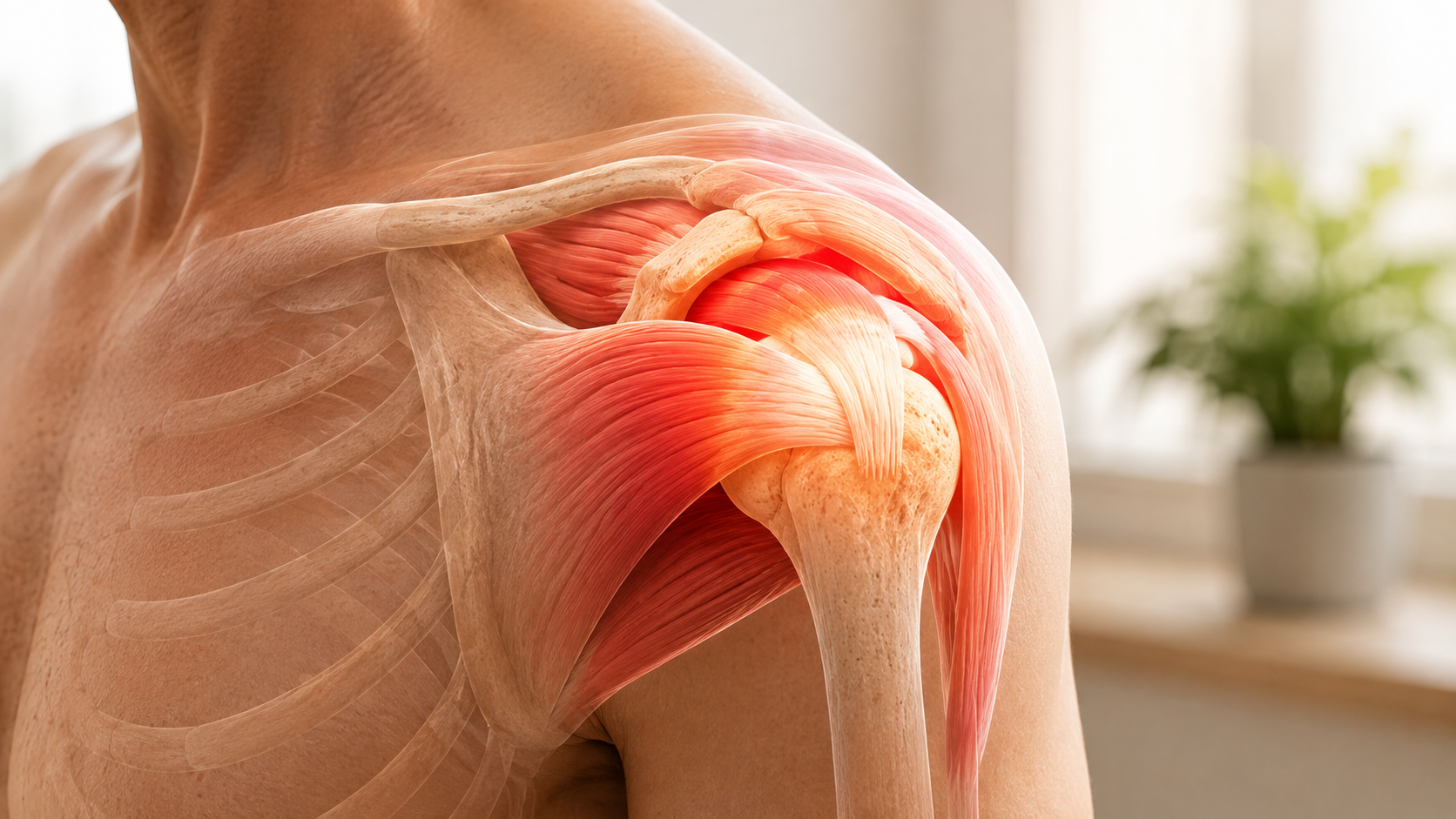
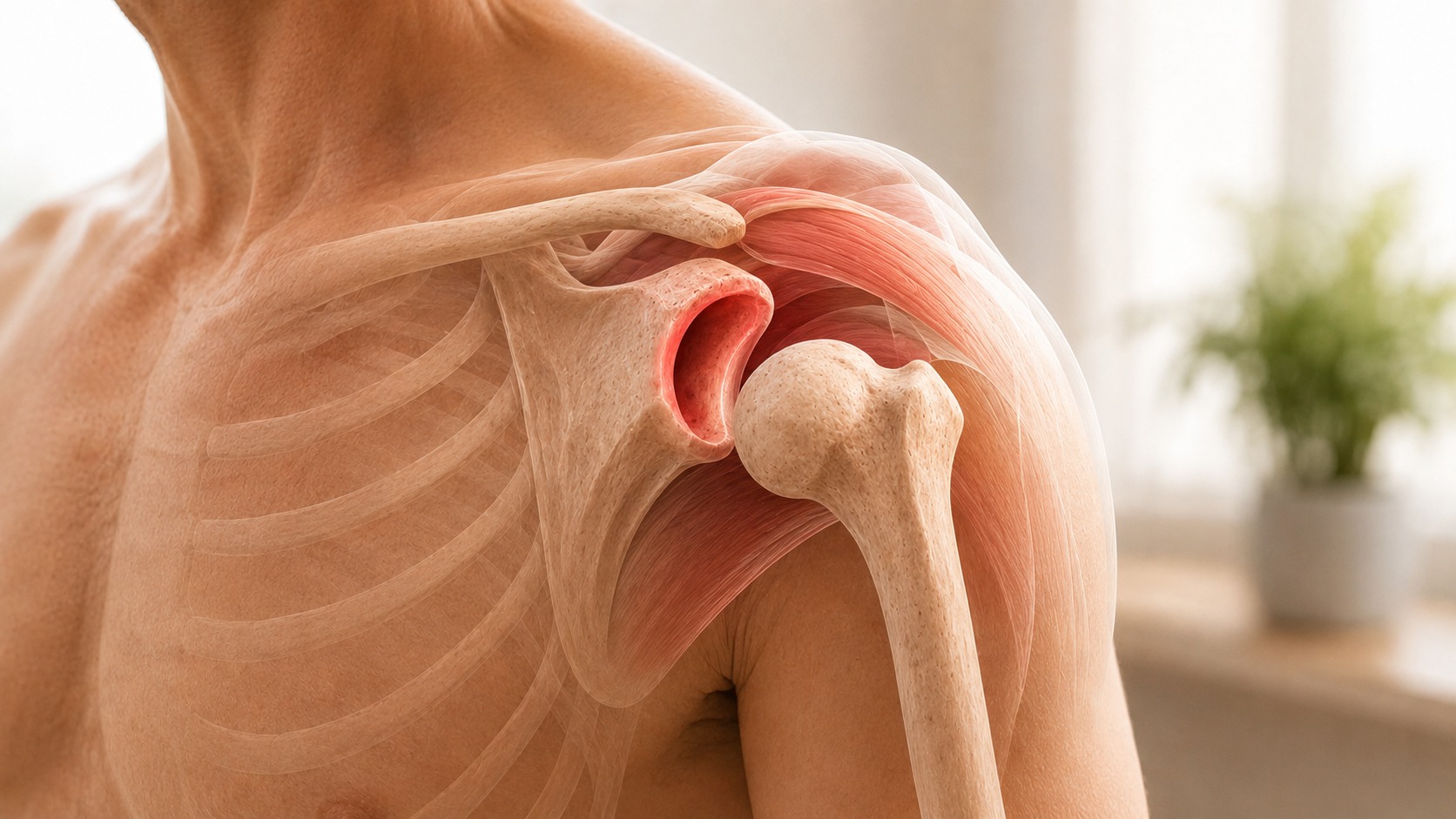
The shoulder is a ball-and-socket joint. The ball at the top of the upper arm bone, known as the humeral head, sits within a relatively shallow socket called the glenoid. This design gives the shoulder an exceptionally wide range of movement, but it also means the joint relies heavily on its muscles and tendons for support.
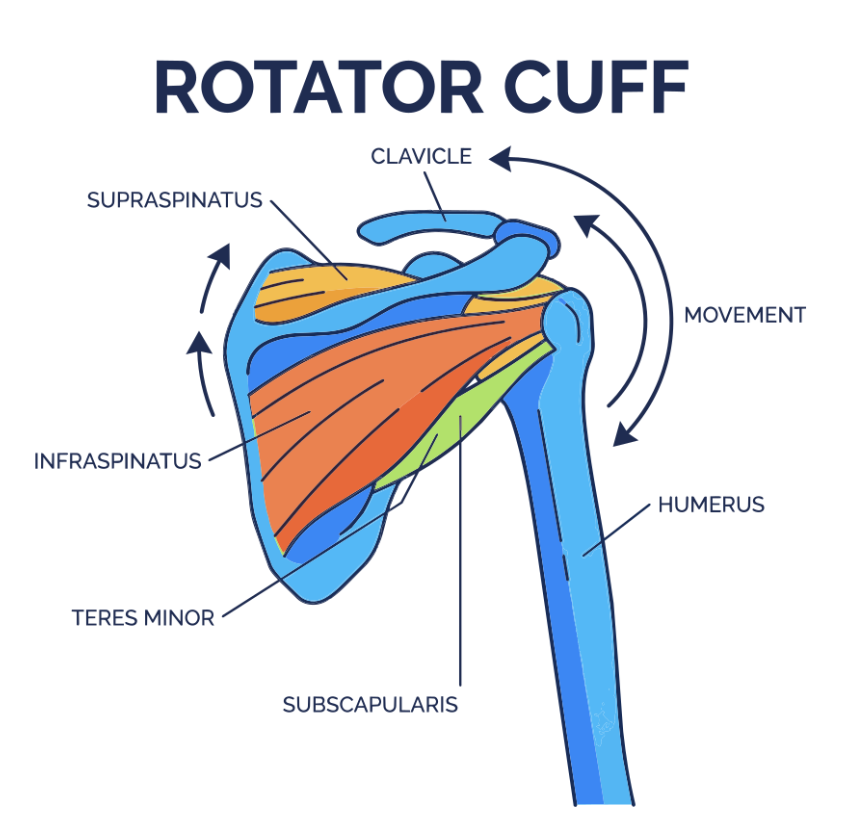
The rotator cuff consists of four muscles: supraspinatus, infraspinatus, subscapularis and teres minor. These muscles begin on the shoulder blade and form tendons that attach to the top of the upper arm bone.
Together, they help keep the ball centred within the socket, lift the arm, rotate the shoulder, control the arm during reaching and lifting, and stabilise the shoulder during movement. The supraspinatus tendon is the tendon most commonly involved in a rotator cuff tear.
What is a rotator cuff tear?
A rotator cuff tear occurs when part or all of one of the tendons becomes damaged or detached from its attachment to the bone. Tears vary considerably in size and severity.
Partial-thickness tear
A partial-thickness tear affects only part of the depth of the tendon. Some tendon fibres remain intact, and the tendon is not completely detached from the bone.
Full-thickness tear
A full-thickness tear extends through the entire depth of the tendon. In some cases the tendon remains close to the bone; in others it retracts or pulls away from its attachment.
Large or massive tear
A large tear may involve more than one rotator cuff tendon. These tears may be associated with greater weakness, tendon retraction, muscle wasting, fatty change within the muscles and reduced control of the shoulder joint.
The size of the tear is important, but it does not always predict how much pain someone will experience. Some small tears are very painful, while some large, long-standing tears cause surprisingly little discomfort.
Rotator cuff tears are common
Rotator cuff tears become more common as people get older. Many people over the age of 50 have some tendon fraying or tearing without experiencing any shoulder symptoms at all. In some cases a tear is discovered only because a scan was performed for another reason.
A rotator cuff tear on a scan does not automatically mean that the tear is causing the pain or that surgery is required. Treatment decisions should take account of how the symptoms began, pain levels, shoulder strength, daily function, age, general health, work requirements, sporting demands, the type and size of tear and the quality of the tendon and muscles. The scan is only one part of the overall picture.
What causes a rotator cuff tear?
Degenerative tears
Degenerative tears develop gradually over time. As we age, the tendons may become thinner, less resilient and more vulnerable to injury, and there may be no single event that caused the tear.
Symptoms sometimes begin after a change in activity such as gardening after a period of inactivity, decorating, repeated overhead work, lifting more than usual, starting a new exercise programme, increasing gym activity, carrying heavy bags or prolonged manual work. Shoulder pain may develop when the physical load placed on the shoulder exceeds the current capacity of the muscles and tendons. This does not necessarily mean serious damage has occurred — it may mean the shoulder has been asked to do more than it is currently conditioned to tolerate.
Traumatic tears
A traumatic rotator cuff tear happens suddenly following an injury such as falling onto the shoulder, falling onto an outstretched hand, a shoulder dislocation, lifting a heavy object unexpectedly, a sudden pulling injury or a sporting accident.
A traumatic tear may cause immediate shoulder pain, sudden weakness, difficulty lifting the arm and a noticeable loss of function. A recent traumatic tear, especially when there is marked weakness or inability to lift the arm, may need earlier assessment by a shoulder specialist.
Risk factors
Factors associated with rotator cuff tears include increasing age, repetitive overhead work, repeated heavy lifting, smoking, diabetes, poor tendon quality, previous shoulder injury, shoulder dislocation and long-term tendon degeneration. These factors do not mean that a tear is inevitable, but they may affect tendon health and healing potential.
What are the symptoms?
Symptoms vary from person to person. Common symptoms include pain over the outer shoulder, pain spreading into the upper arm, pain lifting the arm, pain reaching overhead, pain reaching behind the back, night pain, difficulty lying on the affected side, weakness lifting objects, reduced range of movement and a catching or painful arc during movement.
Pain may be particularly noticeable when washing or drying your hair, putting on a coat, fastening clothing, reaching into a cupboard, lifting a kettle, carrying shopping or putting luggage into an overhead locker. Night pain is common and may significantly affect sleep.
Why does a rotator cuff tear hurt?
The tear itself is not always the only source of pain. Shoulder pain may also be influenced by irritation of the tendon, sensitivity of the bursa, altered movement of the shoulder, muscle weakness, sudden changes in activity, poor sleep, stress, fear of movement and other health conditions.
The bursa is a small fluid-filled sac that helps reduce friction between the rotator cuff and the structures above it. If the bursa becomes irritated, lifting the arm may become painful even when the tendon tear itself has not changed. Pain can also be affected by sleep quality, anxiety, stress, body weight and conditions such as diabetes or chronic lung disease. This helps explain why two people with similar-looking scans may experience very different symptoms.
How is a rotator cuff tear diagnosed?
Diagnosis begins with a careful history and examination. A clinician may ask whether the pain started gradually or after an injury, whether you can lift the arm, whether the shoulder feels weak, whether pain disturbs sleep, which daily activities are difficult, whether you have neck pain, numbness or tingling, and whether you have had a previous shoulder dislocation.
The examination usually assesses shoulder movement, rotator cuff strength, pain during resisted movements, shoulder stability, stiffness, neck function, nerve function in the arm and signs of arthritis. No single shoulder test can diagnose every rotator cuff tear accurately — the diagnosis is usually based on the overall pattern of symptoms, examination findings and, where appropriate, imaging.
Do I need a scan?
Not everyone with shoulder pain needs a scan. Age-related tendon and bursal changes are common, including in people who have no symptoms, so a scan performed too early may identify changes unrelated to the pain. Imaging becomes more useful when symptoms began after a significant injury, there is marked weakness, the arm cannot be raised properly, the diagnosis remains uncertain, symptoms do not improve with treatment, or surgery is being considered.
X-ray
An X-ray does not show the rotator cuff tendon directly. It may help identify shoulder arthritis, fractures, bone spurs, changes around the acromion, altered position of the humeral head and other causes of shoulder pain.
Ultrasound scan
An ultrasound scan can assess partial-thickness tears, full-thickness tears, tendon movement, bursal inflammation and the long head of the biceps tendon. Ultrasound is often enough to confirm a rotator cuff tear.
MRI scan
MRI provides more detailed information about tear size, which tendons are involved, tendon retraction, muscle wasting, fatty degeneration, tendon quality and other shoulder conditions. MRI is particularly useful when an operation is being considered.
Do rotator cuff tears heal by themselves?
A complete full-thickness tear does not usually reattach itself to the bone without surgery. However, this does not mean that the shoulder cannot improve. Many people regain good function without repairing the tear because the remaining rotator cuff muscles become stronger, the deltoid becomes more effective, the shoulder blade muscles compensate, movement improves, sensitivity settles and the shoulder gradually tolerates more load.
Pain and function can improve even when the tear remains visible on a scan. This is why physiotherapy is often recommended before surgery for age-related rotator cuff tears.
Non-surgical treatment
Treatment depends on whether the tear was traumatic or degenerative, the severity of pain, the degree of weakness, age, activity level, work requirements, tear size, tendon quality and response to rehabilitation. Most long-standing or degenerative tears are treated non-surgically at first.
Activity modification
Activity modification means temporarily reducing or changing the movements that repeatedly trigger severe pain. It does not usually mean resting the arm completely.
Helpful strategies include reducing repetitive overhead lifting, breaking large tasks into smaller sections, stepping closer to an object rather than reaching at arm's length, alternating heavy and light tasks, taking regular breaks, avoiding sudden forceful lifting during a flare-up and continuing gentle daily movement. Too much rest may lead to further weakness and reduced capacity.
Physiotherapy
Physiotherapy is the main treatment for many degenerative rotator cuff tears. A rehabilitation programme may focus on restoring shoulder movement, strengthening the rotator cuff, strengthening the deltoid, improving shoulder blade control, increasing tolerance of overhead activity, reducing fear of movement and returning gradually to work or sport.
Common rotator cuff exercises include wall slides, worktop slides, wall press-ups, supported shoulder rotation, assisted arm lifts, resistance-band external rotation and progressive shoulder strengthening. The programme should be adjusted to your current strength, pain and function.
How long does physiotherapy take to work?
Rotator cuff rehabilitation takes time. Some people notice improvement within six weeks, but many need at least 12 weeks of consistent exercise before a meaningful change becomes clear, and further improvement may continue for up to six months. You may not notice much change during the first few weeks — this does not necessarily mean the programme is failing. Muscles and tendons adapt gradually, and stopping too early may mean the shoulder has not had enough time to become stronger.
Is pain during exercise normal?
Some discomfort during exercise can be normal — the exercise needs to be challenging enough for the shoulder muscles to adapt. A reasonable level of discomfort should remain tolerable, settle soon after exercise, not cause a prolonged flare-up and gradually become easier over time. A pain level of around 4 out of 10 is sometimes used as a guide to manageable discomfort during rehabilitation.
If the pain remains significantly worse for several hours, the programme may need to be modified by reducing the resistance, the range of movement, the number of repetitions, the frequency or the speed of progression.
Pain relief
Pain relief may help you sleep, remain active and complete your exercise programme. Depending on your medical history, options may include paracetamol, anti-inflammatory medication, topical anti-inflammatory gel, heat and ice.
Painkillers should be used according to the advice of a pharmacist, GP or treating clinician. Anti-inflammatory medicines are not suitable for everyone, particularly people with certain stomach, kidney, heart or respiratory conditions.
Steroid injections
A corticosteroid injection may provide temporary pain relief. It may be considered when pain is preventing sleep, normal movement, participation in physiotherapy or basic daily activities.
A steroid injection does not repair the tendon or restore muscle strength. It is best viewed as a possible way of reducing pain enough to allow rehabilitation to continue. Repeated injections are generally approached cautiously because they may adversely affect tendon health.
When is surgery considered?
Rotator cuff surgery may be considered when the tear occurred after a significant injury, there is marked weakness, the arm cannot be lifted properly after trauma, symptoms remain disabling despite rehabilitation, daily activities remain severely affected, work or sport remains impossible, the tendon appears repairable and the expected benefits outweigh the risks.
A recent traumatic tear may need earlier assessment because the tendon can retract and the muscle may gradually deteriorate over time. Age-related tears are more commonly treated with physiotherapy first.
Does age determine whether surgery is suitable?
Age influences tendon quality and healing, but age alone should not decide treatment. Other important factors include how the tear occurred, tear size, tendon retraction, muscle quality, smoking, diabetes, activity level, general health, degree of weakness and personal goals.
A healthy, active older patient with a recent traumatic tear may have very different needs from someone of the same age with a long-standing degenerative tear. The decision should be personalised rather than based on a strict age cut-off.
What does rotator cuff repair involve?
Rotator cuff repair is usually performed using arthroscopic keyhole surgery. A small camera is inserted into the shoulder, the torn tendon is identified, the tendon edge is prepared and the bone attachment site is cleaned. Small anchors are then inserted into the upper arm bone, sutures from the anchors are passed through the tendon, and the tendon is secured back onto the bone.
The operation is usually performed under general anaesthetic, and a regional nerve block may also be used to reduce pain during the first day or two after surgery. Sometimes the tendon is too retracted, too fragile or too extensively damaged to allow a complete repair; in these cases a partial repair or another procedure may be considered.
What are the risks of surgery?
Possible risks include infection, bleeding, persistent pain, shoulder stiffness, nerve injury, blood vessel injury, blood clots, anaesthetic complications, failure of the tendon to heal and re-tear. Deep infection, significant nerve injury and blood clots are uncommon, although some patients develop stiffness or ongoing pain after surgery.
The risk of failed healing or re-tear is higher when the tear is large, the tendon is poor quality, the muscle has undergone fatty degeneration, the patient smokes, the patient is older, or postoperative restrictions are not followed. Smoking is particularly important because it may reduce blood supply to the healing tendon.
Recovery after rotator cuff repair
Recovery varies according to tear size, tendon quality, which tendons were repaired, whether the repair was complete, age, general health, rehabilitation progress and surgeon preference. Your own surgical team's instructions should always take priority over general advice.
| Time after surgery | Typical recovery stage |
|---|---|
| 0–3 weeks | Sling protection, wound care, hand and elbow exercises |
| 3–6 weeks | Sling may continue; assisted shoulder movement begins or progresses |
| 6–12 weeks | Gradual return to light daily activities |
| Around 12 weeks onward | Strengthening becomes more important |
| 4–6 months | Gradual return to heavier work and more demanding activities |
| 6–12 months | Continued improvement in pain, strength and confidence |
| Up to 1–2 years | Further gains may still occur |
A sling is often worn for around four weeks and sometimes up to six weeks after a larger repair. Most improvement occurs during the first six months, but recovery may continue for one to two years.
Sleeping after surgery
Sleeping can be difficult during the early stages of recovery. Helpful strategies include sleeping on your back, supporting the elbow with a pillow, placing a pillow beneath the upper arm, sleeping on the unaffected side with pillows supporting the operated arm, and avoiding lying directly on the operated shoulder. Patients are commonly advised not to sleep on the operated side during the first six weeks.
When can I return to work?
Return to work depends on the demands of the job. Someone with an office-based role may return earlier than someone whose job involves heavy lifting, overhead work, manual labour, pushing or pulling, or repetitive shoulder movement. Many people require approximately 4–12 weeks away from work, and heavy manual work and repeated overhead activity may need to be avoided for around 4–6 months.
When can I drive?
You should not drive while wearing a sling. Before returning to driving you should be able to control the steering wheel safely, use all vehicle controls, perform an emergency stop, react quickly, drive without the sling and comply with your insurer's requirements. Driving may be possible around 2–3 weeks after the sling has been discontinued, although this varies considerably.
When can I return to sport?
Return to sport depends on pain, movement, strength and tendon healing. Approximate examples include gentle swimming at around 8–12 weeks, light gardening at around 12 weeks, golf or bowls at around 16 weeks, and tennis, squash or badminton at around 4–6 months. These are broad estimates — your surgeon and physiotherapist should guide your individual return to sport.
Non-surgical treatment versus surgery
| Non-surgical treatment | Rotator cuff repair |
|---|---|
| Usually first choice for degenerative tears | More likely after a traumatic tear or persistent disability |
| Avoids operative risks | Aims to reattach the tendon to the bone |
| Requires consistent rehabilitation | Requires prolonged protection and rehabilitation |
| Tear may remain visible on scans | Repair may not always heal completely |
| Pain and function may still improve significantly | May improve strength and function in suitable patients |
| Recovery begins immediately | Full recovery may take many months |
What is the outlook?
Many people with degenerative rotator cuff tears improve without surgery. The tear may remain visible on a scan, but pain, strength and function can improve through rehabilitation. Rotator cuff repair can improve pain and function in appropriately selected patients, but it does not guarantee a completely normal shoulder — some patients continue to experience weakness, stiffness, reduced endurance, pain with heavier activity, failure of the tendon to heal or a recurrent tear. Realistic expectations are important, particularly after a large or long-standing tear.
When should you seek medical advice?
Arrange an assessment if shoulder pain is not improving after several weeks, pain significantly affects sleep, weakness interferes with daily activities, you cannot raise the arm normally, symptoms began after a fall or dislocation, the shoulder is becoming increasingly stiff, or symptoms persist despite rehabilitation.
Seek urgent medical advice if you develop sudden inability to lift the arm after an injury, obvious deformity, marked swelling, a hot red joint, fever or feeling generally unwell, unexplained weight loss, persistent numbness or tingling, loss of hand control, sudden severe weakness, or severe constant pain that is rapidly worsening.
The OrthoZone take-home message
A rotator cuff tear does not automatically mean that surgery is needed. Many age-related tears improve with carefully progressed exercise, even though the tear remains visible on a scan. Surgery is more likely to be considered after a significant traumatic tear or when persistent pain and weakness continue despite a structured rehabilitation programme. The best treatment depends on the person, not simply the MRI result.
Top tips
- Do not panic about the scan — rotator cuff tears are common, especially with age, and many do not cause symptoms.
- Give physiotherapy enough time: a structured strengthening programme usually needs at least 12 weeks.
- Keep the shoulder moving sensibly — modify severely painful activities, but avoid prolonged unnecessary rest.
- Seek early assessment after a significant injury, particularly with sudden weakness or inability to lift the arm.
- Prepare for a gradual recovery after surgery: protecting the repair and completing rehabilitation are essential.
Related articles
Shoulder Impingement: Symptoms, Exercises, Treatment and Recovery
An evidence-based guide to shoulder impingement (subacromial pain syndrome): symptoms, diagnosis, exercises, injections, surgery and recovery.
Shoulder Dislocation and Instability: Treatment, Surgery and Recovery
Understand shoulder dislocation and instability, recurrence risk, physiotherapy, surgery options and recovery in this evidence-based guide.