
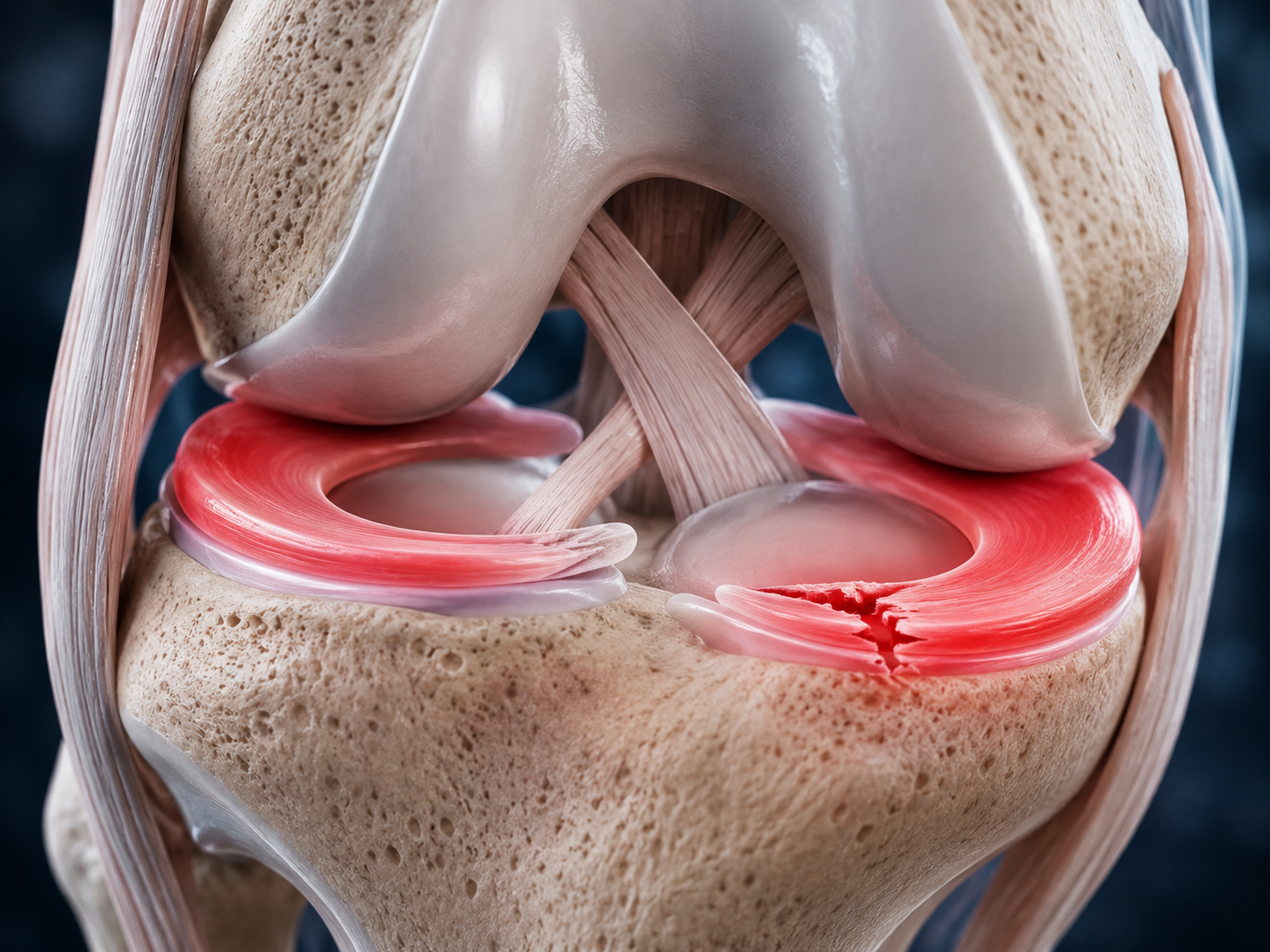
Meniscus Tears: Symptoms, Treatment, Surgery and Recovery
A meniscus tear is one of the most common findings on a knee MRI, but the words "torn meniscus" do not automatically mean that an operation is needed.
Some tears happen suddenly during sport or after a twisting injury. Others develop gradually as the meniscus changes with age and may form part of the wider osteoarthritis process. These two situations can look similar on a scan but often require very different treatment.
Many meniscus tears improve with time, activity modification and structured rehabilitation. Others — particularly displaced tears that lock the knee, certain meniscal root tears and repairable traumatic tears in younger patients — may benefit from earlier surgery.
This guide explains what the meniscus does, why it hurts, how traumatic and degenerative tears differ, which tears can heal, when an MRI is useful and how surgeons decide between rehabilitation, meniscal repair and partial meniscectomy.
Key points
- The menisci are load-sharing structures that help absorb shock, stabilise the knee and protect the joint cartilage.
- A meniscus tear seen on MRI may or may not be the main cause of knee pain, particularly in middle-aged and older adults.
- Most degenerative meniscal tears should initially be treated with exercise, activity modification and appropriate pain relief rather than immediate keyhole surgery.
- Surgery is more urgent when a displaced tear causes a genuinely locked knee, or when a repairable traumatic tear, root tear or associated ligament injury is present.
- When surgery is required, preserving and repairing as much meniscal tissue as possible is generally preferred to removing it.
What is the meniscus?
Each knee contains two menisci: the medial meniscus on the inner side of the knee, and the lateral meniscus on the outer side.
They are often described as two crescent-shaped pieces of cartilage sitting between the thigh bone and shin bone. However, the menisci are not simply passive cushions. They perform several important jobs.
They help to distribute body weight across the knee, absorb shock, reduce pressure on the joint cartilage, improve stability, assist lubrication and contribute to awareness of knee position.
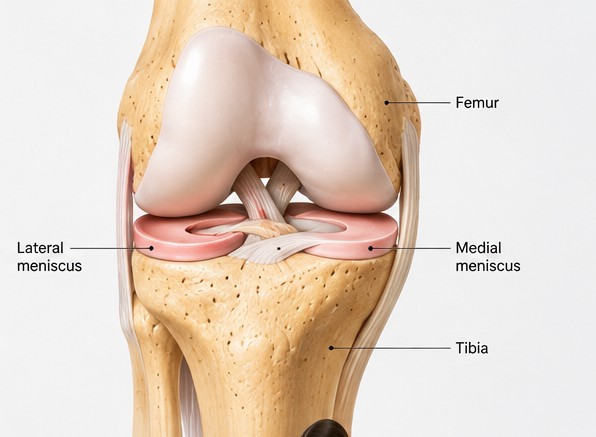
The rounded femur sits on a relatively flat top surface of the tibia. The menisci deepen this surface and improve the fit between the two bones. When part of a meniscus is removed, the remaining surface has to carry greater pressure. The more meniscal tissue that is lost, the more the load becomes concentrated on the cartilage underneath. This is why modern knee surgery aims to preserve the meniscus wherever reasonably possible.
Medial versus lateral meniscus
Medial meniscus
The medial meniscus is more firmly attached and moves less during knee motion. It is therefore more commonly injured during twisting movements. It also contributes to stability, particularly when the ACL is deficient.
Lateral meniscus
The lateral meniscus is more mobile and covers a larger proportion of the outer tibial surface. Loss of lateral meniscal tissue can be particularly significant because the outer side of the knee has more curved joint surfaces. Removing part of the lateral meniscus can therefore cause a relatively large increase in contact pressure. This is one reason surgeons are especially cautious about removing lateral meniscal tissue.
What is a meniscus tear?
A meniscus tear occurs when the fibres within the meniscus split or pull away from their attachment.
The tear may be small or extensive, stable or unstable, acute or longstanding, traumatic or degenerative, partial thickness or full thickness, and within a well-supplied or poorly supplied part of the meniscus.
A tear can remain within the normal shape of the meniscus, or part of it may become displaced into the centre of the knee.
The exact pattern matters because it influences whether the tear can heal, whether it can be repaired, whether it is likely to cause locking, how urgently treatment is required and the expected recovery.
Traumatic and degenerative tears are fundamentally different
This is the most important distinction in meniscus treatment.
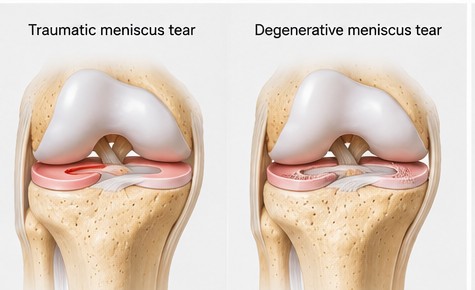
Traumatic meniscus tears
A traumatic tear usually follows a specific injury. Common mechanisms include twisting on a planted foot, changing direction during sport, deep squatting under load, landing awkwardly, a tackle or collision, and an ACL injury.
The person may remember the exact moment the knee was injured. Traumatic tears are more common in younger or active people and may occur in otherwise healthy meniscal tissue.
These tears may be vertical, longitudinal, bucket-handle, radial, flap tears or root tears. Some traumatic tears have good healing potential and may be suitable for repair.
Degenerative meniscal tears
Degenerative tears develop within meniscal tissue that has gradually become less resilient. They may occur after a minor twist, when standing from a low chair, while kneeling or gardening, or without any memorable injury.
They are increasingly common with age and frequently coexist with early or established osteoarthritis. A degenerative tear may represent part of the ageing and osteoarthritic process rather than a completely separate injury. This distinction matters because removing degenerative tissue does not treat the wider changes occurring throughout the knee.
How does a meniscus tear cause pain?
Irritation around the outer meniscus
The outer part of the meniscus has a nerve supply. A tear near this region can directly cause localised pain along the joint line.
Inflammation inside the knee
An injury may irritate the joint lining and produce swelling, stiffness, aching and reduced movement.
Unstable tissue
A flap or displaced fragment may move during knee motion and cause catching, sharp pain, giving way or locking.
Increased pressure on surrounding structures
Loss of normal meniscal function alters how force passes through the joint. This may aggravate the underlying bone and cartilage.
Associated injury
The pain may not come from the meniscus alone. A traumatic event can also damage the ACL, the collateral ligaments, joint cartilage, bone and tendons.
In middle-aged and older adults, pain may arise partly from osteoarthritis even when an MRI reports a meniscal tear.
What are the symptoms of a meniscus tear?
Symptoms vary according to the type of tear and whether other knee structures are injured. Common symptoms include pain on the inner or outer joint line, swelling, stiffness, pain when twisting, pain during deep bending or squatting, clicking or catching, difficulty fully straightening the knee, a feeling that the knee may give way, pain when getting up from a low chair and discomfort on stairs.
A traumatic tear may cause pain and swelling soon after injury. A degenerative tear often produces more gradual symptoms that fluctuate with activity. Twisting injury, localised joint-line pain, tenderness and true locking are the features that most raise suspicion of an acute meniscal tear.
Clicking does not always mean surgery is needed
Many healthy knees click. Clicking may arise from tendons moving, the kneecap, gas within joint fluid, rough cartilage or a meniscal tear.
A painless click is rarely important. Even painful catching does not automatically prove that a meniscus fragment is mechanically trapped. The more concerning symptom is true locking.
What is a genuinely locked knee?
A locked knee is one that becomes physically stuck and cannot fully straighten. This is different from being reluctant to straighten because movement hurts. True locking may occur when a displaced meniscal fragment, often a bucket-handle tear, becomes trapped in the joint.
A locked knee requires prompt specialist assessment because prolonged loss of extension can lead to stiffness, the displaced tear may become harder to reduce, and delay may reduce the chance of successful repair. In ACL-associated bucket-handle tears, early reduction improves the likelihood that the meniscus remains repairable.
Common meniscus tear patterns
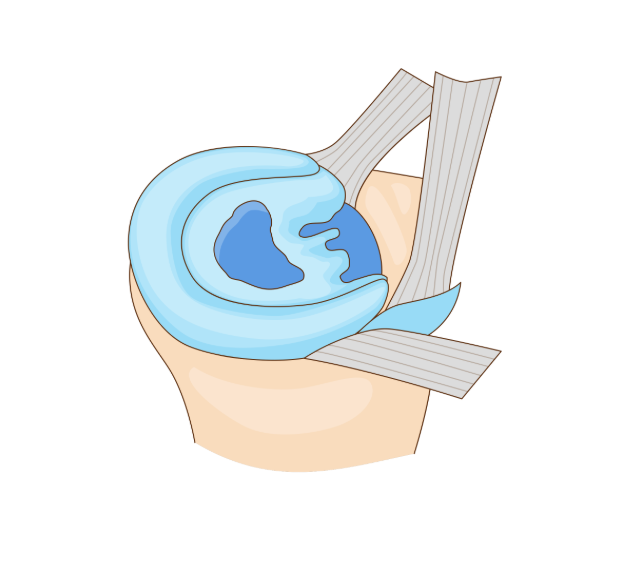
Horizontal tear
A horizontal split divides the meniscus into upper and lower sections. These tears are commonly degenerative and may be associated with a meniscal cyst.
Vertical longitudinal tear
This runs along the length of the meniscus. When close to the outer blood supply, it may be suitable for repair.
Bucket-handle tear
A large longitudinal tear can displace towards the centre of the knee like the handle of a bucket. It may cause sudden locking, inability to straighten the knee and marked restriction of movement.
Many bucket-handle tears in younger patients are treated urgently with reduction and repair where feasible.
Radial tear
A radial tear crosses the fibres that normally transmit load around the meniscus. A large complete radial tear can seriously disrupt meniscal function.
Flap tear
A fragment of tissue can lift or fold and become intermittently trapped.
Complex tear
Complex tears contain several different patterns. They are more common in degenerative tissue and may be less suitable for repair.
Meniscal root tear
The meniscal roots anchor the meniscus to the tibia. A root tear can allow the meniscus to move outwards from beneath the joint, known as extrusion. This can substantially reduce its ability to spread load, even though much of the meniscus remains physically present.
Root tears require careful specialist assessment because selected patients may benefit from repair, while others may be better treated through arthritis management or different surgery depending on age, alignment, cartilage condition, symptoms, activity and degree of arthritis.
Can a meniscus tear heal by itself?
Some tears can heal, but not all. Healing depends on several factors.
Blood supply
The meniscus receives blood mainly around its outer edge. The zones are often described as the red-red zone (outer region with the best blood supply), the red-white zone (intermediate blood supply) and the white-white zone (inner region with very limited blood supply). Tears near the outer edge generally have better healing potential.
Tear pattern
Vertical longitudinal tears often heal more reliably than complex or degenerative tears.
Stability
A small stable tear is more likely to settle than a fragment that repeatedly displaces.
Age and tissue quality
Younger meniscal tissue generally heals better than degenerative tissue. However, chronological age alone does not determine whether repair is possible.
Associated ACL reconstruction
Meniscal repair performed alongside ACL reconstruction often heals more reliably. This may relate to improved knee stability and the biological environment created during ligament reconstruction.
Does a tear need to heal completely for symptoms to improve?
No. This is an important point. A tear may remain visible on MRI even though pain settles, swelling resolves, strength returns and normal activity resumes.
Treatment is therefore aimed at restoring comfortable function, not necessarily making every scan look normal.
How is a meniscus tear diagnosed?
Diagnosis begins with the history and examination. Your clinician will ask whether there was an injury, exactly how the knee twisted, when swelling appeared, where the pain is felt, whether the knee locks, whether it gives way, whether symptoms occur during sport or ordinary activity, and whether arthritis symptoms were already present.
The examination may assess swelling, knee movement, joint-line tenderness, ligament stability, pain with twisting tests, quadriceps strength, and hip and lower-limb control.
No single examination test is completely reliable. The overall pattern of symptoms, findings and imaging is more useful than one positive test.
Do you need an X-ray?
An X-ray does not show the meniscus itself. However, it may be helpful, particularly in middle-aged and older patients, because it can show osteoarthritis, joint-space narrowing, bone spurs, alignment, fractures and other bony abnormalities.
Weight-bearing X-rays may be more useful than a non-weight-bearing MRI when the main question is how much arthritis is present.
Do you need an MRI scan?
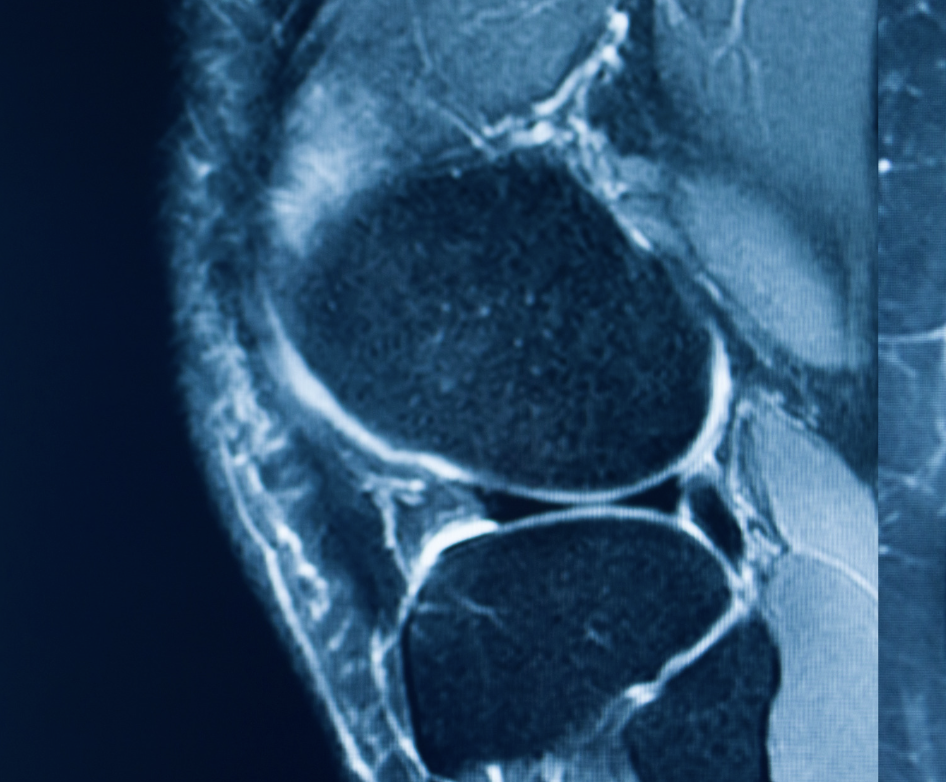
MRI is the best routine scan for showing the menisci and associated soft-tissue injury. It may be useful when there has been a significant traumatic injury, the knee is locked, a repairable tear is suspected, symptoms persist despite rehabilitation, ligament injury is suspected, surgery is being considered, or the diagnosis remains uncertain.
However, an MRI should not be interpreted in isolation. Meniscal tears are common in people without knee pain, especially as age increases. An MRI report saying “meniscal tear” does not prove that the tear is the main source of symptoms or that an operation will help.
When should you seek urgent assessment?
Seek prompt medical advice if the knee is genuinely locked, you cannot fully straighten it after a twisting injury, the knee is very swollen soon after injury, you cannot bear weight, there is marked instability, the knee looks deformed, the foot becomes cold, pale or numb, severe pain follows a major injury, or you develop a hot, red knee with fever.
A displaced bucket-handle tear or significant associated ligament injury may need earlier intervention.
Treatment for a meniscus tear
The right treatment depends on traumatic versus degenerative origin, tear pattern, whether the tear is stable, blood supply, age and tissue quality, associated ligament injury, amount of arthritis, symptoms and activity goals.
There is no single treatment that is correct for every meniscus tear.
Early treatment after an acute injury
Initial treatment may include temporary reduction of aggravating activity, ice wrapped in a cloth, compression, elevation, crutches if walking is difficult, appropriate pain relief and early restoration of movement.
The knee should not remain unnecessarily immobilised unless a clinician has advised protection for a particular injury. Once serious injury and locking have been excluded, gradual movement and muscle activation are usually encouraged.
Physiotherapy and rehabilitation
Rehabilitation is an important treatment for both traumatic and degenerative meniscal symptoms.
The aims are to reduce swelling, regain full extension, restore bending, strengthen the quadriceps, strengthen the hamstrings and gluteal muscles, improve balance, rebuild confidence and return gradually to work or sport.

Early exercises may include heel slides, quadriceps contractions, straight-leg raises, bridges and sit-to-stands.
Later exercises may include squats, step-ups, split squats, cycling, leg press, single-leg balance, and running and change-of-direction drills where appropriate.
A successful programme should be progressive rather than limited to a few low-level exercises indefinitely.
How long should rehabilitation be tried?
For a non-locked knee, a structured rehabilitation programme is usually given time to work. Improvement is often gradual over several weeks or months.
The exact duration depends on severity of symptoms, tear type, arthritis, strength, occupation, sport and progress during treatment. The presence of a tear on MRI alone is not a reason to abandon physiotherapy early.
Treatment of a degenerative meniscal tear
For most degenerative tears, the first treatment should be non-operative. This usually includes education, progressive strengthening, activity modification, weight management where relevant, topical or oral anti-inflammatory medication where safe, treatment of accompanying osteoarthritis, and time.
Randomised studies comparing arthroscopic partial meniscectomy with structured physiotherapy in middle-aged patients have generally found similar improvements in pain and function, particularly when the knee is not locked. The AAOS evidence review found that physical therapy was not inferior to arthroscopic partial meniscectomy for non-obstructive meniscal tears, and that surgery was not superior to supervised exercise in several trials.
This does not mean that surgery never helps. It means that immediate arthroscopy is usually not the best starting point for a degenerative tear.
Why can patients improve without removing the tear?
Rehabilitation can improve muscle support, shock absorption, movement control, tolerance of load, confidence and sensitivity around the knee.
Symptoms often arise from the whole joint rather than from one visible line on an MRI. Improvement therefore does not require the scan finding to disappear.
When might surgery still be considered for a degenerative tear?
Surgery may be discussed when high-quality rehabilitation has been completed, symptoms remain substantial, pain and mechanical symptoms are well localised, the tear is thought to be unstable, other causes of pain have been considered, arthritis is not the main driver of symptoms, and expectations are realistic.
In people with mild-to-moderate osteoarthritis and an MRI-confirmed tear, the AAOS guidelines state that partial meniscectomy may be considered after appropriate non-surgical treatment has failed, while also acknowledging that the available comparative trials show similar average outcomes with physiotherapy. The decision therefore requires careful patient selection rather than routine surgery.
Do catching and clicking prove that surgery will help?
No. The term “mechanical symptoms” is often used to describe clicking, catching, locking and giving way. These symptoms are not all equivalent.
Occasional clicking or a brief catching sensation does not necessarily mean that tissue is physically trapped. True locking — where the knee cannot straighten — is much more significant than intermittent clicking.
Meniscus surgery
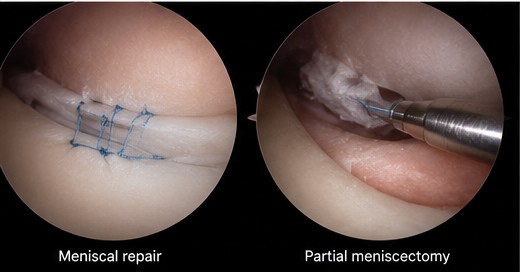
There are two main types of operation: meniscal repair and arthroscopic partial meniscectomy.
The choice is not simply based on patient age. It depends on the tear's position, pattern, stability, tissue quality, blood supply and chronicity. Associated ACL injury and cartilage condition also matter.
What is meniscal repair?
During meniscal repair, the surgeon places sutures or fixation devices across the tear to hold it together while it heals. The procedure is usually performed through keyhole incisions.
Repair is most suitable when the tear is in a region with healing potential, the tissue quality is good, the pattern is repairable, the tear can be reduced into a stable position, the knee is stable or stability is being restored, and the patient can follow the rehabilitation restrictions.
Potentially repairable patterns include selected longitudinal tears, bucket-handle tears, radial tears and root tears. The aim is to preserve meniscal function and protect the knee over the longer term.
Advantages of meniscal repair
Potential advantages include preserving load distribution, maintaining shock absorption, retaining knee stability, reducing cartilage stress and potentially lowering long-term osteoarthritis risk compared with removing meniscal tissue.
Evidence in ACL-associated injuries supports preserving and repairing suitable tears, although long-term comparative evidence is not perfect.
Disadvantages of meniscal repair
Repair has important limitations: not every tear can be repaired, healing is not guaranteed, rehabilitation is slower, weight-bearing or knee bending may be restricted, return to sport takes longer, and further surgery may be needed if the repair fails.
Short-term reoperation rates may be higher after repair than after removing the torn fragment, because an unhealed repair can remain symptomatic. The trade-off is between a slower, less predictable early recovery and the potential long-term benefit of preserving tissue.
What is partial meniscectomy?
A partial meniscectomy removes only the unstable or irreparable portion of the meniscus. The surgeon aims to leave a smooth, stable rim and preserve as much healthy tissue as possible. It is sometimes described as trimming the tear.
Potential advantages include faster early recovery, fewer postoperative restrictions, early weight-bearing being allowed in many cases, and relief from symptoms caused by an unstable fragment.
Potential disadvantages include permanent loss of meniscal tissue, increased pressure on joint cartilage, greater risk of later osteoarthritis, and symptoms persisting if arthritis was the main pain source.
Meniscectomy should not be viewed as restoring a normal meniscus. It removes the unstable part but cannot recreate its original load-sharing function.
Meniscal repair versus partial meniscectomy
| Feature | Meniscal repair | Partial meniscectomy |
|---|---|---|
| Main aim | Preserve and heal the meniscus | Remove unstable, irreparable tissue |
| Suitable tear | Repairable tear with adequate tissue quality | Irreparable or poorly healing fragment |
| Early recovery | Slower | Usually faster |
| Weight-bearing restrictions | Sometimes required | Often minimal |
| Return to sport | Usually later | Often earlier |
| Risk of further surgery | Higher if the repair does not heal | Lower early reoperation risk |
| Long-term tissue preservation | Better | Meniscal tissue permanently lost |
| Arthritis concern | Intended to reduce load-related damage | Loss of tissue increases joint loading |
Why does the lateral meniscus deserve special care?
Removing lateral meniscal tissue can produce a large change in joint pressure. This is partly because the outer femoral and tibial surfaces are more convex and depend heavily on the meniscus to create congruity.
As a result, lateral meniscectomy may lead to faster degenerative change than a similar-sized medial meniscectomy. When technically possible, preserving the lateral meniscus is especially valuable.
Meniscus tears associated with ACL injury
Meniscal injury is common after ACL rupture. Acute ACL injuries often involve the lateral meniscus, while medial meniscal damage becomes increasingly common in a chronically unstable knee. Over time, tears may become more complex and less suitable for repair.
A repairable unstable meniscal tear can influence the timing of ACL surgery. Repairing the meniscus at the same time as ACL reconstruction often improves healing. Small, stable partial-thickness tears in selected locations may sometimes be left alone.
What about meniscal root tears?
A root tear can function almost like losing the meniscus because the tissue can no longer transmit load effectively around its circumference. Treatment depends on the whole knee.
Repair may be considered when arthritis is limited, alignment is acceptable or correctable, the patient is suitable for rehabilitation and the meniscus remains repairable.
Repair may be less suitable when there is advanced osteoarthritis, substantial cartilage loss, severe uncorrected malalignment or poor tissue quality. Some patients with root tears require treatment directed at alignment or arthritis rather than isolated meniscus surgery.
Recovery after meniscus surgery
Recovery varies substantially according to the procedure.
After partial meniscectomy
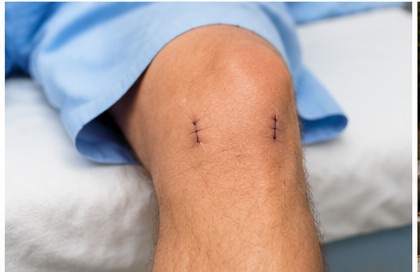
Many patients can bear weight early, begin movement immediately, return to desk work within a short period and resume low-impact exercise within several weeks.
Swelling and strength may take longer to recover than the small skin incisions suggest. Return to running or sport should depend on minimal swelling, full movement, restored strength, good single-leg control and confidence.
After meniscal repair
Recovery is usually slower because the tissue must heal. Depending on the tear and repair, the surgeon may restrict weight-bearing, knee flexion, squatting, pivoting and running.
| Stage | Typical focus |
|---|---|
| First 2 weeks | Swelling control, wound care, regain extension, quadriceps activation |
| 2–6 weeks | Protected movement and progressive walking according to instructions |
| 6–12 weeks | Strengthening and gradual restoration of function |
| 3–4 months | Advanced strength, balance and low-impact conditioning |
| 4–6 months or later | Running and sport-specific progression when criteria are met |
| Around 6 months or later | Possible return to pivoting sport after satisfactory recovery |
The exact pathway should follow the surgeon's and physiotherapist's instructions, because root, radial and complex repairs may require different restrictions.
Risks of meniscus surgery
Possible complications include infection, blood clot, stiffness, persistent pain, swelling, nerve or blood-vessel injury, failure of a repair to heal, recurrent tear, further surgery and progression of osteoarthritis.
Serious complications are uncommon, but surgery should only be recommended when the expected benefit outweighs these risks.
What is the outlook after a meniscus tear?
Many people recover well without surgery. The outlook depends on traumatic versus degenerative tear, associated arthritis, tear pattern, knee alignment, ligament stability, strength, activity demands and treatment adherence.
A young patient with an isolated repairable traumatic tear has a very different outlook from an older patient with a complex degenerative tear and established osteoarthritis. The MRI wording alone cannot provide an individual prognosis.
Can you return to sport with a meniscus tear?
Often, yes. Return may be possible without surgery when swelling has settled, full movement has returned, strength is restored, the knee does not lock, and cutting, landing and sport-specific tasks can be completed confidently.
After surgery, return depends on the procedure. Partial meniscectomy generally permits faster progression than repair, but preserving the meniscus may be more important than returning a few weeks earlier.

When should you seek specialist advice?
Arrange an assessment if pain followed a significant twisting injury, the knee repeatedly swells, joint-line pain persists, the knee catches or gives way, you cannot return to normal activity, symptoms continue despite rehabilitation, an MRI reports a displaced, root or bucket-handle tear, an ACL injury is also suspected, or the knee remains painful after several weeks.
Seek more urgent assessment if the knee is genuinely locked and cannot straighten.
The OrthoZone take-home message
A meniscus tear is not one single diagnosis with one automatic treatment. Traumatic and degenerative tears behave differently, and the MRI appearance must be interpreted alongside age, symptoms, arthritis, stability and activity goals.
Most non-locked degenerative tears should begin with structured rehabilitation rather than immediate arthroscopy. Surgery is more likely to help when there is a displaced locked tear, a repairable traumatic injury, a significant root tear or persistent well-localised symptoms despite appropriate non-operative care. When an operation is required, preserving as much functioning meniscus as possible is usually the priority.
Top tips
- Do not assume that every MRI tear requires surgery — meniscal abnormalities are common with age, and treatment should be based on symptoms and function.
- Distinguish a traumatic tear from a degenerative tear: a repairable sports injury is a different problem from a degenerative tear within an arthritic knee.
- Give structured rehabilitation a genuine chance when the knee is not locked — strengthening and progressive loading can match arthroscopy for many degenerative tears.
- Seek prompt assessment for true locking: a displaced bucket-handle tear may be more repairable when treated early.
- Preserve the meniscus whenever reasonably possible — removing tissue permanently increases pressure on the joint cartilage.
Related articles
ACL Injury: Symptoms, Treatment, Surgery and Recovery
An evidence-based guide to ACL injuries: symptoms, diagnosis, rehabilitation, when surgery is needed, graft choices and return to sport.
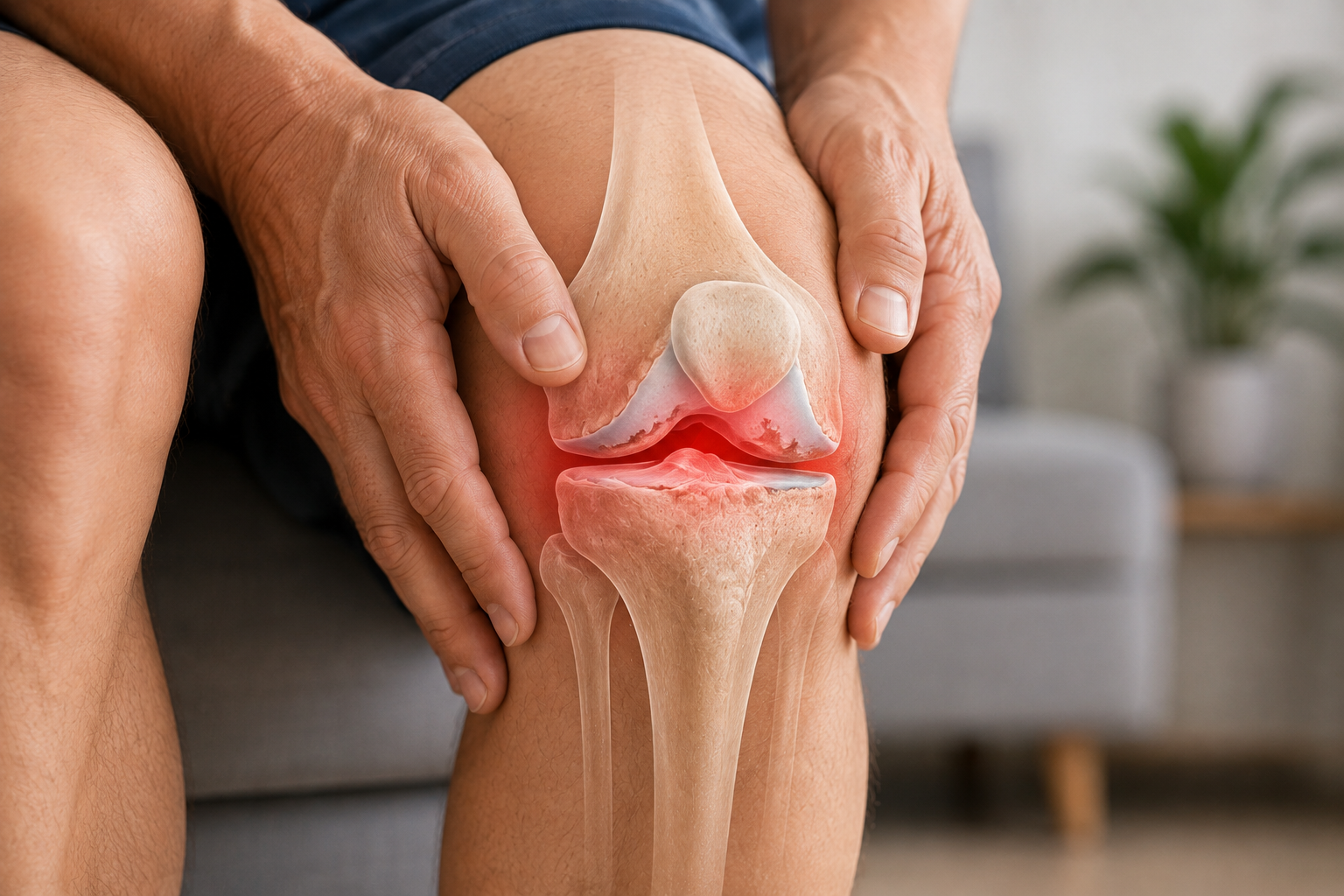
Knee Arthritis (Osteoarthritis): Symptoms, Causes, Diagnosis and Treatment
An evidence-based guide to knee osteoarthritis: symptoms, causes, diagnosis, exercise, weight management, injections and when knee replacement is recommended.