Lower Back Pain: Causes, Symptoms, Treatment and Recovery
Few conditions are as common as lower back pain. It is one of the leading reasons people visit their GP, attend physiotherapy or take time off work. Almost everyone experiences back pain at some stage in their life, yet despite how common it is, many people worry that it means they have seriously damaged their spine.
Fortunately, this is rarely the case. Most episodes of lower back pain improve significantly within a few weeks and do not require scans, injections or surgery. In many cases, remaining active, understanding your symptoms and gradually returning to normal activities are the most effective treatments.
This guide explains what lower back pain is, what causes it, when you should seek urgent medical attention, which treatments are supported by evidence and what you can do to recover safely and confidently.
Key points
- Lower back pain is extremely common and most episodes improve within a few weeks without surgery.
- The majority of cases are “non-specific” or mechanical back pain, meaning there is no serious underlying disease.
- Remaining active is one of the most important treatments, while prolonged bed rest can delay recovery.
- Scans such as MRI are not usually needed in the early stages, unless there are concerning symptoms or treatment decisions depend on the result.
- Certain warning signs (“red flags”) require urgent assessment, including bowel or bladder problems, numbness around the saddle area or rapidly worsening leg weakness.
What is lower back pain?
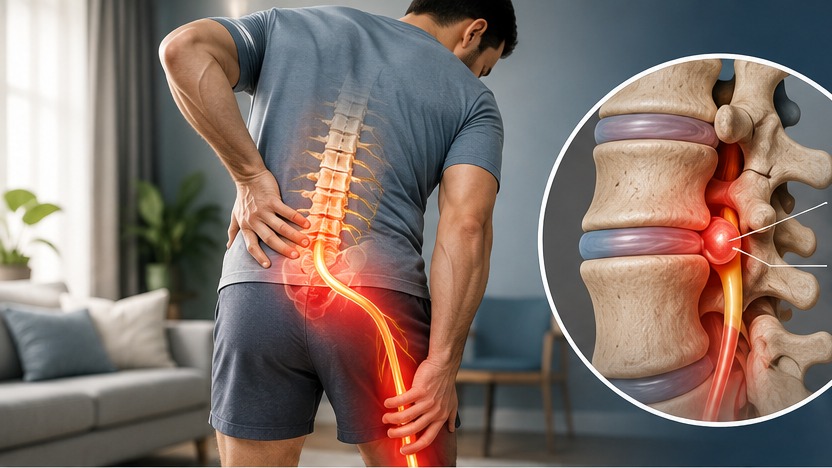
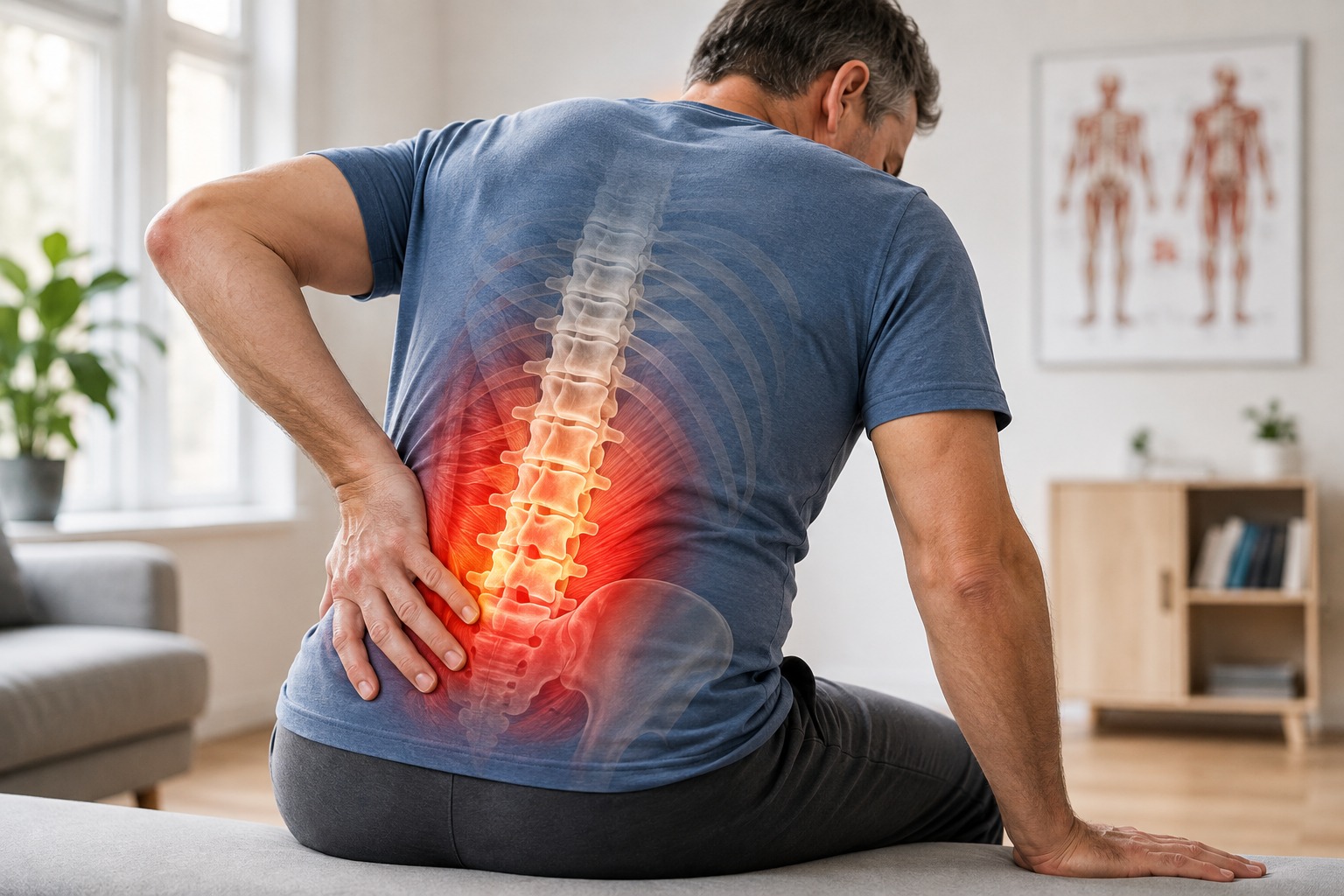
Lower back pain refers to pain arising in the lumbar spine, the lower part of your back located between the rib cage and the pelvis.
It may start suddenly after lifting or twisting, develop gradually over several days or weeks, occur after sport or exercise, or appear without any obvious cause at all.
The pain itself varies considerably. Some people describe a dull ache or stiffness, others experience muscle spasm, sharp pain during movement, difficulty standing upright or pain that makes walking uncomfortable.
Importantly, most lower back pain is not caused by serious damage. It usually reflects irritation of the muscles, ligaments, joints or discs that support the spine. These tissues are very sensitive and can become painful even after relatively minor strains. NHS physiotherapy guidance describes most cases as non-specific lower back pain, meaning the pain is not due to a serious disease or major structural injury.
Understanding the lower back
To understand why back pain occurs, it helps to know a little about how the spine works. The lumbar spine consists of five lumbar vertebrae (L1–L5), which support much of the body's weight; intervertebral discs, which act as shock absorbers; facet joints, which guide and control movement; strong ligaments, which stabilise the spine; powerful muscles including the multifidus, erector spinae and abdominal muscles; and nerves, which leave the spinal canal and travel into the legs.
Together these structures allow you to bend, twist, lift, walk, run, sit and stand. Because the lower back performs so many different functions every day, it is not surprising that it is particularly vulnerable to becoming painful. Most acute back pain is mechanical in nature, arising from disruption in the normal movement or interaction of these structures rather than from a dangerous disease.
Acute versus chronic lower back pain
| Acute lower back pain | Chronic lower back pain |
|---|---|
| Lasts less than 6 weeks | Persists for 12 weeks or longer |
| Usually improves naturally | May require a broader rehabilitation approach |
| Often follows a minor strain | Can involve physical, psychological and lifestyle factors |
| Most people recover completely | Many people still improve, although recovery may take longer |
Most episodes of acute back pain settle within days to weeks, whereas only a smaller proportion of people develop persistent symptoms lasting longer than three months.
What causes lower back pain?
One of the biggest misconceptions about back pain is that it must mean something has “slipped out of place” or become permanently damaged. In reality, most lower back pain has no single identifiable cause. It usually results from temporary irritation of the tissues that support the spine.
Muscle strain
The muscles supporting the spine can become overloaded after lifting, gardening, sport, prolonged sitting or any unusual activity.
Ligament sprain
The strong ligaments that stabilise the spine can be stretched, leading to pain and protective muscle spasm.
Joint irritation
The small facet joints at the back of the spine can become inflamed or irritated during normal daily activities.
Intervertebral disc problems
The discs act as cushions between the vertebrae. They can develop small tears, bulge, or degenerate with age. Importantly, disc degeneration is a common part of normal ageing and does not always cause pain.
Arthritis
As we get older, arthritis can affect the joints of the spine, contributing to stiffness and discomfort.
Less common causes
Less frequently, back pain may be related to spinal fractures, inflammatory arthritis, infection, tumours, kidney disease, osteoporosis or cauda equina syndrome. These conditions are much less common but are important because they require specific treatment.
Risk factors
Certain factors increase the likelihood of developing lower back pain: increasing age, poor physical fitness, prolonged sitting, obesity, smoking, heavy manual work, repetitive lifting, stress, anxiety, depression, poor sleep and previous episodes of back pain.
Psychological factors, low mood and stress can influence both the perception of pain and the likelihood that symptoms become persistent.
What does lower back pain feel like?
Symptoms vary from person to person but commonly include aching across the lower back, stiffness after sitting, pain when bending forwards, pain when standing upright, muscle spasm, difficulty rolling in bed, pain after lifting, discomfort during prolonged sitting and pain that improves with gentle movement.
Some people also experience pain spreading into the buttocks or upper thighs. Pain travelling below the knee, particularly if associated with numbness or tingling, may suggest sciatica, which is covered in a separate OrthoZone guide.
Red flags — when to seek urgent medical advice
Although the vast majority of episodes of lower back pain are not caused by a serious medical condition, a small number of symptoms should never be ignored. These are known as red flags because they may indicate nerve compression, infection, fracture or, more rarely, cancer.
| Red flag symptom | Why it matters |
|---|---|
| Difficulty passing urine or loss of bladder control | Possible cauda equina syndrome — emergency |
| Loss of bowel control | Possible cauda equina syndrome — emergency |
| Numbness around the buttocks, genitals or inner thighs | “Saddle numbness” suggests nerve compression |
| Rapidly worsening weakness in one or both legs | Progressive nerve compression |
| Severe pain affecting both legs | May indicate significant nerve involvement |
| Unexplained fever with back pain | Possible spinal infection |
| Unexplained weight loss or a history of cancer | Requires assessment for tumour |
| Back pain after significant trauma | Possible spinal fracture |
What is cauda equina syndrome?
The spinal cord ends around the level of the first lumbar vertebra. Below this point lies a bundle of nerves called the cauda equina, which means “horse's tail” because of its appearance.
These nerves control bladder function, bowel function, sexual function, sensation around the saddle area and movement of the legs. If they become severely compressed — usually by a very large lumbar disc prolapse — urgent surgery may be needed to prevent permanent nerve damage. Cauda equina syndrome is rare, but recognising it quickly is extremely important.
How is lower back pain diagnosed?
In most people the diagnosis is made from your symptoms, your medical history and a physical examination.
Your clinician will usually ask when the pain began, whether it started after an injury, where the pain is, whether it travels into the leg, whether you have numbness or weakness, whether you have had previous episodes and whether there are any bladder or bowel symptoms.
During the examination they may assess your posture, spinal movement, muscle tenderness, leg strength, sensation, reflexes and walking pattern. For uncomplicated mechanical lower back pain, this assessment is usually all that is needed.
Do I need an MRI scan?
Probably not. Many people believe an MRI scan is essential to find the cause of back pain, but most people with uncomplicated lower back pain do not need imaging.
Scans often show age-related changes that are completely normal and may have nothing to do with the pain — disc bulges, disc degeneration, facet joint arthritis and small annular tears are extremely common, even in people with no back pain at all. Imaging should be reserved for situations where the results are likely to change management or when serious pathology is suspected.
When might an MRI be helpful?
An MRI scan may be recommended if symptoms persist despite appropriate treatment, surgery is being considered, significant leg pain suggests sciatica, progressive weakness develops, infection or tumour is suspected, or there are red flag symptoms.
MRI is excellent at showing discs, nerves, ligaments, spinal canal narrowing, inflammation and infection. However, scans should always be interpreted alongside your symptoms and examination.
Do I need an X-ray?
Usually not. Unlike broken bones, most causes of lower back pain cannot be seen well on an X-ray. X-rays mainly show fractures, severe arthritis and major spinal deformity. They do not show discs, nerves, muscles or ligaments. For this reason, routine X-rays are generally not recommended for uncomplicated lower back pain.
The treatment pathway
One of the most reassuring things to know is that most lower back pain improves naturally. Treatment focuses on helping you recover while keeping you active and preventing the problem becoming persistent.
The main goals are to control pain, maintain movement, restore confidence, gradually return to normal activities and reduce the risk of recurrence.
Stay active
This is one of the most important messages in modern back pain management. Years ago, people were often advised to remain in bed until the pain settled. We now know that prolonged bed rest can weaken muscles, increase stiffness, delay recovery, reduce confidence and prolong pain.
Current NHS and Arthritis UK guidance encourages people to remain as active as symptoms allow, even if that means modifying activities temporarily. Walking is one of the best forms of exercise during the early stages.
Exercise
Exercise is one of the most effective long-term treatments for lower back pain. It improves flexibility, strengthens supporting muscles, reduces stiffness, restores confidence in movement and improves general fitness.
Suitable exercises may include pelvic tilts, knee rolls, gentle lumbar stretches, bridging, core strengthening, walking and swimming. Gradual progression and regular movement are more effective than waiting for pain to disappear before exercising.
Physiotherapy
Physiotherapy may be particularly helpful if symptoms are not improving, you have recurrent episodes, movement has become restricted, or you are struggling to return to work or sport.
Treatment may include education, manual therapy where appropriate, supervised exercises, movement retraining, pacing advice and strategies to improve confidence with movement. A physiotherapist will usually tailor rehabilitation to your individual symptoms rather than using a single programme for everyone.
Heat or ice?
Both can help. Many people find heat particularly useful for muscle spasm and stiffness — wheat bags, hot water bottles or warm showers. Ice may be more comfortable immediately after a minor strain or following activities that temporarily aggravate symptoms. Neither treatment speeds healing significantly, but both may help manage pain and make movement easier.
Pain relief
Pain medication can help you remain active during recovery. Options may include paracetamol (although benefits may be limited), non-steroidal anti-inflammatory drugs (NSAIDs) if appropriate, and topical anti-inflammatory gels.
Medication should always be used at the lowest effective dose and for the shortest necessary period, taking into account your medical history and advice from your healthcare professional.
Sleep
Back pain often feels worse after a poor night's sleep, and poor sleep can also increase the perception of pain. Helpful strategies include maintaining a regular bedtime, using a comfortable mattress, changing position if one becomes uncomfortable, placing a pillow between the knees when lying on your side, and placing a pillow beneath the knees when lying on your back if it reduces strain.
Work
Returning to work is often an important part of recovery, and for most people prolonged absence is not beneficial. You may need temporary adjustments such as lighter duties, more frequent breaks, changing your workstation or alternating between sitting and standing. Remaining engaged with normal daily activities often improves confidence and speeds recovery.
Does posture cause back pain?
Many people worry they have “bad posture”. In reality, there is no single perfect posture. The most important thing is avoiding staying in one position for prolonged periods. Whether sitting or standing, move regularly, stretch frequently and vary your position throughout the day. Movement is generally more important than maintaining one “ideal” posture.
Pain does not always mean damage
One of the most important messages from modern pain science is that pain and tissue damage are not always the same thing. As pain persists, the nervous system can become more sensitive, which means everyday movements may feel painful even though they are not causing harm.
Understanding this helps explain why gentle movement is safe, why gradual exercise is beneficial, and why avoiding activity completely may actually prolong recovery.
When is surgery needed?
One of the most reassuring facts about lower back pain is that the overwhelming majority of people never need surgery. Even when pain is severe, most episodes improve naturally with time, movement and appropriate rehabilitation.
Surgery is not recommended for uncomplicated mechanical lower back pain, because there is little evidence that it provides better long-term outcomes than high-quality non-operative care. It is usually reserved for people with significant nerve compression causing persistent sciatica, cauda equina syndrome, spinal instability, certain fractures, infection, tumours, or carefully selected patients with chronic pain after specialist assessment.
Surgery should only be considered when symptoms, examination findings and imaging correlate, and when non-operative treatment has failed or urgent neurological compromise is present.
Preventing future episodes
Having one episode of back pain does not mean your back is permanently weak. In fact, most people recover completely.
Stay physically active
Regular movement keeps muscles strong, joints mobile, discs healthy and confidence high. Good activities include walking, swimming, cycling, Pilates, yoga and strength training. The goal isn't to avoid using your back — it's to make it stronger.
Build core strength
Your core includes the abdominal muscles, spinal muscles, pelvic muscles and diaphragm. Together these provide stability for the spine. Simple strengthening exercises performed consistently often improve both confidence and spinal endurance.
Maintain a healthy weight
Excess body weight increases the mechanical load placed on the lumbar spine. Maintaining a healthy weight can reduce strain on the discs, facet joints and supporting muscles, and also improves general health and fitness.
Stop smoking
Smoking is associated with poorer disc health, slower tissue healing and an increased risk of chronic pain. Stopping smoking benefits both spinal health and overall wellbeing.
Lift sensibly
Contrary to popular belief, lifting itself is not dangerous. Problems are more likely when lifting loads that are too heavy, lifting repeatedly without rest, attempting unfamiliar tasks or lifting when already fatigued.
Practical advice includes keeping the load close to your body, avoiding sudden twisting while lifting, sharing heavy loads where possible and using your legs as well as your back. Rather than fearing lifting, use sensible technique and build confidence through gradual exposure.
Ten common myths about back pain
| Myth | Reality |
|---|---|
| “My spine must be damaged” | Most back pain is not caused by serious damage; it often reflects temporary irritation and increased sensitivity. |
| “I should stay in bed” | Prolonged bed rest usually delays recovery. Gentle movement is one of the best treatments. |
| “I need an MRI scan” | Most people recover without imaging. Scans frequently show normal age-related changes unrelated to symptoms. |
| “Bending will damage my back” | Bending is a normal movement. Gradually returning to bending restores confidence and function. |
| “Exercise will make it worse” | Appropriate exercise usually helps recovery rather than harming the spine. |
| “I have a slipped disc” | Most back pain is not caused by a slipped disc, and even when a disc bulges many people recover naturally. |
| “Pain means harm” | Pain does not always reflect tissue damage; the nervous system can become more sensitive during recovery. |
| “Good posture will cure my pain” | There is no single perfect posture — regular movement matters more than sitting perfectly. |
| “My back is weak” | The spine is an incredibly strong structure. Strengthening builds confidence rather than protecting a fragile back. |
| “I'll never recover” | The outlook is excellent. Most episodes improve significantly with time and appropriate rehabilitation. |
Frequently asked questions
Should I keep walking?
Yes. Walking is one of the best forms of exercise during recovery. Start with short distances and gradually increase as symptoms improve.
Is swimming good?
Yes. Swimming and water-based exercise reduce the load on the spine while allowing muscles to work. Many people find it particularly comfortable during recovery.
Can I go to the gym?
Usually yes. Initially you may need to reduce very heavy lifting, explosive movements and exercises that significantly worsen symptoms. Strength training can usually be reintroduced gradually.
Will my back ever be the same again?
In most cases, yes. Most people return to work, sport, gardening, lifting and everyday activities without long-term problems.
Can stress make back pain worse?
Yes. Stress does not mean the pain is “all in your head”. However, stress, anxiety, poor sleep and low mood can all increase pain sensitivity, so managing these factors often forms an important part of recovery.
Recovery timeline
| Time | Expected recovery |
|---|---|
| First week | Pain may be severe, but gentle movement should continue where possible. |
| 2–4 weeks | Most people notice improving mobility and reducing pain. |
| 4–6 weeks | Many patients return to most normal daily activities. |
| 6–12 weeks | Continued improvement in strength and confidence. |
| 3–6 months | Most patients have recovered fully or have only occasional mild symptoms. |
Treatment comparison
| Treatment | Role | Evidence |
|---|---|---|
| Education and reassurance | First-line treatment | Strong evidence |
| Staying active | Maintain function | Strong evidence |
| Walking | Improve mobility | Strong evidence |
| Physiotherapy | Improve movement and confidence | Strong evidence |
| Exercise programme | Prevent recurrence | Strong evidence |
| Heat therapy | Reduce muscle spasm | Helpful for symptom relief |
| Pain relief | Improve comfort | Useful alongside activity |
| MRI scan | Selected patients only | Not routinely required |
| Surgery | Rarely indicated | Reserved for carefully selected patients |
The OrthoZone take-home message
Lower back pain is one of the commonest musculoskeletal conditions and, although it can be extremely painful, it is rarely caused by serious disease. Most episodes improve within a few weeks with reassurance, staying active and a gradual return to normal movement. Understanding that the spine is a strong, resilient structure — and that pain does not always equal damage — is one of the most important steps towards recovery. Imaging and surgery are only needed for a small minority of patients, particularly those with red flag symptoms or persistent nerve compression.
Top tips
- Keep moving. Gentle activity usually speeds recovery more than prolonged rest.
- Don't be frightened by pain. Pain does not necessarily mean your back is damaged.
- Build strength gradually. Strong muscles support a healthy spine and reduce future episodes.
- Avoid unnecessary scans. Most people recover without needing an MRI or X-ray.
- Know the warning signs. Seek urgent medical attention if you develop bladder or bowel problems, saddle numbness or rapidly worsening leg weakness.