
Sciatica: A Complete Guide to Leg Pain Caused by a Trapped Nerve
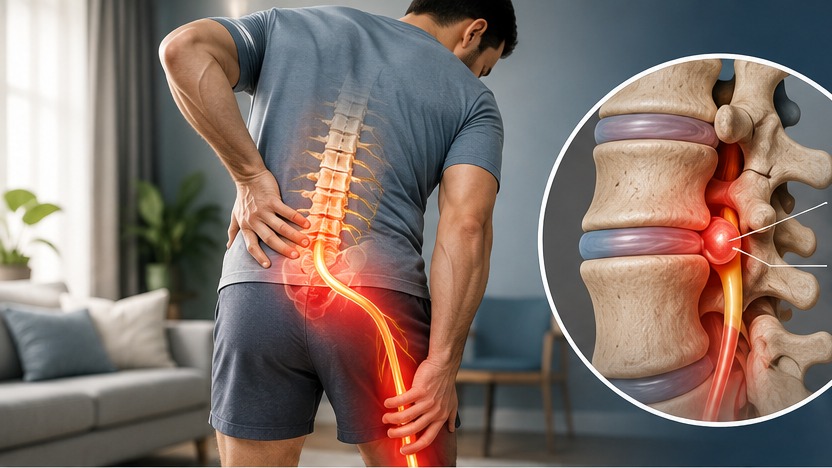
Sciatica is one of the most common reasons people experience severe leg pain. Unlike ordinary back pain, sciatica occurs when one of the nerves leaving the lower spine becomes irritated or compressed. This causes pain that travels from the lower back or buttock down the leg, often reaching the calf or foot. Many people also experience tingling, numbness or weakness.
The pain can be frightening. Some people worry they have permanently damaged their spine or that they will inevitably need surgery. Fortunately, this is rarely the case. Most episodes of sciatica improve naturally over time, and only a small proportion of people require an operation. The majority of cases improve within weeks to a few months, and most people recover without specialist intervention.
In this guide we explain exactly what sciatica is, why it develops, how it is diagnosed, when an MRI scan is useful, which treatments are supported by evidence and when surgery may be the best option.
Key points
- Sciatica is leg pain caused by irritation or compression of a spinal nerve root, not a problem with the sciatic nerve itself in the leg.
- The commonest cause is a lumbar disc prolapse (often called a slipped disc) pressing on a nerve root.
- Most people improve without surgery, with symptoms often settling within 6–12 weeks, although recovery can sometimes take longer.
- Most people do not need an MRI scan in the early stages because scans rarely change initial treatment.
- Difficulty controlling your bladder or bowels, numbness around the genitals or rapidly worsening leg weakness are emergency symptoms that may indicate cauda equina syndrome and need immediate assessment.
What is sciatica?
Sciatica is pain caused by irritation of one or more of the nerve roots that form the sciatic nerve.
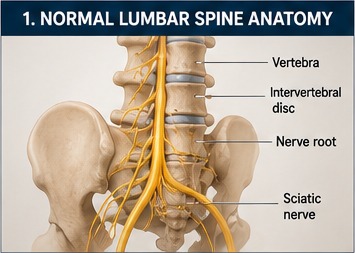
Although people often say they have "a trapped sciatic nerve", the problem almost always starts inside the lower spine, before the sciatic nerve has even formed. Several nerves leave the lower back and join together in the pelvis to create the sciatic nerve, the largest nerve in the human body.
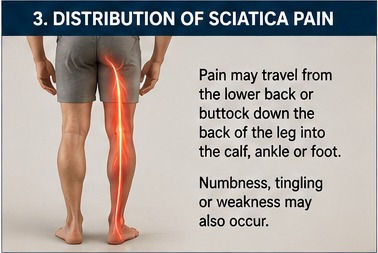
This nerve then travels through the buttock, the back of the thigh, the calf, the ankle and the foot. If one of the nerve roots becomes irritated, pain can travel anywhere along this pathway. This explains why someone with a problem in their lower back may actually feel much more pain in their leg than in their back. In fact, the leg pain is often worse than the back pain, which is one of the classic features of sciatica.
Sciatica is not the same as back pain
This is one of the biggest misunderstandings. Many people assume sciatica simply means severe back pain. It doesn't.
Simple low back pain usually causes pain across the lower back, muscle stiffness and discomfort when bending, with no pain travelling below the knee. It is often caused by muscles, ligaments or joints within the spine.
Sciatica causes pain travelling into the buttock and down the leg, burning or shooting pain, tingling, numbness and sometimes weakness. The pain follows the course of an irritated nerve. This difference is important because the treatment and recovery can be slightly different.
| Mechanical back pain | Sciatica |
|---|---|
| Pain mainly in the lower back | Pain radiates into the leg |
| Usually no numbness | Tingling or numbness common |
| No muscle weakness | Weakness may occur |
| Pain rarely below the knee | Often extends below the knee |
| Usually muscular or joint pain | Irritated spinal nerve root |
Understanding the sciatic nerve
The sciatic nerve is the largest nerve in the body. It is formed by several nerve roots leaving the lower lumbar and upper sacral spine, which combine together before travelling down the back of the leg.
The sciatic nerve supplies muscles that move the hip, muscles that bend the knee, muscles that move the ankle, muscles controlling the foot and toes, and sensation to much of the leg and foot. Because it supplies such a large area, irritation of just one nerve root can produce symptoms over a surprisingly wide region.
What causes sciatica?
Sciatica is a symptom, not a diagnosis. Several different conditions can irritate the nerve root.
The commonest include lumbar disc prolapse, lumbar spinal stenosis, age-related degeneration and inflammation around the nerve. Less commonly, tumours, infection or trauma may be responsible. The exact cause influences which treatments are most appropriate.
Lumbar disc prolapse (slipped disc)
This is the commonest cause of sciatica, particularly in younger and middle-aged adults.
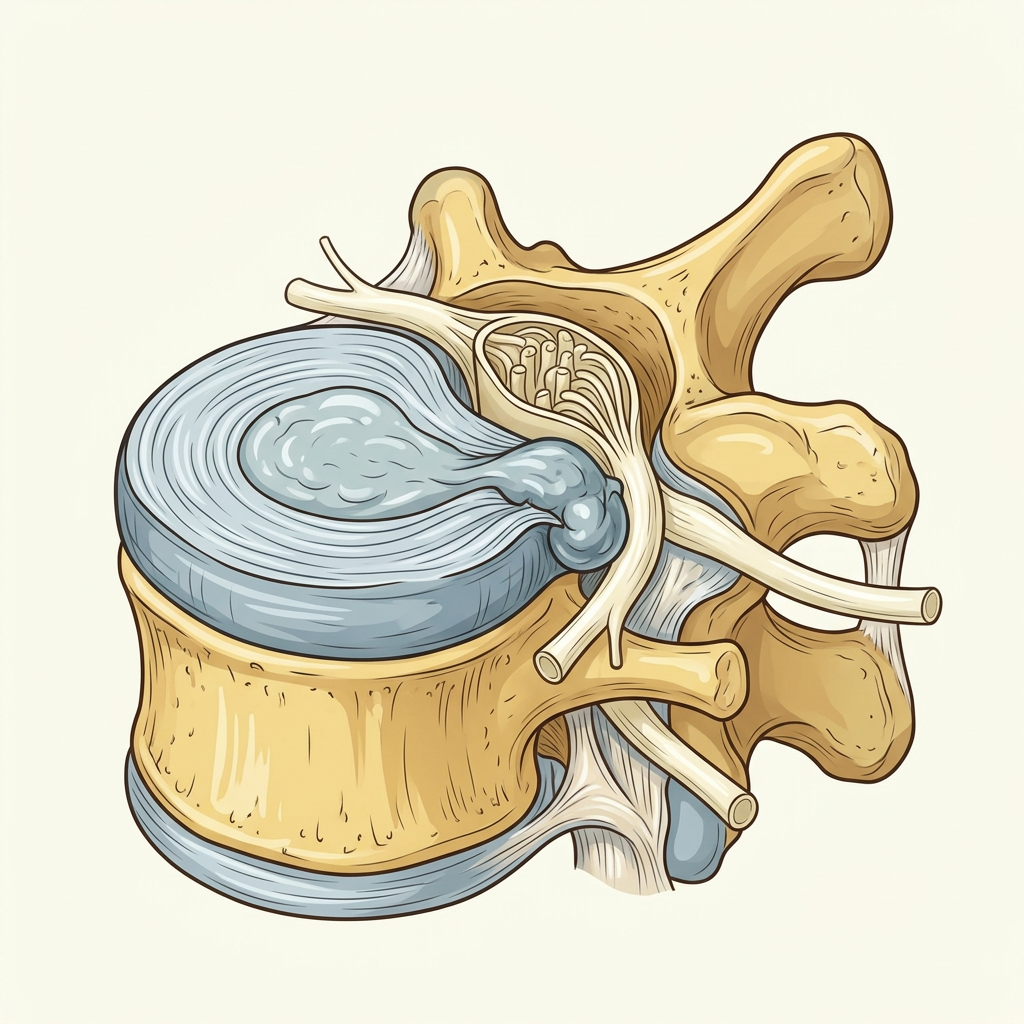
Each vertebra is separated by an intervertebral disc, which acts like a shock absorber. It has a strong outer ring and a softer gel-like centre. Sometimes part of the disc bulges backwards, and if this bulge presses against a nearby nerve root, sciatica develops.
Patients often describe this as a "slipped disc". In reality, the disc does not literally slip out. Instead, part of the disc bulges or herniates through the outer fibres.
Why does a disc bulge?
Disc injuries may occur because of heavy lifting, repeated bending, twisting or gradual age-related degeneration. However, many patients cannot identify one specific event, and sometimes people simply wake up with symptoms.
This does not necessarily mean the spine is weak. Disc changes are common as we get older, and many people have disc bulges without experiencing any pain at all.
Spinal stenosis
In older adults, sciatica is more commonly caused by lumbar spinal stenosis. As we age, joints enlarge, ligaments thicken and discs gradually lose height. Together these changes narrow the spaces through which the nerves travel.
Instead of one large disc prolapse pressing on a nerve, there is a gradual reduction in space around the nerve. Younger patients are more likely to have disc-related sciatica, whereas older patients more commonly develop age-related narrowing of the spinal canal.
Other causes
Less commonly, sciatica may result from spinal fractures, spinal infections, tumours, inflammatory spinal disease, cysts or previous spinal surgery. These causes are much less common but are considered when symptoms or examination findings are unusual.
What does sciatica feel like?
Sciatica is often described as sharp, burning, electric shock-like, shooting or stabbing. Unlike muscular back pain, it typically follows a recognisable path down the leg.
Some people experience constant pain. Others notice episodes of severe pain triggered by coughing, sneezing, bending, prolonged sitting or getting out of a car. The character of the pain reflects irritation of the nerve itself.
Common symptoms
Symptoms may include lower back pain, buttock pain, pain down the thigh, pain below the knee, calf pain, pain into the foot, numbness, pins and needles, burning sensations and muscle weakness. The exact location depends on which nerve root is affected.
Does everyone get back pain?
No. This often surprises people. Some patients have severe leg pain with very little back pain at all, because the irritated nerve root is responsible for most of the symptoms. Leg pain being worse than back pain is one of the clinical clues that suggests sciatica rather than simple mechanical low back pain.
How is sciatica diagnosed?
In most cases, diagnosis is made from your symptoms, your medical history and a physical examination.
Your clinician will ask about where the pain travels, whether it goes below the knee, numbness, weakness, bladder or bowel symptoms, previous episodes and any recent injuries. During the examination they will assess muscle strength, sensation, reflexes, walking pattern, spinal movement and nerve tension tests such as the straight leg raise.
This combination of history and examination is usually enough to diagnose sciatica without needing immediate imaging.
Do I need an MRI scan?
One of the commonest questions people ask is whether they should have an MRI scan straight away. In most cases, the answer is no. This often surprises patients, particularly when the leg pain is severe.
The reason is simple: during the first few weeks, an MRI scan rarely changes the initial treatment. Whether the scan shows a small disc prolapse or a larger one, the recommended management is usually exactly the same — remain active, manage pain, begin appropriate exercises and allow the irritated nerve time to recover.
NICE recommends not routinely requesting imaging for people with low back pain, with or without sciatica, unless the result is likely to change management — such as when considering specialist intervention or when serious pathology is suspected.
When is an MRI helpful?
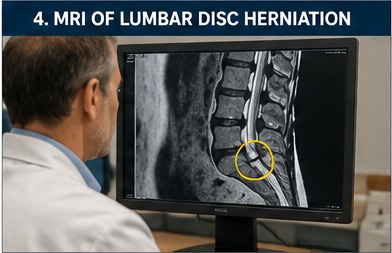
An MRI scan may become useful if symptoms persist despite appropriate treatment, surgery is being considered, an epidural injection is being planned, there is significant or progressive weakness, another diagnosis is suspected, or there are red flag symptoms.
MRI is particularly good at showing lumbar disc prolapse, spinal stenosis, nerve compression, tumours, infection and inflammation. However, scans must always be interpreted carefully. Many people with no pain whatsoever have disc bulges visible on MRI, and equally, some people with severe sciatica have relatively modest findings. The scan should always be interpreted alongside your symptoms and examination, not in isolation.
Red flag symptoms
Although the vast majority of people recover without serious problems, there are a small number of symptoms that should never be ignored.
Seek urgent medical assessment if you develop rapidly worsening leg weakness, numbness around the buttocks, genitals or inner thighs ("saddle numbness"), difficulty passing urine, loss of bladder or bowel control, loss of sexual sensation, severe pain affecting both legs, or fever, unexplained weight loss or a history of cancer with new back pain.
These symptoms may indicate cauda equina syndrome, infection or another serious spinal condition.
| Symptom | Why it matters |
|---|---|
| Loss of bladder control | Possible cauda equina syndrome |
| Loss of bowel control | Possible cauda equina syndrome |
| Saddle numbness | Compression of the cauda equina |
| Rapidly worsening leg weakness | Significant nerve compression |
| Fever with severe back pain | Possible spinal infection |
| Unexplained weight loss with persistent pain | Requires urgent assessment for serious underlying pathology |
What is cauda equina syndrome?
The spinal cord ends around the level of the first lumbar vertebra. Below this level, the spinal canal contains a bundle of nerve roots known as the cauda equina, meaning "horse's tail".
If these nerves become severely compressed — most commonly by a very large disc prolapse — they may stop working properly. This is called cauda equina syndrome. Although it is rare, it is a surgical emergency because prolonged compression can lead to permanent problems with bladder, bowel and sexual function. If you develop these symptoms, seek immediate emergency assessment.
Does everyone with sciatica need surgery?
Absolutely not. This is perhaps the single most reassuring message for patients. The majority of people improve without an operation.
Disc prolapses often become smaller naturally over time as the body gradually breaks down and reabsorbs the displaced disc material. At the same time, inflammation settles, pressure on the nerve reduces and the nerve begins to recover. This explains why many people notice gradual improvement over several weeks, even without surgery.
The treatment pathway
Stage 1 — control the pain and keep moving
During the first few weeks the priority is controlling pain, maintaining movement, avoiding prolonged bed rest and allowing the nerve to recover.
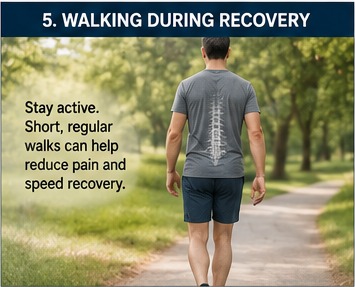
Many patients worry that walking will make the disc worse. Fortunately, this is rarely true. Current evidence consistently shows that remaining as active as symptoms allow leads to better recovery than prolonged bed rest, and NHS guidance encourages people to continue normal activities wherever possible.
Should I stay in bed?
Years ago, people with sciatica were often advised to stay in bed for several days. We now know this is generally not helpful.
Prolonged bed rest leads to muscle weakness, joint stiffness, reduced fitness, slower recovery and greater fear of movement. Instead, try to walk short distances, change position regularly, avoid sitting for prolonged periods and continue gentle daily activities. Listen to your symptoms, but don't be afraid to move.
Physiotherapy
Physiotherapy can play an important role, particularly if symptoms are persisting. Treatment may include advice about posture, education, nerve mobility exercises, flexibility exercises, core strengthening and a gradual return to activity.
The emphasis is not on "putting the disc back in", but on helping you regain confidence, improve movement and return to normal function.

Exercises
There is no single exercise that cures sciatica. Instead, rehabilitation is tailored to the individual.
Depending on your symptoms, exercises may focus on lumbar mobility, hamstring flexibility, hip flexibility, nerve gliding exercises, abdominal strengthening, gluteal strengthening and walking programmes. The best exercise programme is one that you can perform consistently without significantly worsening your symptoms.
Pain relief
Pain medication may help you remain active while the nerve settles. Simple options include paracetamol (although evidence for benefit is limited) and non-steroidal anti-inflammatory drugs (NSAIDs), if appropriate.
Medication should always be considered alongside your overall health and any potential side effects. Importantly, pain relief is designed to help you move more comfortably — it does not speed up nerve healing.
What about gabapentin and pregabalin?
These medications were commonly prescribed for sciatica in the past. However, NICE no longer recommends gabapentinoids for the routine management of sciatica, because evidence has shown little overall benefit while exposing patients to potential side effects including dizziness, drowsiness and dependence. This represents an important change in modern sciatica management.
Oral steroids
Some people are prescribed a short course of steroid tablets. The evidence for routine use is limited, and they are not recommended for routine management of sciatica in current NICE guidance because the benefits are uncertain and they may cause adverse effects.
Epidural steroid injections
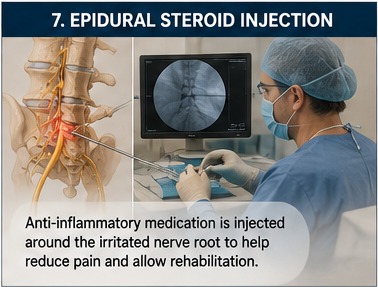
If severe leg pain persists despite appropriate non-operative treatment, an epidural steroid injection may be considered. Unlike tablets, this involves placing anti-inflammatory medication around the irritated nerve root under imaging guidance.
The aim is to reduce inflammation, reduce leg pain and allow rehabilitation to progress. An epidural is not a cure for a disc prolapse. Instead, it may provide a window of pain relief that allows the nerve to settle naturally or helps someone participate more effectively in physiotherapy.
NICE supports considering epidural injections in carefully selected patients with acute and severe sciatica, while recognising that they are not appropriate for everyone.
When should I see a specialist?
A specialist assessment is usually appropriate if severe pain persists despite appropriate treatment, symptoms continue beyond several weeks without improvement, progressive weakness develops, MRI findings correlate with persistent nerve compression, or surgery or injection therapy is being considered.
Most patients referred to a spinal specialist still do not require surgery, but specialist assessment can help determine the most appropriate next step.
When is surgery needed?
One of the biggest fears people have is that a diagnosis of sciatica automatically means they will need an operation. Fortunately, this is rarely the case.
Most people improve naturally as the inflammation settles and the compressed nerve begins to recover. Even when an MRI scan shows a sizeable disc prolapse, surgery is often unnecessary because the body can gradually shrink and reabsorb the prolapsed disc over time.
NICE recommends considering spinal surgery when non-surgical treatment has failed to improve pain or function and imaging findings match the patient's symptoms, rather than simply because a disc prolapse is visible on an MRI scan.
Who might benefit from surgery?
Surgery may be appropriate if you have severe leg pain that has persisted despite appropriate non-operative treatment, MRI evidence of nerve compression that matches your symptoms, significant weakness caused by nerve compression, pain that is preventing normal daily activities or work, or recurrent episodes that significantly affect quality of life.
Urgent surgery is usually recommended for cauda equina syndrome, rapidly progressive muscle weakness or severe neurological deterioration.
The decision is never based on the MRI scan alone. Instead, your surgeon combines your symptoms, examination findings, MRI findings, how long symptoms have been present, your overall health and your personal goals.
What is a microdiscectomy?
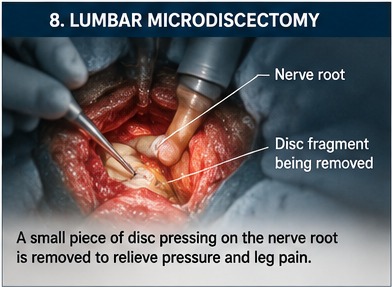
The commonest operation performed for sciatica caused by a lumbar disc prolapse is called a microdiscectomy. Despite the name, the operation is not performed on the sciatic nerve itself. Instead, the surgeon removes the small piece of disc that is pressing on the affected nerve root.
The operation usually involves a small incision in the lower back, gently separating the back muscles, using magnification with an operating microscope or surgical loupes, removing only the portion of disc compressing the nerve and leaving as much normal disc as possible.
The goal is to relieve pressure on the nerve while preserving the normal structures of the spine.
How successful is surgery?
For carefully selected patients, surgery is very successful at relieving leg pain. Many patients notice improvement almost immediately after surgery because the pressure on the nerve has been removed.
However, it is important to understand that surgery is better at treating leg pain than back pain. If most of your symptoms are coming from back pain rather than nerve pain, surgery may be less beneficial. Recovery of numbness or weakness is also less predictable than recovery of pain, because nerves heal much more slowly than they stop hurting.
Recovery after surgery
Most lumbar microdiscectomies are performed as day-case procedures or with an overnight hospital stay. A typical recovery pathway is set out below, although everyone recovers at a different pace and your surgeon or physiotherapist will guide your rehabilitation.
| Time | Recovery goals |
|---|---|
| First few days | Walking regularly, wound care, gentle movement |
| 2–6 weeks | Gradually increasing activity, avoiding prolonged sitting, gentle stretching |
| 6–12 weeks | Return to most office-based work and light exercise |
| 3–6 months | Progressive strengthening and return to heavier activities or sport |
| Up to 12 months | Continued nerve recovery, particularly if numbness or weakness was present before surgery |
Recovery without surgery
| Time | Expected progress |
|---|---|
| Week 1–2 | Pain control, keep moving, short regular walks |
| Week 2–6 | Gradual improvement in leg pain, physiotherapy begins |
| Week 6–12 | Most patients notice significant improvement |
| 3–6 months | Ongoing nerve recovery and return to normal activities |
| 6–12 months | Continued improvement, particularly in numbness and strength if affected |
What is the outlook?
The prognosis for sciatica is generally very good. Most people improve without surgery. Recovery depends on several factors, including the underlying cause, the severity of nerve irritation, how long symptoms have been present, overall health and remaining active during recovery.
It is quite common to experience gradual improvement, occasional flare-ups and temporary increases in pain after heavier activity. This does not necessarily mean the disc has become worse. As long as symptoms continue to improve overall, these fluctuations are usually part of the normal healing process.
Treatment comparison
| Treatment | Role | Advantages | Limitations |
|---|---|---|---|
| Education and reassurance | Understanding the condition | Reduces anxiety and encourages recovery | Requires patient engagement |
| Staying active | Maintain movement and function | Strong evidence for better recovery | Symptoms may temporarily fluctuate |
| Physiotherapy | Restore movement and confidence | Improves function and supports recovery | Benefits develop gradually |
| Pain relief | Improve comfort | Helps maintain activity | Does not treat the underlying cause |
| Epidural steroid injection | Reduce nerve inflammation | May help selected patients with severe pain | Temporary benefit; not suitable for everyone |
| MRI scan | Confirm diagnosis when appropriate | Guides specialist treatment | Not routinely needed early on |
| Microdiscectomy | Relieve persistent nerve compression | Excellent relief of leg pain in selected patients | Surgical risks and recovery time |
Frequently asked questions
Will my disc go back into place?
Not exactly. The disc usually does not "pop back in." Instead, over time the body gradually breaks down and absorbs the prolapsed portion of the disc, reducing pressure on the nerve. This natural healing process explains why many people improve without surgery.
Should I keep walking?
Yes. Walking is one of the best activities during recovery. Short, frequent walks are generally better than remaining in bed or sitting for prolonged periods. If walking significantly increases your symptoms, reduce the distance temporarily and build up gradually.
Can I go to the gym?
Usually yes, but you may need to modify your programme. During the painful phase it is sensible to avoid exercises that markedly increase leg pain, such as heavy deadlifts, heavy squats and heavy bent-over rows. Your physiotherapist can advise when these exercises can be safely reintroduced.
Can I drive?
Many people can continue driving once they can sit comfortably, perform an emergency stop safely and control the vehicle without severe pain. On longer journeys, stop regularly to stretch and walk.
Will I always have sciatica?
No. Most people experience one episode that gradually settles. Some patients have recurrent episodes, but these are often managed successfully without surgery. Maintaining a healthy weight, staying active and keeping your trunk and hip muscles strong may help reduce the risk of future episodes.
Does everyone with a disc bulge have pain?
No. MRI studies show that many healthy people with no symptoms at all have disc bulges. This is why MRI findings must always be interpreted alongside your symptoms and examination. Treating the scan rather than the patient can lead to unnecessary interventions.
The OrthoZone take-home message
Sciatica is one of the commonest causes of leg pain and is usually caused by irritation of a nerve root in the lower spine, most often from a lumbar disc prolapse. Although the pain can be severe, the outlook is generally excellent, with most people recovering without surgery. The key principles are to stay as active as possible, recognise the warning signs that require urgent assessment, and understand that MRI scans and surgery are only needed for a carefully selected minority of patients.
Top tips
- Keep moving. Prolonged bed rest usually slows recovery — gentle walking and regular movement are generally beneficial.
- Don't panic if your MRI shows a disc bulge. Disc bulges are common and many shrink naturally over time without surgery.
- Focus on the leg pain. Surgery is most effective for persistent nerve pain running down the leg, rather than isolated lower back pain.
- Know the red flags. Difficulty controlling your bladder or bowels, saddle numbness or rapidly worsening weakness requires immediate emergency assessment.
- Be patient. Nerves heal slowly, so recovery often takes weeks or months — and most people improve without an operation.