Greater Trochanteric Pain Syndrome (Trochanteric Bursitis): A Complete Guide to Pain on the Outside of the Hip
Pain on the outside of the hip is extremely common and is often labelled trochanteric bursitis. However, research over the past two decades has shown that this name is often misleading. In many people the main problem is not inflammation of the bursa alone, but changes affecting the gluteal tendons — particularly the gluteus medius and gluteus minimus — together with increased compression over the outside of the hip. This broader condition is now known as Greater Trochanteric Pain Syndrome (GTPS).
GTPS can make simple activities surprisingly difficult. Sleeping on your side, climbing stairs, walking longer distances or standing on one leg to put on trousers may all become painful.
The good news is that most people improve without surgery. Understanding what is happening, modifying the activities that overload the hip and following a structured strengthening programme are the cornerstones of successful treatment.
This guide explains what GTPS is, why it develops, how it is diagnosed and the treatments that are most likely to help.
Key points
- Greater trochanteric pain syndrome (GTPS) is now the preferred term for most cases of pain on the outside of the hip, because the problem often involves the gluteal tendons as well as the bursa.
- Pain is usually felt over the outside of the hip and is commonly worse when lying on the affected side, climbing stairs or walking.
- Most people improve with education, activity modification and progressive strengthening exercises rather than surgery.
- Steroid injections may provide temporary pain relief for some patients but do not treat the underlying tendon problem.
- Surgery is only considered in a small number of people whose symptoms persist despite comprehensive non-operative treatment.
Understanding the hip
The hip is a ball-and-socket joint designed to support your body weight while allowing a wide range of movement. The ball is the head of the femur (thigh bone), which fits into a socket in the pelvis called the acetabulum.
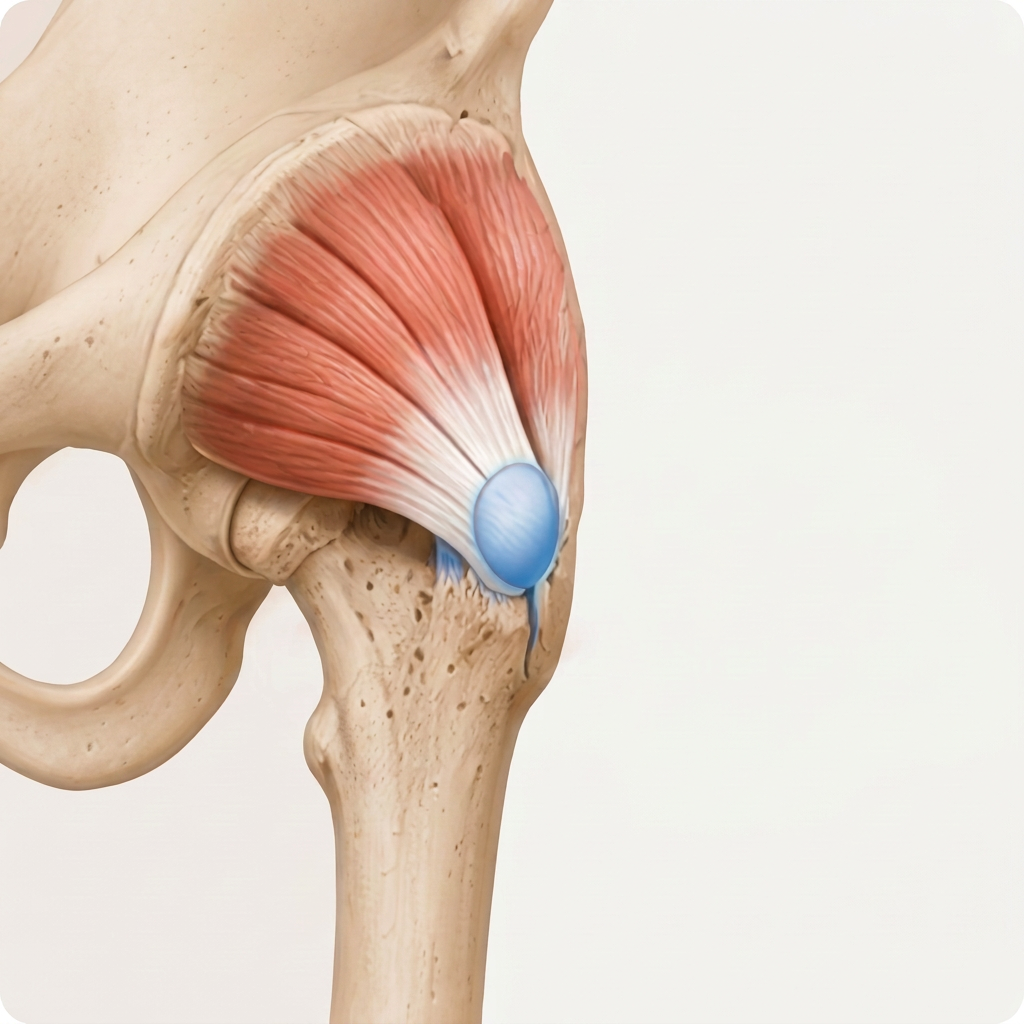
On the outside of the upper femur is a large bony prominence called the greater trochanter. This is an important area because it acts as the attachment site for two powerful muscles: the gluteus medius and the gluteus minimus.
These muscles keep the pelvis level when walking, stabilise the hip, and allow you to stand on one leg, climb stairs, run and maintain balance.
Between the tendons and the bone lie small fluid-filled sacs called bursae. A bursa acts like a cushion, helping reduce friction between tendon and bone during movement. For many years it was assumed that inflammation of this bursa explained pain on the outside of the hip. We now know the picture is usually much more complex.
What is greater trochanteric pain syndrome?
Greater Trochanteric Pain Syndrome (GTPS) is an umbrella term describing pain arising from structures around the greater trochanter. Rather than being caused by one single abnormality, symptoms often result from a combination of gluteal tendon overload, gluteal tendinopathy, compression of the tendons against the greater trochanter, irritation of one or more bursae, and weakness of the surrounding muscles.
This is why the term greater trochanteric pain syndrome is now preferred over trochanteric bursitis in many patients.
Why "trochanteric bursitis" isn't the whole story
The term trochanteric bursitis suggests that inflammation of the bursa is the main cause of pain. However, imaging studies have shown that many people with lateral hip pain have little or no evidence of isolated bursitis. Instead, changes affecting the gluteus medius and gluteus minimus tendons are common, sometimes occurring alongside irritation of the bursa.
An easy way to think about it is this: imagine repeatedly bending a paperclip. Eventually it weakens because it is being overloaded. The same principle can apply to tendons. Repeated loading — particularly when combined with compression — can gradually reduce a tendon's ability to cope, leading to pain and reduced function.
The bursa may become irritated as part of this process, but it is often not the only structure involved. This distinction matters, because treatment should focus on improving tendon health and reducing excessive compression rather than simply trying to reduce inflammation.
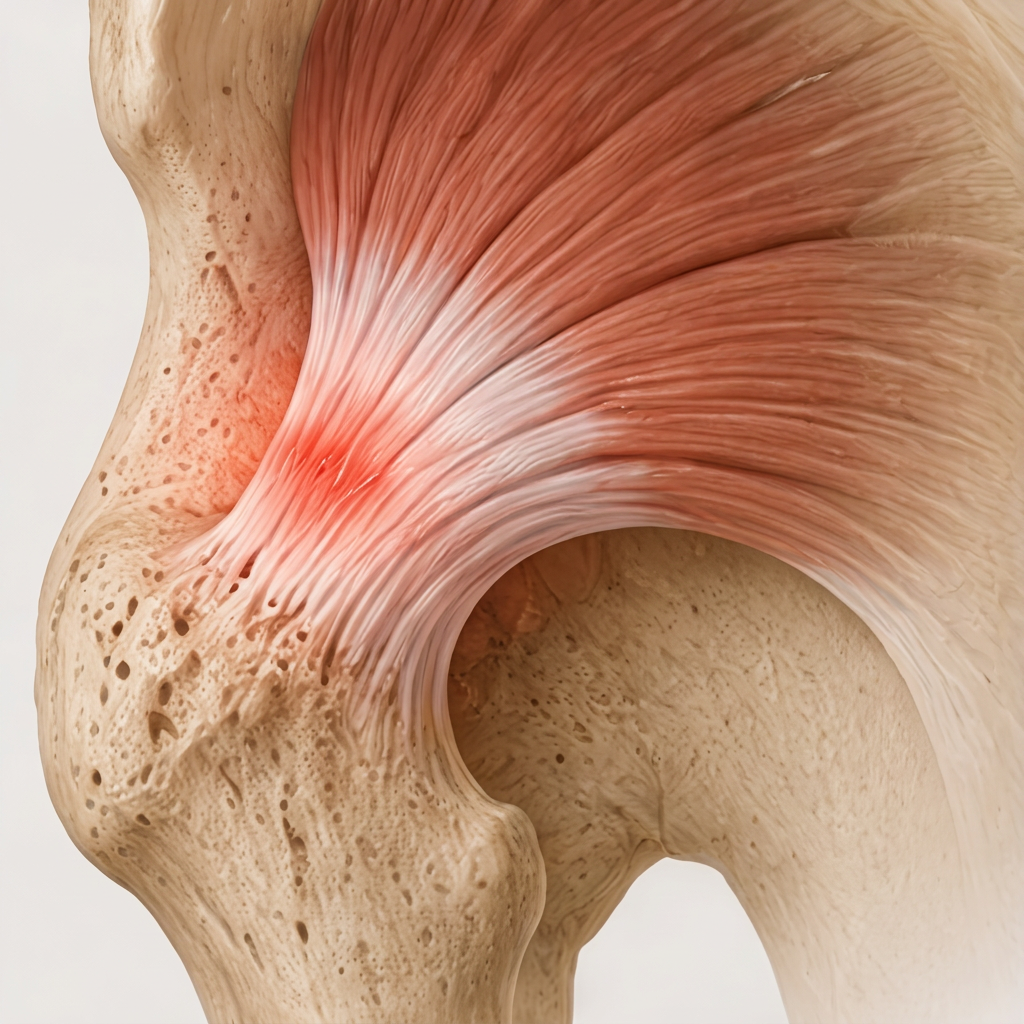
Why does it hurt when you lie on your side?
One of the classic symptoms of GTPS is pain when lying on the affected side. Many people assume this means they have "inflamed bursitis". In reality, the reason is often mechanical.
When you lie directly on the side of the hip, body weight compresses the gluteal tendons against the greater trochanter, pressure also compresses the underlying bursa, and the already sensitive tissues become more painful.
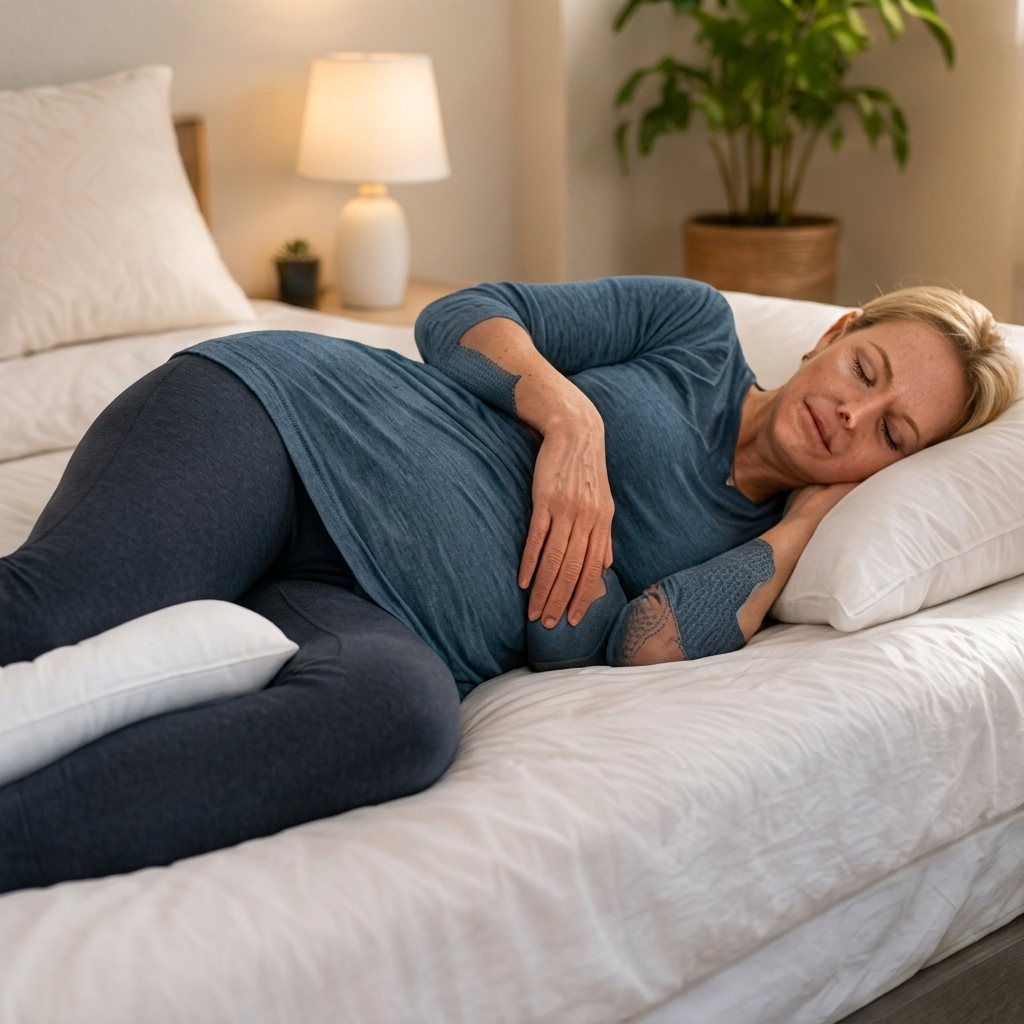
This is why many people sleep better lying on the opposite side with a pillow between the knees, lying on their back, and avoiding prolonged pressure directly over the painful hip. Reducing compression is an important part of rehabilitation.
What causes greater trochanteric pain syndrome?
GTPS usually develops because the load placed on the gluteal tendons becomes greater than the tendons can comfortably tolerate. Rather than one major injury, symptoms often develop gradually.
Common contributing factors include sudden increases in walking or running, climbing more stairs than usual, prolonged standing, carrying heavy loads, weak hip muscles, an altered walking pattern, reduced balance, previous hip or knee problems, lower back conditions and increased body weight.
Some people notice symptoms after a fall directly onto the side of the hip, although many cannot identify a specific event.
Who is most likely to develop GTPS?
Greater trochanteric pain syndrome is particularly common in women between 40 and 70 years of age, runners, walkers, people with hip or knee osteoarthritis, people with lower back pain, and individuals who stand for prolonged periods at work.
The condition is also more common in women because differences in pelvic shape can increase the compressive forces acting on the gluteal tendons.
What are the symptoms?
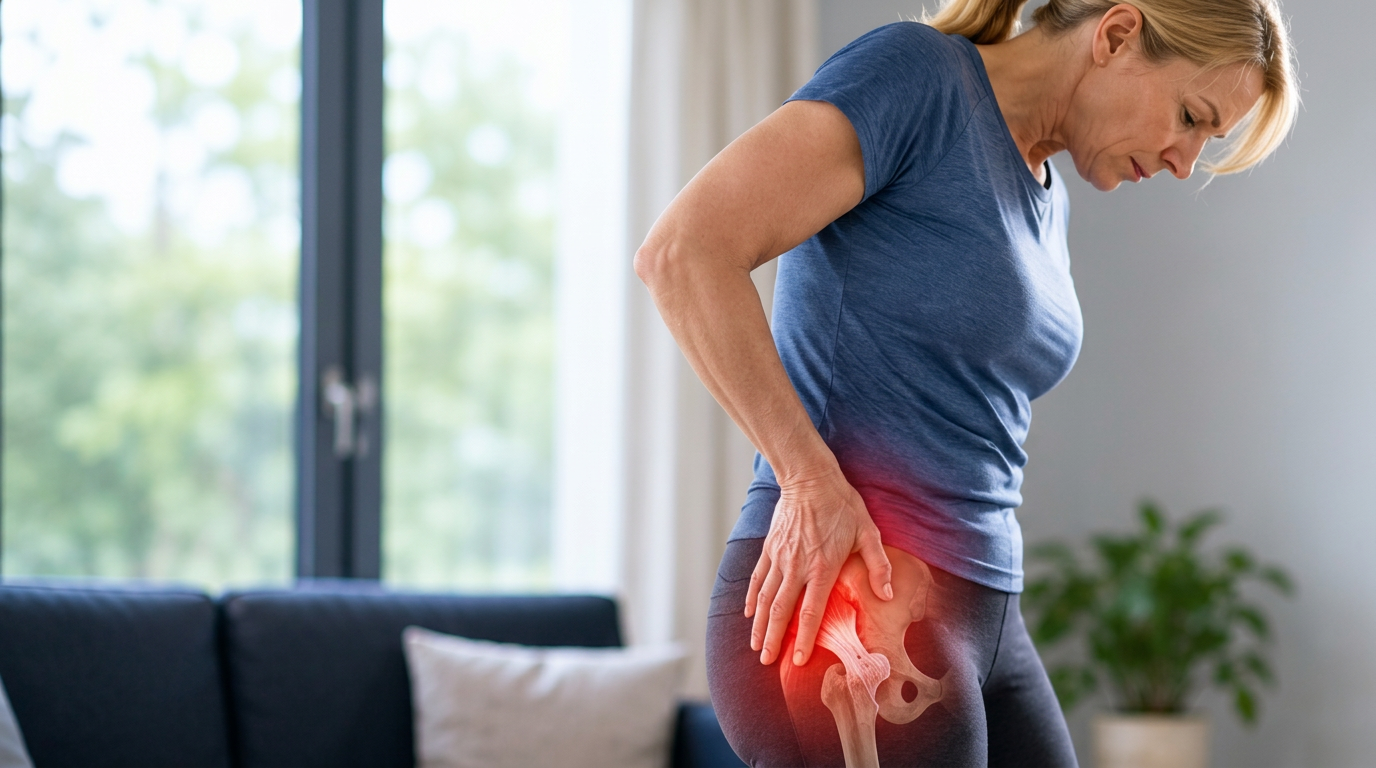
The symptoms of GTPS can vary, but the pain is usually felt over the outside of the hip rather than deep in the groin.
Common symptoms include pain directly over the outside of the hip; tenderness when pressing over the greater trochanter; pain when lying on the affected side; discomfort climbing stairs; pain walking longer distances; pain standing on one leg; difficulty getting out of a car; aching after prolonged standing; and pain that sometimes spreads down the outside of the thigh.
Unlike hip arthritis, GTPS usually does not cause significant stiffness within the hip joint itself.
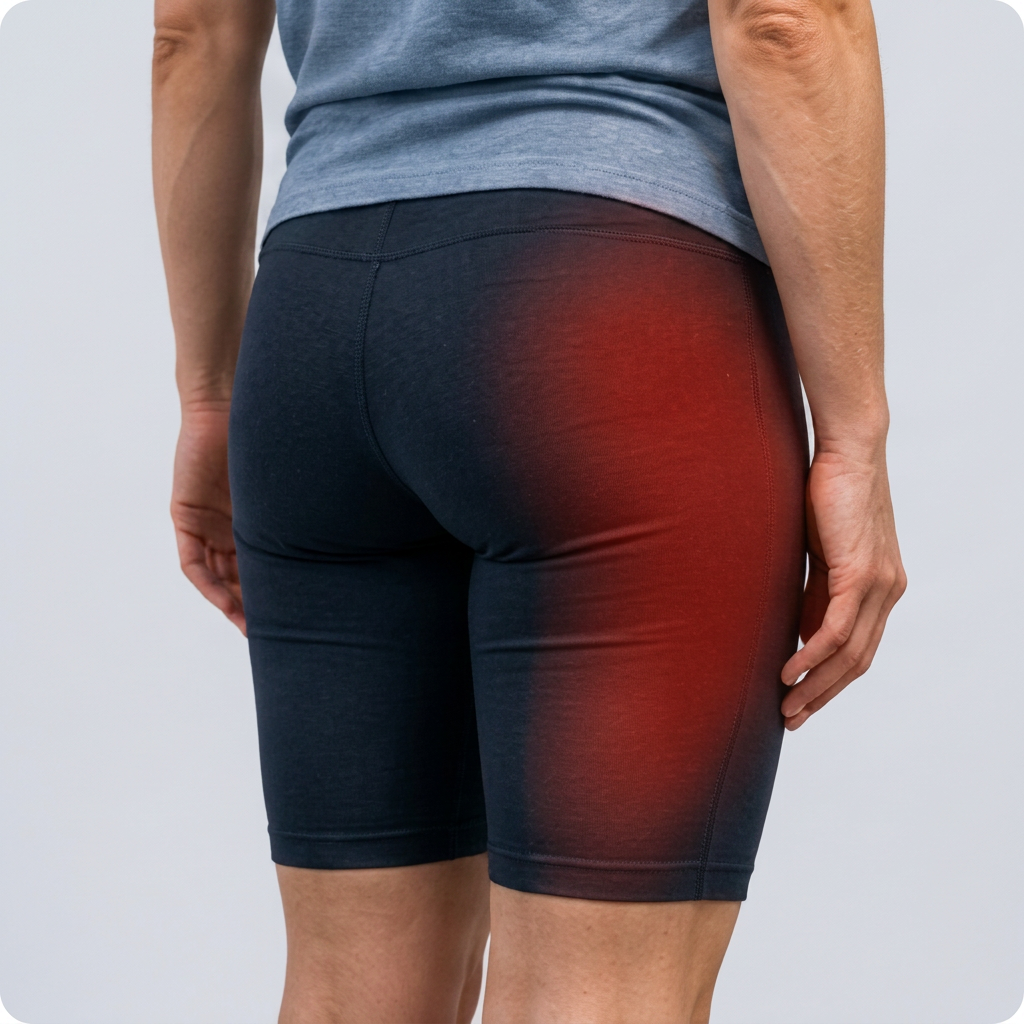
Why can the pain spread down the leg?
Many patients become concerned that pain running down the outside of the thigh must mean sciatica. Fortunately, this is often not the case.
Pain from the gluteal tendons commonly radiates down the outer thigh, sometimes reaching towards the knee. This is known as referred pain. Although the pain spreads, the problem remains around the outside of the hip.
What activities make it worse?
GTPS is often aggravated by activities that either increase tendon loading or increase tendon compression. Common triggers include lying on the affected side, crossing your legs, sitting with one leg over the other, standing with your weight on one hip, climbing stairs, walking uphill, running, getting out of low chairs, prolonged standing and standing on one leg while dressing.
Many people recognise that their symptoms become worse towards the end of the day after prolonged activity.
How is greater trochanteric pain syndrome diagnosed?
Diagnosis usually begins with a careful history and examination. Your clinician will ask where exactly the pain is, when it began, whether it is worse at night, whether you can lie on that side, whether climbing stairs or walking make it worse, and whether there has been a recent increase in activity. The pattern of symptoms often provides the biggest clue.
Physical examination
During the examination your clinician may assess where the pain is located, tenderness over the greater trochanter, hip movement, muscle strength, walking pattern, balance, single-leg stance and pain during resisted hip abduction.
These tests help distinguish GTPS from other causes of hip pain such as hip arthritis, lumbar spine disorders or muscle injuries.
Do you need an X-ray or MRI?
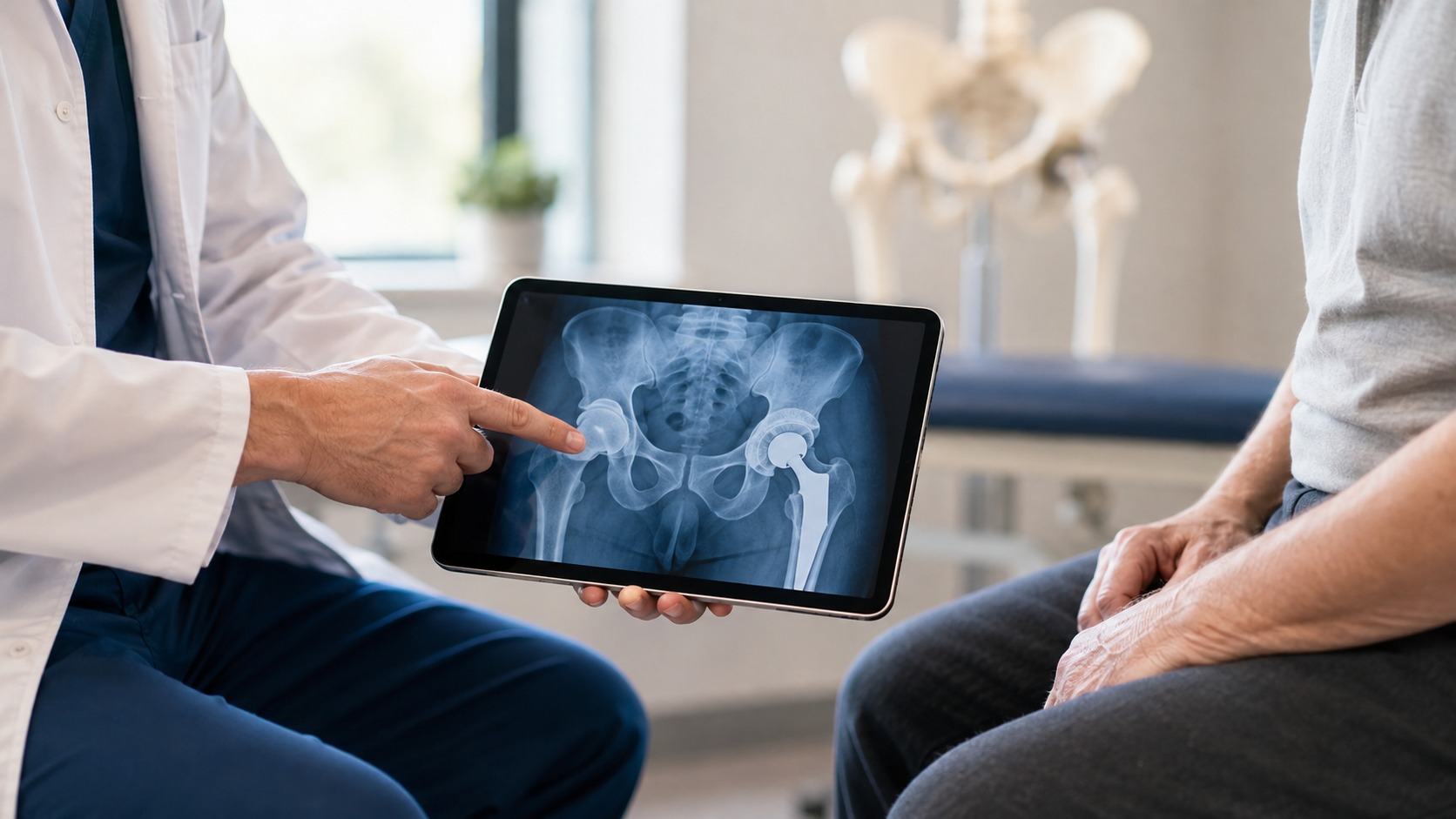
Many people with typical GTPS do not need advanced imaging. X-rays are often normal but may be useful if hip arthritis or another bony problem is suspected.
MRI or ultrasound may be considered if symptoms fail to improve, the diagnosis is uncertain, a significant gluteal tendon tear is suspected, or surgery is being considered.
Imaging may show changes affecting the gluteal tendons or fluid within the bursa, but treatment decisions should always be based on the overall clinical picture rather than the scan alone.
Treatment of greater trochanteric pain syndrome
One of the most reassuring things about GTPS is that most people recover without surgery. Although symptoms can sometimes persist for several months, the majority of patients improve with the right combination of education, activity modification and a structured rehabilitation programme. The key is understanding that this is usually an overload problem affecting the gluteal tendons, rather than simply an inflamed bursa that needs to "settle down".
Treatment aims to reduce pain, reduce excessive compression of the gluteal tendons, improve tendon strength, restore hip muscle function, improve walking and balance, and return you safely to work, exercise and sport.
Understanding "load versus capacity"
One of the easiest ways to understand GTPS is to think about your tendons as ropes. Healthy ropes tolerate repeated pulling very well. However, if the load becomes greater than the rope can comfortably manage — or if the rope is repeatedly squeezed against a hard surface — it gradually becomes irritated and weaker.
The gluteal tendons work in exactly the same way. Every time you walk, climb stairs, run, stand on one leg or get out of a chair, your gluteal tendons help stabilise the pelvis. If the amount of work placed upon them becomes greater than they can tolerate, pain develops.
The solution is therefore not complete rest, but gradually improving the tendons' ability to cope with load again.
Why education is one of the most important treatments
Many people worry that hip pain means they are "wearing the joint away". Fortunately, this is rarely the case with GTPS. Understanding the condition helps reduce fear and allows rehabilitation to progress more confidently.
Research has shown that explaining why the pain occurs, why sleeping is painful, why certain positions increase compression and why strengthening exercises work is an important part of successful treatment.
Activity modification
Activity modification does not mean stopping everything. Instead, it means temporarily reducing activities that repeatedly overload or compress the tendons while maintaining as much normal movement as possible.
Examples include reducing long uphill walks during painful flare-ups, avoiding prolonged standing on one leg, limiting repeated stair climbing if symptoms are severe, temporarily reducing running volume, and alternating walking with cycling or swimming.
The aim is to calm the irritated tissues without allowing the muscles to become weak.
Reducing tendon compression
One of the most important concepts in GTPS rehabilitation is reducing compression. The gluteal tendons become compressed whenever the hip moves into certain positions, so simple changes can make a surprisingly large difference.
Try to avoid standing with your weight resting on one hip, crossing your legs, sitting with one knee over the other, sleeping directly on the painful side and prolonged side-lying without support.
Instead, stand with your weight evenly distributed, keep both feet on the floor when sitting, avoid letting one hip "drop out", and change position regularly. These small changes reduce pressure across the tendons and may help symptoms settle more quickly.
How should you sleep?
Night pain is one of the most frustrating symptoms of GTPS. Many patients wake repeatedly because rolling onto the painful side compresses the sensitive tissues.
If you sleep on the opposite side, place a thick pillow between your knees, keep the painful leg supported, and avoid allowing the upper leg to fall across the body. If you sleep on your back, placing a pillow beneath the knees may improve comfort.
These simple adjustments reduce compression over the greater trochanter and are specifically recommended in NHS rehabilitation guidance.
Physiotherapy
Physiotherapy is the cornerstone of treatment. The goals are to reduce pain, restore gluteal strength, improve balance, improve walking, improve pelvic control and gradually increase tendon capacity. Treatment should be progressive rather than relying on passive treatments alone.
Early rehabilitation
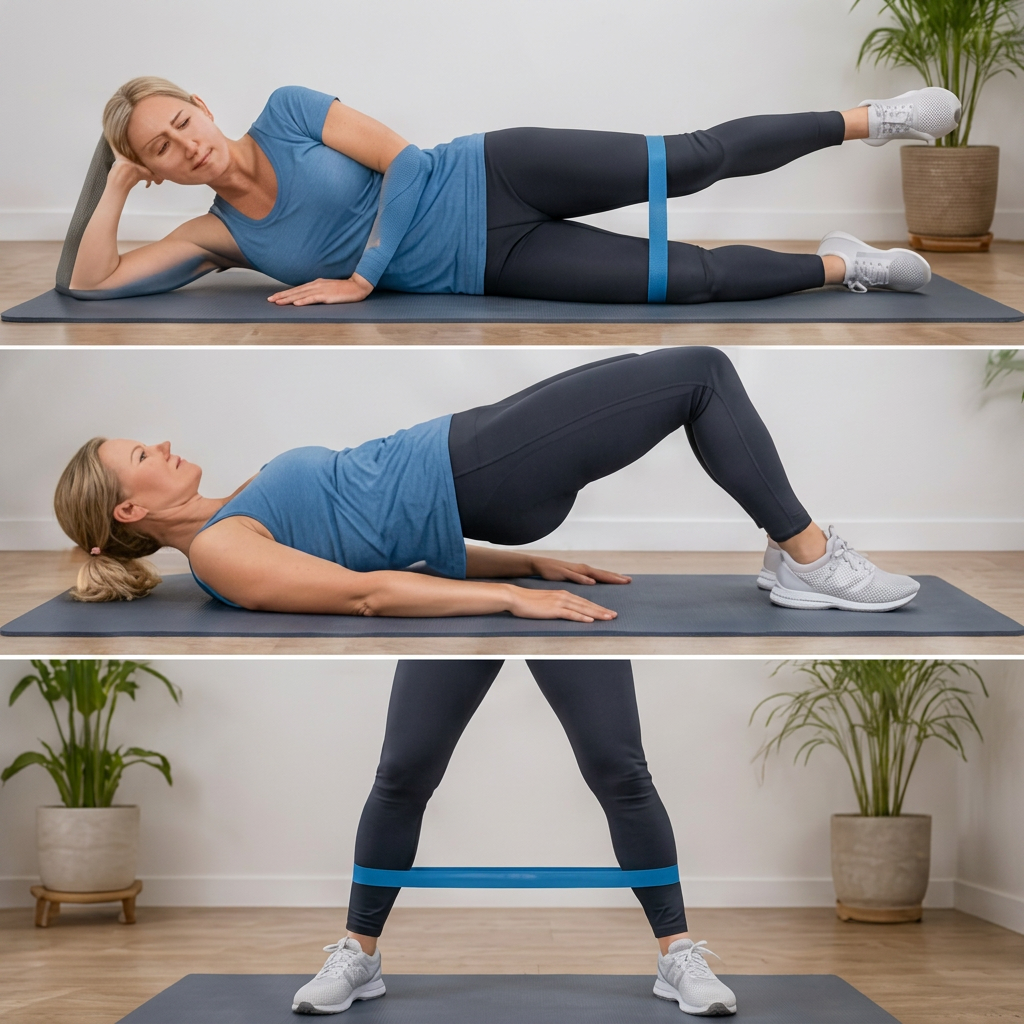
Initially, exercises focus on gentle muscle activation without placing excessive compression across the tendons. Examples include isometric gluteal contractions, bridge exercises, gentle hip abduction, pelvic control exercises and core stability exercises. These exercises aim to begin loading the tendon without provoking excessive pain.
Progressive strengthening
As symptoms improve, strengthening exercises become gradually more demanding. Examples include side-stepping with resistance bands, single-leg bridges, step-ups, sit-to-stands, single-leg balance, resisted hip abduction and lateral step-downs.
The emphasis should always be on good movement quality, gradual progression and avoiding excessive pain. Rather than trying to strengthen as quickly as possible, rehabilitation should build the tendon's tolerance over several weeks or months.
Balance and pelvic control
The gluteal muscles are not simply "hip muscles". They play a crucial role in stabilising the pelvis whenever you stand on one leg, and poor pelvic control increases the load placed upon the tendons. Rehabilitation therefore often includes single-leg standing, balance exercises, controlled squats, walking drills and stair training. These exercises help improve the way the hip functions during everyday activities.
Can you continue exercising?
Usually yes. Complete rest is rarely helpful. Instead, reduce activities that significantly increase symptoms, maintain general fitness, continue strengthening exercises and gradually rebuild walking distance. Swimming, cycling and low-impact gym work are often well tolerated while symptoms improve.
Is some pain during exercise acceptable?
Yes. A small amount of discomfort during rehabilitation is usually acceptable. A useful guide is that pain should remain mild to moderate, symptoms should settle within a reasonable time afterwards, and pain should not continue increasing day after day.
If exercises consistently make symptoms much worse for several days, they may simply need modifying. This does not usually mean damage has occurred.
Pain relief
Simple pain relief may help you continue with rehabilitation. Options include paracetamol, topical anti-inflammatory gels and oral anti-inflammatory medication if appropriate. Medication should support rehabilitation rather than replace it.
Corticosteroid injections
Steroid injections are commonly used for persistent lateral hip pain. They can reduce pain, particularly when symptoms are preventing rehabilitation. However, it is important to understand what they can and cannot do.
They may reduce inflammation around the bursa, reduce pain and make physiotherapy easier. They do not repair damaged tendons, strengthen the gluteal muscles or correct abnormal loading.
Many people experience good short-term relief, although symptoms may return if the underlying tendon weakness is not addressed. For this reason, injections should usually be viewed as an adjunct to rehabilitation rather than a cure.
Shockwave therapy
Extracorporeal shockwave therapy (ESWT) uses sound waves delivered to the painful area. Current evidence suggests it may benefit selected patients, particularly those with persistent gluteal tendinopathy who have not improved with initial rehabilitation.
However, results vary, multiple treatment sessions are usually required, and it should normally be combined with exercise rather than used alone. NHS guidance notes that shockwave therapy may be considered for persistent symptoms after appropriate conservative management.
What about PRP?
Platelet-rich plasma (PRP) injections have attracted increasing interest. The theory is that concentrated platelets may stimulate tendon healing.
However, at present the evidence remains limited, studies show mixed results and treatment protocols vary considerably. Because of this uncertainty, PRP is not routinely recommended as standard treatment for GTPS. Patients considering private PRP treatment should understand that the evidence is still evolving.
Does massage help?
Massage may temporarily reduce muscle tightness around the hip. However, massage does not strengthen the gluteal tendons. It is therefore best viewed as a temporary symptom-relieving treatment rather than a long-term solution.
When is surgery needed?
Fortunately, surgery is rarely required and most people improve with non-operative treatment. Surgery may be considered if symptoms persist despite six to twelve months of well-supervised rehabilitation, imaging demonstrates a significant gluteal tendon tear, there is persistent disability affecting quality of life, and other causes of pain have been excluded.
What does surgery involve?
The operation depends on the underlying problem. Possible procedures include gluteus medius tendon repair, gluteus minimus tendon repair, bursectomy (removal of the inflamed bursa) and release of the iliotibial band where appropriate.
Modern surgery is usually performed through minimally invasive or limited open techniques, depending on the pathology. The goal is to restore tendon function rather than simply remove the bursa.
Recovery timeline
| Stage | What you can expect |
|---|---|
| Weeks 1–2 | Understand the diagnosis, reduce tendon compression, modify painful activities, begin gentle exercises. |
| Weeks 2–6 | Pain gradually settles, walking becomes easier, gluteal muscles begin strengthening. |
| Weeks 6–12 | Improved balance, increased walking tolerance, progression to more demanding strengthening exercises. |
| 3–6 months | Most people notice substantial improvement in pain and function and return to normal daily activities. |
| 6–12 months | Continued improvements in tendon strength, endurance and confidence. Occasional flare-ups may still occur after unusually heavy activity. |
Treatment comparison
| Treatment | Main role | Advantages | Limitations |
|---|---|---|---|
| Education | Understanding the condition | Improves confidence and supports rehabilitation | Requires active participation |
| Activity modification | Reduce overload | Helps symptoms settle while maintaining activity | Temporary adjustments needed |
| Physiotherapy | Restore tendon capacity | Best long-term evidence for recovery | Requires commitment over several months |
| Strengthening exercises | Improve gluteal tendon health | Addresses the underlying problem | Progress may be gradual |
| Pain relief | Control symptoms | Helps maintain activity | Does not treat the underlying tendon problem |
| Corticosteroid injection | Reduce short-term pain | May allow rehabilitation to progress | Relief may be temporary |
| Shockwave therapy | Persistent symptoms | May benefit selected patients | Results vary between individuals |
| Surgery | Severe persistent cases | May restore tendon function when appropriate | Only suitable for a small minority of patients |
Frequently asked questions
Is GTPS the same as trochanteric bursitis?
Not exactly. For many years, pain on the outside of the hip was almost always called trochanteric bursitis, implying that inflammation of the bursa was the main problem. We now know that this is often an oversimplification.
In many patients the underlying problem is gluteal tendinopathy — changes affecting the gluteus medius and gluteus minimus tendons — together with increased compression over the greater trochanter. The bursa may become irritated as part of this process, but it is often not the only source of pain. For this reason, greater trochanteric pain syndrome is now the preferred term.
Will it go away on its own?
Some people notice gradual improvement over several weeks. However, many continue to experience symptoms because they unknowingly keep placing excessive load or compression on the gluteal tendons.
Without addressing muscle weakness, walking pattern, sleeping position and activity levels, the condition may become persistent. The good news is that most patients improve significantly with the right rehabilitation programme, even if symptoms have been present for several months.
Should I keep walking?
Usually yes — walking is important for general health. However, if longer walks consistently increase pain, it may help to reduce distance temporarily, walk on flatter ground, take shorter and more frequent walks, and gradually build distance again as symptoms improve. The aim is to remain active while avoiding repeated overload of the tendons.
Can running cause GTPS?
Running itself is not harmful. However, sudden increases in distance, speed, hill training or frequency can overload the gluteal tendons. Most runners are able to return to running successfully once strength has improved, pain is well controlled and training is increased gradually.
Is cycling better than walking?
For some people, yes. Cycling usually produces less compression over the outside of the hip than prolonged walking. It can therefore be an excellent way of maintaining fitness while symptoms improve.
Will I need an MRI?
Usually not. Most people can be diagnosed through a careful history and physical examination. MRI or ultrasound is generally reserved for an uncertain diagnosis, persistent symptoms, suspected gluteal tendon tear or consideration of surgery. Scans should support the clinical assessment rather than replace it.
Will a steroid injection cure it?
No. A corticosteroid injection may reduce pain for a period of time, particularly if inflammation around the bursa is contributing to symptoms. However, injections do not strengthen the tendons, improve muscle weakness, correct abnormal loading or prevent symptoms returning. The best long-term results are usually achieved when injections are combined with an appropriate rehabilitation programme.
Can I sleep on the painful side again?
Yes — most people can eventually return to sleeping normally. During the early stages of recovery, however, avoiding prolonged compression helps reduce symptoms. Many patients find it helpful to sleep on the opposite side, place a pillow between the knees, or sleep on their back if comfortable. As the tendons become stronger, sleeping usually becomes much more comfortable.
Is surgery common?
Fortunately, no. The vast majority of people with GTPS improve without surgery. Surgery is generally reserved for significant gluteal tendon tears, persistent pain despite comprehensive rehabilitation, and symptoms lasting many months despite appropriate treatment.
Prognosis
The outlook for most people with greater trochanteric pain syndrome is very good. With appropriate treatment, pain usually improves gradually, walking becomes easier, sleep improves, confidence returns and most people avoid surgery.
Recovery is often measured in months rather than weeks, particularly if symptoms have been present for a long time before treatment begins. Patients who understand the condition, reduce tendon compression, complete a progressive strengthening programme and remain physically active generally achieve the best long-term outcomes.
The OrthoZone take-home message
Greater trochanteric pain syndrome is one of the commonest causes of pain on the outside of the hip. Although it has traditionally been called "trochanteric bursitis", we now know that the gluteal tendons are often the main structures involved. The good news is that most people recover without surgery. Education, reducing tendon compression, staying active and following a progressive strengthening programme form the foundation of successful treatment. Steroid injections and shockwave therapy may help selected patients, but lasting improvement usually comes from restoring the tendons' ability to cope with everyday loads.
Top tips
- Don't stand with all your weight on one hip — standing evenly on both legs reduces unnecessary compression of the gluteal tendons.
- Avoid sleeping directly on the painful side during the early stages; a pillow between the knees when lying on the opposite side often makes a significant difference.
- Keep moving, but be sensible — complete rest usually delays recovery, so modify activities rather than stopping altogether.
- Strengthening is the key to long-term recovery: strong gluteal muscles help the tendons cope with everyday loads and reduce the risk of symptoms returning.
- Be patient — tendons recover gradually, and consistent rehabilitation over several months usually beats searching for a quick fix.